5 Weird Signs of Iron Deficiency You Shouldn’t Ignore
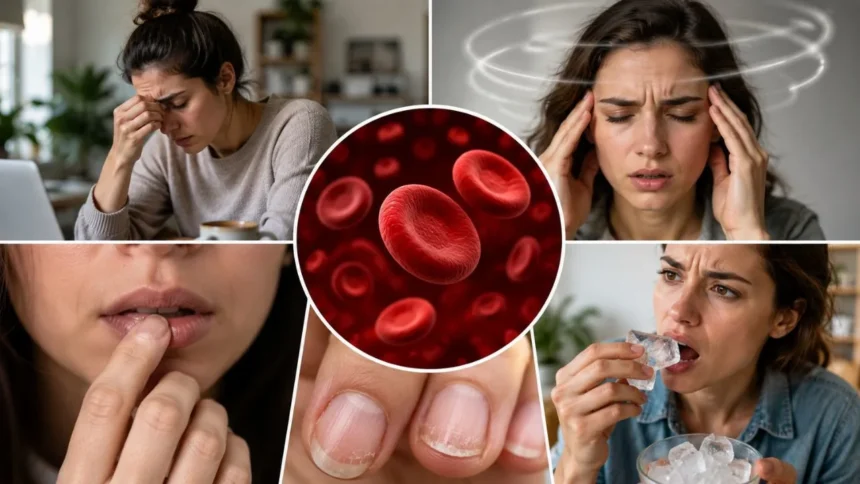
Iron deficiency is often associated with tiredness, weakness, and pale skin. However, low iron levels can also produce less obvious changes that are easy to dismiss. You might suddenly crave ice, feel an uncontrollable urge to move your legs, notice unusual nail shapes, develop a sore tongue, or see more hair coming out in the shower.
These unusual symptoms do not automatically mean that you have iron deficiency. Restless legs, brittle nails, mouth soreness, and hair shedding can have several possible causes. However, they become more meaningful when they appear alongside fatigue, shortness of breath, headaches, dizziness, cold hands, reduced exercise tolerance, or a noticeably fast heartbeat.
Iron is needed to make hemoglobin, the protein in red blood cells that carries oxygen from the lungs to body tissues. Iron deficiency begins when the body’s stored iron becomes depleted. If it continues, it can eventually reduce healthy red blood cell production and develop into iron-deficiency anemia.
A blood test is the only reliable way to confirm whether your symptoms are related to low iron. Taking high-dose iron without testing can cause side effects and may be harmful when iron deficiency is not present. This guide explains five weird signs of iron deficiency, other symptoms to watch for, and when to seek medical care.
What Is Iron Deficiency?
Iron deficiency occurs when your body does not have enough available iron to meet its needs. The body stores some iron in a protein called ferritin and uses it to make hemoglobin, support muscle function, and maintain several important cellular processes. Low iron stores can develop gradually without creating obvious symptoms at first.
Iron deficiency and iron-deficiency anemia are related, but they are not exactly the same condition. During the earliest stage, ferritin and stored iron may fall while hemoglobin remains within the laboratory’s normal range. If the shortage continues, red blood cell production can be affected and hemoglobin may eventually decline.
Iron-deficiency anemia means the lack of iron has become significant enough to reduce the amount or quality of oxygen-carrying red blood cells. This can make ordinary activities feel more demanding because muscles, organs, and other tissues may receive less oxygen than they need.
A ferritin test can help evaluate stored iron, while a complete blood count measures hemoglobin, hematocrit, red blood cells, and related values. Healthcare professionals may use several tests because ferritin can also be affected by inflammation, infection, liver conditions, and other health factors.
1. You Constantly Crave Ice or Non-Food Items
A strong desire to chew ice is one of the most distinctive signs associated with iron deficiency. This craving is called pagophagia, a specific form of pica. Some people may consume cups of ice throughout the day without realizing that the habit could be connected to a nutritional or medical issue.
Pica describes cravings for substances that are not normally considered food. Depending on the person and culture, these may include dirt, clay, chalk, paper, starch, or other non-food materials. The exact reason iron deficiency produces these cravings is not fully understood, but the association is well recognized.
Chewing ice does not prove that your iron is low. Some people enjoy the texture, use ice to manage dry mouth, or develop the behavior as a habit. However, a new or unusually intense ice craving deserves attention when it occurs with tiredness, dizziness, shortness of breath, pale skin, or heavy menstrual bleeding.
Tell a healthcare professional about the craving rather than hiding it because it seems embarrassing. Pica can expose someone to dental damage, choking, infections, toxins, or intestinal problems depending on the substance being eaten. Ice and non-food cravings are listed among the less common symptoms of iron-deficiency anemia.
2. Your Legs Feel Restless at Night
Restless legs syndrome creates an uncomfortable urge to move the legs, usually while sitting or lying down. People may describe crawling, tingling, pulling, throbbing, itching, or electric sensations deep within the legs. Movement often provides temporary relief, but the discomfort may return after the person becomes still again.
The symptoms frequently become stronger in the evening or at night. This can make it difficult to fall asleep, remain asleep, watch a movie, travel, or sit through a long meeting. Poor sleep may then add to the fatigue and concentration problems already associated with iron deficiency.
Not everyone with restless legs has low iron. The condition may occur without a clear cause or be associated with pregnancy, kidney disease, certain medicines, nerve problems, or other health conditions. However, iron deficiency can trigger or worsen symptoms even when a person does not yet have obvious anemia.
A healthcare professional may consider checking ferritin and other iron markers when restless legs are persistent or unexplained. Do not begin high-dose supplementation based on leg symptoms alone, as the correct treatment depends on test results, medications, medical history, and the underlying cause.
3. Your Nails Become Brittle or Spoon-Shaped
Iron deficiency can sometimes affect the appearance and strength of the fingernails. They may become thin, fragile, soft, cracked, or more likely to split. These changes tend to develop gradually, so a person may initially blame frequent handwashing, nail polish, household chemicals, or normal aging.
A more unusual change is koilonychia, commonly called spoon nails. The center of the nail becomes depressed while the outer edges turn upward, creating a shape that can hold a small drop of liquid. Spoon-shaped nails are generally associated with longer-lasting or more significant iron deficiency rather than a mild, temporary shortage.
Nail changes are not specific to low iron. Fungal infections, skin conditions, thyroid disorders, repeated injury, nutritional deficiencies, aging, and exposure to chemicals may also affect nail shape or texture. One broken nail after an injury does not suggest iron-deficiency anemia.
Pay attention when several nails begin changing without an obvious external cause, especially alongside fatigue, pale skin, breathlessness, hair loss, or pica. Brittle and spoon-shaped nails are recognized possible signs of iron-deficiency anemia, but blood testing is needed to establish the reason.
4. Your Tongue Feels Sore or Mouth Corners Crack
A sore, inflamed tongue is another less familiar symptom of iron deficiency. The tongue may feel tender, unusually smooth, swollen, pale, or sensitive to spicy and acidic foods. Some people experience burning, altered taste, or discomfort while eating and drinking.
Iron deficiency may also be associated with painful cracks or open sores at the corners of the mouth. This condition is commonly called angular cheilitis. The affected skin may become red, split, crusted, or uncomfortable whenever you smile, speak, or open your mouth widely.
These symptoms have many possible causes. Mouth-corner cracks can occur because of saliva, dry weather, ill-fitting dentures, yeast or bacterial infection, vitamin deficiencies, skin conditions, or repeated lip licking. A sore tongue may also be related to vitamin B12 or folate deficiency, irritation, infection, or another oral condition.
Persistent tongue pain, swallowing difficulty, mouth sores, or recurring cracks should be professionally evaluated. Iron-deficiency anemia can cause a sore tongue, altered taste, mouth ulcers, and discomfort at the corners of the mouth, but an examination and blood tests help distinguish it from other conditions.
5. You Notice More Hair Shedding Than Usual
Most people naturally lose some hair each day, and the amount may vary with washing, brushing, hair length, and styling practices. Iron deficiency may contribute to more noticeable or widespread shedding, particularly when iron stores have been low for an extended period.
You might see more hair in the shower drain, on your pillow, inside a hairbrush, or around the home. Rather than creating one clearly bald patch, nutritional or stress-related shedding often appears as reduced density across the scalp. The ponytail may feel thinner even though the scalp still looks evenly covered.
Hair loss is not a reliable stand-alone test for iron deficiency. Illness, emotional stress, childbirth, thyroid disorders, hormonal changes, rapid weight loss, restrictive diets, medications, scalp conditions, genetics, and several nutrient deficiencies can all contribute to shedding.
A clinician or dermatologist can consider your hair pattern, recent health history, diet, medications, and laboratory results. Iron deficiency is listed as a possible cause of increased hair shedding, but taking iron without confirming low levels may delay the diagnosis of the actual problem.
Other Unusual Signs of Iron Deficiency
Some people with iron-deficiency anemia notice ringing, buzzing, or hissing sounds that do not come from an external source. This symptom is known as tinnitus. Tinnitus is common and has many other possible causes, including hearing loss, noise exposure, ear problems, and certain medicines.
Food may also begin tasting unusual, or a person may develop itching without an immediately obvious skin explanation. These symptoms are less familiar than tiredness and breathlessness, which means people may not connect them with a possible blood or nutritional problem.
Difficulty swallowing can occasionally occur in association with long-standing iron deficiency. Because swallowing problems may also signal throat, esophageal, neurological, or digestive conditions, they should not be self-treated with supplements or assumed to be harmless.
Iron deficiency can therefore appear in unexpected ways, but these signs remain nonspecific. The NHS includes tinnitus, altered taste, itching, swallowing difficulty, mouth ulcers, hair loss, pica, spoon-shaped nails, and restless legs among less common symptoms of iron-deficiency anemia.
Common Symptoms That May Appear Alongside Weird Signs
Fatigue is one of the most frequently reported symptoms of iron-deficiency anemia. It may feel different from ordinary tiredness because sleep does not completely restore your energy. Work, exercise, household tasks, and concentration may start requiring noticeably more effort.
Shortness of breath can occur because the blood is carrying less oxygen. You may become breathless when climbing stairs, walking uphill, exercising, or completing activities that were previously easy. Some people also notice a racing, pounding, or unusually noticeable heartbeat.
Headaches, dizziness, lightheadedness, cold hands and feet, weakness, and pale skin may also occur. Paleness can appear in the face, lips, gums, nail beds, or inside the lower eyelids, although skin tone and lighting can make visual assessment unreliable.
Mild iron deficiency or anemia may cause few noticeable symptoms, while more serious deficiency can create greater physical limitations. Common symptoms recognized by major health organizations include fatigue, weakness, headaches, dizziness, breathlessness, pale skin, chest discomfort, and heart palpitations.
Why Iron Deficiency Causes Such Different Symptoms
Iron’s best-known role is supporting hemoglobin production. Hemoglobin enables red blood cells to transport oxygen from the lungs to muscles, the brain, and other tissues. When hemoglobin becomes too low, the reduced oxygen supply can contribute to tiredness, breathlessness, weakness, dizziness, and reduced exercise performance.
The body also uses iron in myoglobin, a protein involved in supplying oxygen to muscles. In addition, iron contributes to cellular function, neurological development, connective tissue health, and the production of certain hormones. Its effects are therefore not limited to the red blood cells.
Iron deficiency develops in stages. The body first draws upon stored iron, then has less iron available for red blood cell production, and finally may develop anemia. This progression helps explain why someone can have depleted iron stores before the classic signs of anemia become obvious.
Symptoms also differ because every person has a different starting iron level, rate of blood loss, diet, medical history, activity level, and tolerance for change. Iron’s roles in hemoglobin, myoglobin, metabolism, growth, and cellular processes help explain why deficiency can affect energy, muscles, concentration, hair, nails, and oral tissues.
What Causes Iron Deficiency?
Blood loss is one of the most important causes of iron deficiency because blood contains iron-rich hemoglobin. Heavy or prolonged menstrual periods can gradually deplete the body’s stores. Blood loss during childbirth, surgery, injuries, and frequent blood donation may also contribute.
Bleeding within the digestive system is another possible cause. Stomach ulcers, bowel inflammation, hemorrhoids, gastrointestinal cancers, and regular use of medicines that irritate the digestive tract may lead to visible or hidden blood loss. Dark, tar-like stools or visible blood requires medical attention.
Some people do not absorb iron effectively. Celiac disease, inflammatory bowel disease, stomach or intestinal surgery, certain infections, and medicines that reduce stomach acid can interfere with absorption. Pregnancy, growth, and endurance training may also increase iron requirements.
A low-iron diet can contribute, particularly when meals are restrictive or poorly planned. However, adults should not assume diet is the only explanation for newly diagnosed deficiency. Heavy menstruation, pregnancy, gastrointestinal bleeding, malabsorption, surgery, and other medical conditions are recognized causes that may require targeted treatment.
Who Is Most at Risk of Low Iron?
People who menstruate are at greater risk because they lose iron through menstrual blood. The risk rises with very heavy, prolonged, or frequent periods. Bleeding that regularly soaks through protection quickly, requires double protection, or includes large clots should be discussed with a healthcare professional.
Pregnant people need more iron to support their own increased blood volume and the developing baby. Teenagers and young children can also be vulnerable because their bodies are growing rapidly. Feeding patterns and dietary variety are especially important during childhood.
Vegetarians and vegans can meet their iron needs, but plant foods contain nonheme iron, which is generally less readily absorbed than heme iron from animal foods. Careful meal planning, sufficient portions, fortified products, and vitamin C-rich foods can help support adequate intake.
People with gastrointestinal disorders, kidney disease, inflammatory conditions, previous weight-loss surgery, frequent blood donation, endurance-sport participation, or a history of significant bleeding may also be at risk. NIH guidance identifies infants, young children, teenage girls, pregnant people, and premenopausal women among groups more likely to have inadequate iron.
How Iron Deficiency Is Diagnosed
A clinician will usually begin by discussing your symptoms, menstrual pattern, diet, medicines, pregnancies, digestive health, previous surgeries, and possible bleeding. They may examine the skin, tongue, nails, heart rate, and other physical signs, but an examination alone cannot confirm iron deficiency.
A complete blood count, also called a CBC or full blood count, measures red blood cells, hemoglobin, hematocrit, and the average size of red blood cells. These results help determine whether anemia is present and may provide clues about its type.
Ferritin is commonly measured to estimate the body’s stored iron. Clinicians may also request serum iron, transferrin, total iron-binding capacity, or transferrin saturation. Because inflammation may raise ferritin, results must be interpreted alongside health history and other laboratory findings.
Finding low iron is only part of the diagnosis. The clinician must also identify why the deficiency developed, particularly when blood loss is possible. CBC and ferritin testing are central to assessment, while additional digestive, menstrual, or other investigations may be needed when the cause is unclear.
Why You Should Not Diagnose Yourself From Symptoms
Many symptoms associated with low iron overlap with other health problems. Fatigue may result from poor sleep, thyroid disease, infection, depression, vitamin B12 deficiency, medication effects, or several chronic conditions. Hair loss and brittle nails are similarly nonspecific.
Even the unusual signs do not provide certainty. Restless legs can occur with normal iron levels, while pica may have psychological, cultural, developmental, or other nutritional causes. Mouth changes can arise from infection, irritation, or different vitamin deficiencies.
Self-diagnosis may also cause someone to miss ongoing blood loss. An iron supplement could temporarily improve laboratory values while an ulcer, bowel condition, heavy menstrual bleeding, or another underlying issue continues without proper treatment.
Iron status should be assessed with appropriate blood tests and medical context. Healthcare guidance recommends evaluating the type and cause of anemia rather than treating every symptom with iron, because several kinds of anemia and many unrelated conditions can produce similar complaints.
Should You Take an Iron Supplement?
Iron supplements are commonly used when testing confirms iron deficiency or iron-deficiency anemia. Oral iron can gradually rebuild the body’s stores, but the correct form, dose, schedule, and treatment length depend on the person’s test results and underlying cause.
Common side effects include nausea, constipation, diarrhea, abdominal discomfort, heartburn, and dark stools. A healthcare professional may change the preparation, timing, dose, or schedule when side effects make treatment difficult. Severe symptoms should not simply be ignored.
Iron can interact with medicines and other supplements. It may reduce the absorption or effectiveness of levothyroxine and certain other medications, while calcium may interfere with iron absorption. Pharmacists can help create a safe schedule when several products are being taken.
Do not take high-dose iron merely because you feel tired or notice hair loss. Excessive supplemental iron can damage the digestive tract and organs, while accidental overdose can be fatal to children. Iron supplements should be stored securely and used according to professional instructions.
Iron-Rich Foods That Can Support Healthy Levels
Heme iron is found in meat, poultry, and seafood and is generally absorbed more efficiently. Useful sources can include lean red meat, liver, shellfish, sardines, chicken, and turkey. Liver is especially rich in iron but may not be appropriate in large quantities for everyone.
Plant-based sources include lentils, beans, chickpeas, tofu, tempeh, pumpkin seeds, dark-green vegetables, dried fruit, and iron-fortified cereals or breads. These foods provide nonheme iron and can make an important contribution to vegetarian, vegan, and mixed diets.
Eating vitamin C-rich foods with plant iron can improve absorption. Examples include bell peppers, citrus fruit, strawberries, tomatoes, broccoli, and kiwi. A lentil dish served with peppers or a fortified cereal eaten with berries can therefore provide a useful combination.
Tea, coffee, calcium supplements, and some high-phytate foods may reduce iron absorption when consumed at the same time. You do not necessarily need to eliminate them, but a dietitian or clinician may recommend adjusting their timing when iron levels are low.
How Long Does It Take to Feel Better?
The recovery timeline depends on how low your iron is, whether anemia is present, what caused it, and whether the treatment is absorbed and taken consistently. Some people notice an improvement in energy within several weeks, while replenishing iron stores can take considerably longer.
Symptoms do not all improve at the same rate. Breathlessness and fatigue may change before hair growth, nail strength, or restless legs fully recover. Hair and nails grow slowly, so visible improvement may require several months even after the underlying deficiency is corrected.
Repeat blood tests are often used to confirm that hemoglobin and iron stores are moving in the right direction. Treatment may continue after hemoglobin improves because the body still needs time to rebuild depleted reserves. Stopping tablets too early can leave iron stores inadequately restored.
If results do not improve, the clinician may review the diagnosis, dose, adherence, ongoing bleeding, absorption, and other medical conditions. Oral treatment commonly takes several months, and some people require intravenous iron when oral supplements are ineffective, poorly tolerated, or unsuitable.
When to See a Doctor About Possible Iron Deficiency
Arrange a non-emergency medical appointment when fatigue, breathlessness, dizziness, pica, restless legs, unusual nail changes, mouth soreness, or hair loss persists without an obvious explanation. Testing is particularly important when several of these symptoms occur together.
Seek medical advice when menstrual bleeding is heavy, prolonged, or worsening. You should also report blood in the stool, black tar-like stools, ongoing stomach pain, unexplained weight loss, difficulty swallowing, or a change in bowel habits.
Pregnant people, children, teenagers, older adults, and those with digestive diseases should obtain individualized advice. Iron requirements and laboratory interpretation differ according to age, pregnancy, inflammation, health conditions, and the presence of other nutrient deficiencies.
Do not delay evaluation simply because the symptoms seem mild. Iron deficiency can progress gradually, and the underlying blood loss may be more important than the anemia itself. Healthcare organizations recommend blood testing when iron-deficiency anemia is suspected and further investigation when the cause is unclear.
When Symptoms May Require Urgent Care
Seek urgent medical assistance for chest pain, fainting, severe shortness of breath, confusion, extreme weakness, or a very fast or irregular heartbeat. These symptoms can have many causes and should not be assumed to result only from low iron.
Heavy active bleeding also requires prompt attention. Warning signs can include soaking through menstrual protection repeatedly in a short period, vomiting blood, passing a large amount of blood in the stool, or producing black, sticky stools alongside weakness or dizziness.
Severe anemia can place additional strain on the heart and lungs because the body attempts to compensate for reduced oxygen delivery. People with existing cardiovascular or respiratory conditions may become symptomatic sooner and need more urgent assessment.
Call emergency services when symptoms are sudden, severe, or rapidly worsening. Iron-deficiency anemia can be treatable, but chest pain, breathing difficulty, fainting, and major bleeding are not symptoms to manage at home with food or over-the-counter supplements.
Final Thoughts
The five weird signs of iron deficiency include cravings for ice or non-food items, restless legs, spoon-shaped nails, a sore tongue or cracked mouth corners, and increased hair shedding. These symptoms can appear before someone realizes that their iron may be low.
None of these signs confirms iron deficiency by itself. They can overlap with thyroid problems, skin conditions, sleep disorders, other nutrient deficiencies, medication effects, infections, and several other health concerns.
A complete blood count and iron studies, especially ferritin, can help determine whether low iron is responsible. When deficiency is confirmed, treatment should address both the missing iron and the reason it became depleted.
Avoid treating unexplained fatigue or hair loss with high-dose iron on your own. Testing, appropriate supplementation, iron-rich foods, and investigation of possible blood loss provide a safer path toward restoring healthy iron levels.
Can you have iron deficiency without anemia?
Yes. Iron stores can become depleted while hemoglobin remains within the normal range. A ferritin test may identify low stored iron before iron-deficiency anemia fully develops.
Is craving ice always a sign of iron deficiency?
No. Some people chew ice because of habit, dry mouth, stress, or personal preference. However, a new or intense ice craving is worth discussing with a healthcare professional.
Does low iron cause hair loss?
Iron deficiency may contribute to increased hair shedding, but hair loss has many other causes. Blood testing and a scalp or medical evaluation may be needed to identify the reason.
What blood test checks for iron deficiency?
Clinicians commonly use a complete blood count and ferritin test. They may also check serum iron, transferrin, total iron-binding capacity, or transferrin saturation.
Can I fix iron deficiency with food alone?
Diet may help when low intake is a contributing factor, but confirmed anemia often requires prescribed supplementation. Blood loss, poor absorption, and other underlying causes must also be treated.