
At-Home Red Light Therapy: Benefits, Risks and Tips
What Is At-Home Red Light Therapy?
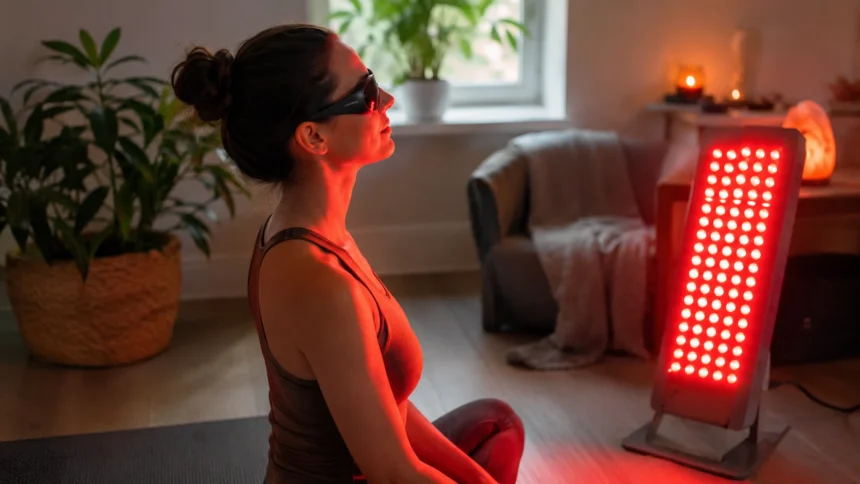
At-home red light therapy is a noninvasive treatment that exposes the skin or scalp to low levels of red or near-infrared light using devices such as masks, panels, wands, caps, combs, and helmets. The treatment is also known as photobiomodulation or low-level light therapy, although specific technologies and wavelengths can differ between products. Unlike ultraviolet light from the sun or tanning beds, red light therapy does not intentionally use UV radiation to produce its effects. The light is designed to interact with cells without causing the controlled tissue injury associated with stronger resurfacing lasers. Interest in home devices has increased because they can be used repeatedly without visiting a dermatologist or clinic for every session.
Red light generally refers to visible wavelengths toward the red end of the light spectrum, while near-infrared light has longer wavelengths that cannot be seen by the human eye. Different wavelengths penetrate tissue to different depths, which is one reason a device designed for facial skin may differ from one intended for the scalp or another area. Manufacturers also vary the power output, number of LEDs, treatment distance, and recommended exposure time. These details matter because photobiomodulation depends on delivering an appropriate amount of light rather than simply making an area look brightly red. Two home devices that appear similar can therefore deliver substantially different treatment doses.
The proposed biological effects of red light therapy involve the way light energy interacts with light-sensitive components inside cells. Researchers have investigated whether this exposure can influence cellular energy production, inflammatory signaling, circulation, collagen-related processes, and tissue repair. These mechanisms are scientifically plausible and have produced promising findings in laboratory and clinical research. However, biological activity does not mean every advertised benefit has been proven in large human trials. Red light therapy is currently better supported for selected skin and hair applications than for many of the broader wellness claims commonly promoted online.
At-home devices are generally less powerful than professional systems used in medical offices, which can influence both treatment results and the time required to see them. A dermatologist may use carefully selected equipment as one part of a broader treatment plan involving topical medicine, procedures, or other evidence-based therapies. Home masks or panels are usually designed for repeated self-use with lower energy levels and predetermined treatment schedules. This can make them convenient, but it also means results may be subtle and develop gradually. The American Academy of Dermatology notes that research involving home devices is difficult to compare because devices and treatment schedules differ considerably.
Red light therapy should therefore be viewed as a specific light-based intervention rather than a universal wellness treatment. It may be useful for certain cosmetic concerns, some forms of hair loss, and selected dermatologic applications when the correct device is used consistently. Evidence is much weaker for claims involving major weight loss, cancer treatment, depression, dramatic muscle growth, or broad “detoxification.” Cleveland Clinic specifically notes that many promoted uses remain unsupported or insufficiently studied. Understanding where evidence is stronger and where claims remain speculative can prevent an expensive home device from being treated like a cure-all.
How Does Red Light Therapy Work?
Photobiomodulation is based on the idea that cells can respond to specific wavelengths of light without the light needing to burn or deliberately damage tissue. When red or near-infrared light reaches the skin, some of that energy can be absorbed by molecules within cells. Researchers have focused heavily on mitochondria because these structures help cells produce adenosine triphosphate, or ATP, which is used for cellular energy. Light exposure may influence mitochondrial activity and signaling pathways involved in inflammation and repair. The exact response depends on wavelength, energy dose, tissue type, treatment frequency, and the biological condition being treated.
Red light therapy is different from laser resurfacing, intense pulsed light, and other procedures that intentionally deliver higher energy to produce controlled heating or injury. Most home LED devices are designed to be nonthermal or minimally heating when used correctly. The objective is to stimulate a biological response without removing the surface of the skin or creating significant downtime. This is one reason users can usually return immediately to their normal activities after treatment. However, incorrect use or defective equipment can still cause irritation or injury, so describing red light as gentle does not mean it should be used without instructions.
Dose is particularly important because photobiomodulation does not necessarily follow the rule that more exposure creates better results. Treatment involves the combination of power, distance, wavelength, surface area, and exposure time. Using a device for twice as long as recommended does not automatically double the benefit and may increase irritation or other unwanted effects. Home devices are designed around specific treatment schedules, which can differ widely between manufacturers. Following the exact instructions supplied with the device is therefore safer than creating a treatment schedule based on social media recommendations.
Wavelength also matters because visible red and near-infrared light penetrate tissue differently. Some cosmetic devices focus mainly on visible red light for surface skin concerns, while other products combine red and near-infrared wavelengths. Hair-growth caps and helmets may use configurations designed to deliver light through the scalp toward hair follicles. Full-body panels may contain several wavelength ranges and much larger treatment areas. A wavelength that has been studied for one condition should not automatically be assumed to treat a completely different problem simply because both devices produce red-looking light.
Individual biology creates another layer of variation because skin tone, hair density, medications, medical conditions, age, and treatment goals can influence response. A device that produces visible improvement for one user may have little noticeable effect for another despite identical use. Research also shows that different studies use different devices and treatment protocols, making it difficult to define one perfect home dose for every concern. This variability is why realistic expectations are important. Photobiomodulation is a genuine biological process, but the results depend heavily on what is treated, how the light is delivered, and the person receiving it.
Potential Skin Benefits of At-Home Red Light Therapy
Skin rejuvenation is one of the most popular uses of home red light therapy, particularly for people hoping to improve fine lines, uneven texture, redness, or early signs of aging. Research suggests that certain red LED devices may produce subtle improvements in some of these concerns after repeated use. The American Academy of Dermatology reports that studies have found improvements such as smoother skin, reduced redness, and changes in fine lines or discoloration in some participants. The results are generally gradual rather than dramatic. Someone expecting the equivalent of a facelift, injectable treatment, or aggressive laser procedure from a home mask is therefore likely to be disappointed.
One explanation for the anti-aging interest involves collagen, a structural protein that helps skin maintain firmness and resilience. Aging, ultraviolet exposure, smoking, and other factors gradually affect collagen and other components of the skin. Red light exposure has been studied for its potential to influence fibroblasts, the cells involved in producing collagen and supporting connective tissue. Some small clinical studies suggest improvements in texture and wrinkle appearance after repeated treatment. However, there is no universally established home protocol that guarantees a particular amount of collagen production, and device quality can strongly affect outcomes.
Red light may also reduce certain forms of visible inflammation or redness in some people, which contributes to its use alongside dermatologic procedures. Professional dermatologists sometimes incorporate light therapy into treatment plans rather than using it as the only intervention. The American Academy of Dermatology notes that dermatologists may combine red light with medicated creams, microneedling, chemical peels, or other treatments depending on the patient’s concern. This complementary role is important because it prevents red light from being presented as a replacement for well-established skin treatments. A person with persistent rosacea, dermatitis, or another inflammatory condition should obtain a diagnosis before trying to treat redness at home.
Acne is another area in which visible light has been investigated, but treatment is more complicated than simply shining red light on every type of breakout. The American Academy of Dermatology notes that red, blue, and combination visible-light approaches can help some inflammatory pimples, while visible light is not effective for every acne lesion such as blackheads, whiteheads, nodules, or cysts. Many people therefore receive better results when light therapy is combined with appropriate topical or prescription acne treatment. Severe, painful, or scarring acne should not be left untreated while relying exclusively on a home LED mask.
Skin benefits also depend on basic skin care habits that have much stronger evidence for preventing premature aging and sun-related damage. Daily sun protection, avoiding tanning, not smoking, and using appropriately selected skin-care ingredients remain essential even when red light therapy is added. A home device cannot reverse continuous ultraviolet exposure or compensate completely for habits that damage the skin. Red light is most reasonable as an optional addition to a sensible skin-care routine rather than the foundation of the routine itself. Users should judge value by realistic improvements in their specific concern rather than assuming every advertised anti-aging claim will apply to them.
Can Red Light Therapy Help With Hair Growth?
Hair loss is one of the more promising at-home applications because low-level red light and laser devices have been studied for androgenetic alopecia, commonly called male or female pattern hair loss. Some randomized trials have reported increases in hair density, thickness, or growth after repeated treatment. The American Academy of Dermatology states that some studies support red light therapy for hereditary hair loss and notes that FDA-cleared home combs, caps, and helmets are available for this purpose. However, treatment does not usually restore a completely full head of hair, and results require repeated use over time.
Pattern hair loss develops because genetically susceptible hair follicles gradually miniaturize under hormonal influences, producing thinner and shorter hairs. Red light is thought to stimulate follicular activity and potentially extend or support portions of the hair-growth cycle. The exact biological mechanisms remain under investigation, and not every follicle will respond equally. Hair that has been absent for many years because follicles have severely miniaturized may be less likely to respond than earlier thinning. Starting treatment after an appropriate diagnosis is therefore more sensible than waiting until hair loss is advanced and assuming a light device can reverse every stage.
Red light therapy does not treat every cause of hair loss. Temporary shedding can occur after illness, pregnancy, severe stress, nutritional deficiencies, certain medications, thyroid disease, or other medical conditions. Patchy hair loss can result from autoimmune disease, fungal infection, or inflammatory scalp disorders. Treating these problems with a generic red light cap could delay identification of the real cause. The American Academy of Dermatology emphasizes that hair loss has many causes and that evidence for red light therapy does not apply equally to all of them. A dermatologist can determine whether pattern hair loss is actually present.
Combination treatment may provide better results for some patients than relying on light therapy by itself. Research discussed by the American Academy of Dermatology includes studies in which low-level light therapy and minoxidil were both useful, with combined treatment producing particularly favorable results in some participants. Treatment options depend on sex, age, diagnosis, pregnancy considerations, medical history, and the severity of hair loss. Prescription medicines may also be appropriate in selected cases. A home light device is therefore one possible tool within a broader hair-loss strategy rather than the automatic first choice for every person noticing shedding.
Consistency is essential because hair growth occurs slowly. Most users should not expect a visible transformation after a few sessions or one week of treatment. Manufacturers may recommend several sessions each week for months, followed by continued maintenance use. Stopping treatment can allow the underlying pattern hair-loss process to continue, just as stopping other hair-loss treatments can reduce maintained gains. Anyone considering an expensive cap or helmet should therefore evaluate whether they are willing to follow the schedule for months rather than buying based on short-term enthusiasm.
Does Red Light Therapy Help Pain, Recovery or Wound Healing?
Red and near-infrared light have been investigated for pain, inflammation, musculoskeletal conditions, wound healing, and exercise recovery, but evidence varies substantially depending on the condition and treatment protocol. Some clinical studies have reported benefits in specific settings, which has encouraged sports and wellness companies to promote full-body red light panels. The challenge is that results obtained using professionally calibrated devices cannot automatically be reproduced by every consumer panel sold online. Different wavelengths, doses, and treatment distances can produce very different exposures. At-home users should therefore avoid interpreting broad claims such as “reduces inflammation” as proof that the device treats every painful condition.
Musculoskeletal pain has many possible causes, including arthritis, tendon injuries, nerve compression, muscle strain, fractures, and inflammatory disease. A temporary reduction in discomfort after light exposure would not identify which condition is present or correct a structural problem requiring rehabilitation or medical treatment. Red light may eventually become a useful adjunct for some forms of pain, but current evidence does not justify replacing physical therapy, appropriate exercise, medication, or diagnostic evaluation when those treatments are indicated. Cleveland Clinic notes that pain-related applications continue to be investigated rather than presenting red light as a universally established treatment.
Exercise recovery claims also require caution because athletes can experience muscle soreness for many reasons and studies use different treatment schedules. Some research suggests photobiomodulation may influence muscle fatigue, soreness, or cellular recovery when delivered at carefully controlled doses. However, consumers cannot assume that sitting near any red panel after exercise will reproduce those results. Sleep, hydration, nutrition, training load, and adequate recovery remain much more established components of athletic performance. Red light can be considered experimental or complementary in this context rather than essential equipment for becoming stronger or recovering faster.
Wound healing is another area of research, but open wounds should not automatically be treated with a consumer light panel. Wounds can become infected, contain damaged tissue, or require cleaning, dressings, stitches, antibiotics, circulation assessment, or other medical care. Some professional LED or photobiomodulation treatments are used in controlled medical contexts, yet that is different from self-treating a surgical incision, diabetic ulcer, burn, or infected wound. The FDA advises against some photobiomodulation body-contouring procedures when an active infection, wound, or lesion is present in the treatment area. Device-specific instructions should always take priority.
The safest interpretation is that pain and tissue-recovery research is promising but condition-specific. Red light may eventually have clearly defined roles in more medical specialties as larger trials establish optimal wavelengths and doses. At present, home treatment should not delay diagnosis of persistent pain, swelling, weakness, numbness, limited movement, or a wound that is not healing normally. A consumer panel is best used only for an intended indication clearly covered by the device instructions. Medical problems need diagnosis first because successful photobiomodulation depends on treating the correct condition rather than merely illuminating the painful area.
What Are the Risks and Side Effects?
Short-term red light therapy appears relatively safe when a properly designed device is used according to instructions. Unlike ultraviolet radiation, red light therapy is not designed to cause the DNA damage associated with tanning and UV exposure. The American Academy of Dermatology states that research has not found red light to cause skin cancer in the way ultraviolet light can. This is reassuring, but it should not be interpreted as proof that unlimited exposure is harmless. Long-term safety data for repeated consumer use remain less complete than short-term safety data.
Temporary skin irritation is among the more commonly reported problems. People may experience redness, mild discomfort, tenderness, inflammation, itching, or rash after treatment, particularly if the device is used too frequently or at an inappropriate distance. Cleveland Clinic lists redness, inflammation, rash, and pain among possible LED light therapy side effects. Most mild reactions resolve after exposure stops, but persistent symptoms deserve medical attention. Continuing treatment through increasing pain or irritation because “healing light must be working” is not a sensible approach.
Eye exposure is another important safety issue because intense visible or near-infrared light can potentially injure the eyes. Some devices are designed with built-in shielding, while others require protective goggles during every session. Users should follow the exact eye-safety instructions provided by the manufacturer and should not replace recommended protective equipment with ordinary sunglasses. The American Academy of Dermatology specifically advises using the recommended eye protection whenever device instructions require it. The FDA also warns that light-based procedures can injure the eyes, reinforcing the importance of proper protection.
Skin pigmentation changes are possible in some settings, particularly for people who are sensitive to visible light. The American Academy of Dermatology notes that darker skin tones can be more sensitive to visible light and may have a greater risk of developing persistent hyperpigmentation after certain exposures. This does not mean people with darker skin cannot use red light therapy, but it supports obtaining professional advice when treating pigmentation, melasma, or another condition prone to discoloration. Any device that repeatedly causes darkening, unusual redness, or uneven pigmentation should be stopped while the reaction is evaluated.
Device malfunction and misuse can create risks beyond the normal biological effects of red light. Excessive heat, damaged electrical components, incorrect charging equipment, or using a panel closer than directed could increase the chance of burns or other injury. The FDA lists burns, skin sensitivity, pigmentation changes, itching, pain, and electrical malfunction among potential complications associated with low-level light body-contouring technologies. Buying equipment from a reputable manufacturer and inspecting it regularly therefore matters. A low-risk technology can still become unsafe when a poorly designed or damaged device is used incorrectly.
Who Should Be Cautious Before Using Red Light Therapy?
People with medical conditions that cause photosensitivity should speak with a healthcare professional before using red light therapy. Lupus and certain other disorders can make the skin unusually responsive to light and potentially worsen after exposure. The American Academy of Dermatology specifically recommends consulting a dermatologist because red light can aggravate photosensitive skin conditions in some people. A home device should not be tested casually on a known light-sensitive condition simply because red wavelengths feel gentler than sunlight. Medical advice can help determine whether the treatment should be avoided entirely or modified.
Photosensitizing medications also deserve attention because some prescription and over-the-counter drugs increase sensitivity to light. The relevance depends on the medication and wavelength, so users should not rely on a generic internet list. A pharmacist, dermatologist, or prescribing clinician can review medications more accurately before regular treatment begins. The AAD recommends checking for interactions between red light and medications or treatments that increase light sensitivity. This is especially important when someone is combining red light therapy with prescription skin treatments, procedures, or medications known to alter skin sensitivity.
People with a suspicious mole, changing lesion, unexplained skin growth, or possible skin cancer should obtain a medical diagnosis before repeatedly exposing the area to a home device. Red light therapy is not a treatment for skin cancer, and temporarily improving redness around a lesion could create false reassurance. Cleveland Clinic advises seeing a dermatologist before home LED therapy because what appears to be a cosmetic skin problem can sometimes represent a more significant condition. The correct diagnosis should always come before cosmetic self-treatment when a lesion is unusual, bleeding, rapidly changing, or failing to heal.
Pregnancy is another situation in which caution is appropriate because safety evidence for many consumer devices is limited. The FDA’s information on photobiomodulation used for noninvasive body contouring advises against that specific application during pregnancy or when planning pregnancy. This guidance does not prove that every small facial LED mask is harmful during pregnancy, but it illustrates why device indication matters. Pregnant users should check the manufacturer’s warnings and discuss use with their healthcare professional rather than assuming that non-UV light automatically means pregnancy safety has been established.
People with implanted medical devices, a history of cancer in the treatment area, active infections, or significant wounds may also need individualized guidance depending on the equipment and intended application. FDA guidance for certain low-level light body-contouring devices lists active implants, photosensitivity, pregnancy, active infection, and cancer at the treatment site among circumstances in which that particular treatment is not recommended. These cautions cannot automatically be transferred to every home mask or hair cap, but they show why product-specific instructions matter. When a medical condition is involved, professional advice is safer than assuming all red light devices share the same contraindications.
How to Choose an At-Home Red Light Therapy Device
Begin by choosing a device designed specifically for the concern you want to treat. A facial mask marketed for wrinkles is not automatically suitable for hair loss, and a scalp helmet is not designed for body pain. Manufacturers should clearly state the intended use, treatment area, session time, and safety precautions. The American Academy of Dermatology recommends selecting a red light device made for the particular condition you hope to address. This simple step can prevent people from paying for a large panel when a more targeted device has actually been studied for their goal.
For medical or cosmetic claims in the United States, look for legitimate FDA clearance when appropriate to the product category and intended use. FDA clearance means a device has gone through the applicable regulatory pathway for its marketed indication; it does not prove every broad wellness claim a manufacturer may place elsewhere in advertising. The American Academy of Dermatology advises consumers to look for FDA-cleared devices and warns that phrases such as “FDA certified” can be misleading when used as if they were official device designations. Consumers should verify the exact intended use rather than treating an FDA-related logo as a universal stamp of superior effectiveness.
The device should provide clear technical information rather than relying entirely on celebrity endorsements, dramatic before-and-after photographs, or vague terms such as medical grade. Useful specifications can include wavelength range, treatment distance, session duration, recommended frequency, and the size of the treatment area. Irradiance or power density may also be listed, although comparing numbers between manufacturers can be difficult when testing methods are inconsistent. A higher power figure does not automatically make a device better because treatment dose also depends on exposure time. Practical instructions and credible testing are more useful than chasing the largest number advertised.
Comfort and usability also matter because most red light treatments require consistent sessions over weeks or months. A mask that is painful to wear or a panel that is difficult to position may eventually remain unused regardless of its specifications. Hair caps need to fit correctly enough for light to reach the scalp, while facial devices should not place uncomfortable pressure around the eyes or nose. Consider cleaning instructions, warranty coverage, electrical certification, return policies, and replacement parts before spending significant money. A device is only useful when it can be incorporated safely into a realistic routine.
Finally, be cautious of products promising dozens of unrelated medical benefits from the same light source. Claims that one panel simultaneously melts fat, balances hormones, cures pain, heals every injury, improves depression, reverses aging, boosts immunity, and treats chronic disease should raise skepticism. Red light therapy is being studied across many fields, but investigation is not equivalent to established clinical effectiveness. Cleveland Clinic specifically notes that evidence remains lacking for several widely promoted uses, including weight loss and certain mental health claims. A focused device with realistic claims is generally more credible than one marketed as a universal health solution.
How to Use Red Light Therapy Safely at Home
Start by reading the complete device instructions before the first session, even if you have previously used another red light product. Different devices can have different treatment distances, exposure times, and eye-protection requirements. A recommendation from a social media creator may be inappropriate for your specific equipment because power output can vary substantially. Follow the manufacturer’s treatment schedule instead of improvising longer sessions in an attempt to accelerate results. Both Cleveland Clinic and the American Academy of Dermatology emphasize following device directions carefully when using home LED or red light therapy.
Use the device on the treatment area exactly as instructed and avoid applying products that the manufacturer says could increase sensitivity or interfere with light delivery. For facial treatment, many devices are intended for clean, dry skin, although instructions vary. Heavy makeup or opaque products can block light, while certain topical medications may make skin more reactive. If you use prescription retinoids, photosensitizing drugs, or other active treatments, ask a dermatologist whether they should be separated from red light sessions. A treatment routine should be built around skin tolerance rather than combining every popular anti-aging technique at the same time.
Protect your eyes whenever the manufacturer requires goggles or another form of shielding. Do not stare directly into exposed high-intensity LEDs simply because red light lacks ultraviolet radiation. If protective goggles are supplied, use them every session and make sure they fit correctly. The American Academy of Dermatology advises using the exact type of eye protection recommended for the device instead of substituting ordinary sunglasses. Stop treatment and seek professional advice if you develop ongoing eye pain, unusual visual symptoms, or significant light sensitivity after exposure.
Consistency is more useful than excessive treatment. Red light therapy is generally not a one-time intervention, and improvements in skin or hair may require weeks or months of regular use. The American Academy of Dermatology emphasizes that users need repeated treatments and that not everyone will see noticeable results. Take baseline photographs under similar lighting if you want to judge gradual cosmetic changes objectively. This can prevent repeatedly increasing treatment time simply because day-to-day changes are difficult to see in the mirror.
Stop using the device if you develop persistent redness, burning, pain, swelling, rash, unusual pigmentation, or another concerning reaction. Mild temporary warmth may occur with some equipment, but treatment should not feel like a burning procedure unless the device is specifically designed differently under professional supervision. Cleveland Clinic recommends contacting a healthcare provider when LED therapy causes significant inflammation, pain, rash, or redness. Give the skin time to recover rather than immediately restarting at the same schedule. A treatment that repeatedly causes injury is not becoming more effective simply because it produces a stronger sensation.
How Often Should You Use Red Light Therapy?
There is no single universal frequency that applies to every red light device because treatment dose varies according to wavelength, power, treatment area, and intended use. One manufacturer may recommend several short sessions each week, while another may specify longer sessions on fewer days. Professional devices can also deliver more energy than typical home products and may therefore use different schedules. This is why copying another person’s treatment time can be misleading even when both devices look similar. The correct schedule is the one validated for the specific device and provided in its instructions.
Skin-care users commonly need repeated treatments for several weeks before deciding whether a device is helping. Fine lines, texture, and pigmentation do not change instantly because skin remodeling is gradual. Hair-growth treatment can take even longer because scalp follicles move through growth cycles measured in months rather than days. A person who stops after five sessions may simply not have used the device long enough to evaluate its intended effect. At the same time, continuing indefinitely without any visible benefit may not be worthwhile, particularly when the device requires considerable time or money.
Increasing frequency beyond the recommended schedule can backfire. Photobiomodulation research suggests that biological responses depend on dose, and excessive exposure is not guaranteed to produce greater stimulation. In practical terms, overuse can increase dryness, irritation, redness, discomfort, or other unwanted effects. The goal is to deliver the designed treatment dose consistently rather than maximize exposure. More time under bright LEDs is not automatically equivalent to more collagen, faster hair growth, or greater pain relief.
Maintenance may be necessary after improvement because many conditions treated with red light continue to progress naturally. Skin continues to age, and hereditary hair loss can continue even after a period of improvement. The American Academy of Dermatology notes that follow-up treatment is typically needed for both skin aging and hereditary hair loss. This should be considered before buying a device because treatment may become a long-term routine. A product that requires permanent maintenance deserves the same practical evaluation as any other ongoing skin or hair treatment.
If the manufacturer’s schedule seems unusually aggressive or contradicts warnings from established medical sources, consider asking a dermatologist before proceeding. Users should also be cautious when a seller encourages progressively longer sessions without providing credible evidence or technical reasoning. Home light therapy should be predictable enough that instructions specify treatment duration and frequency clearly. When no usable guidance is provided, the device may not be appropriate for unsupervised treatment. Good equipment should make safe use straightforward rather than requiring customers to invent their own photobiomodulation protocol.
What Results Should You Realistically Expect?
Red light therapy tends to produce gradual, modest changes rather than dramatic overnight transformations. For skin concerns, some users may notice softer texture, reduced redness, or subtle improvement in fine lines after several weeks of regular sessions. Others may see little visible difference even when they follow directions carefully. The American Academy of Dermatology notes that study results are encouraging for several signs of skin aging but also emphasizes that researchers still do not know the optimal home dose for many concerns. Marketing photographs should therefore not be treated as a guarantee of how your skin will respond.
Hair-growth results are similarly variable. People with androgenetic alopecia may experience reduced shedding or some increase in hair density after months of regular treatment, but a full restoration of advanced hair loss is unrealistic. Results may be more noticeable when treatment begins relatively early and is combined with other evidence-based therapies when appropriate. The cause of hair loss matters greatly because a light helmet cannot correct iron deficiency, thyroid disease, autoimmune hair loss, or other unrelated problems. Diagnostic accuracy often determines whether the device has any reasonable chance of working.
For acne, visible light may help selected inflammatory pimples but usually does not replace a comprehensive acne plan. Comedonal acne, cysts, nodules, and scarring require different approaches, and severe cases should be treated early to reduce the risk of permanent scars. The American Academy of Dermatology stresses that light treatments rarely clear every type of acne by themselves. A reasonable expectation would therefore be partial improvement as an adjunct, not the elimination of every lesion. Comparing skin month by month rather than day by day provides a more realistic assessment.
Claims involving body fat, dramatic muscle enhancement, systemic hormone changes, or general disease prevention should be treated much more cautiously. The FDA notes that certain low-level light technologies used for body contouring may temporarily reduce circumference in treated areas, which is not the same as producing clinically meaningful long-term weight loss. Cleveland Clinic also notes a lack of scientific evidence supporting broad weight-loss claims for red light therapy. Someone trying to manage obesity should therefore rely on established nutrition, physical activity, behavioral, medication, or surgical approaches when appropriate rather than expecting a light panel to substantially reduce body fat.
Results should ultimately be judged against the cost, effort, and alternatives available for the same goal. A home mask may be worthwhile for someone who enjoys the routine and experiences gradual cosmetic improvement without irritation. Another person may obtain better results from sunscreen, retinoids, minoxidil, acne medication, physical therapy, or another well-established treatment depending on the problem. Red light therapy does not have to be ineffective to be unnecessary. Its value depends on whether it provides a meaningful additional benefit for your specific concern after safer, proven basics have already been considered.
Frequently Asked Questions About At-Home Red Light Therapy
Does at-home red light therapy really work?
It can work for selected concerns, particularly some signs of skin aging and hereditary hair loss, but results vary between devices and individuals. Evidence is less convincing for many broader claims such as significant weight loss or treatment of systemic diseases.
Is red light therapy safe to use every day?
Some devices are designed for frequent use, while others are not, so daily treatment should only be used when the manufacturer’s instructions recommend it. Using red light more often or longer than directed may increase irritation without improving results.
Can red light therapy damage your eyes?
Yes, intense light exposure can potentially injure the eyes, particularly when a device requires protection and it is not used. Follow the manufacturer’s eye-safety instructions and use the recommended protective goggles rather than ordinary sunglasses.
Does red light therapy cause skin cancer?
Current evidence has not linked red light therapy with skin cancer in the way ultraviolet radiation is linked with cancer risk. However, long-term data for repeated consumer use remain limited, and red light should not be used to self-treat suspicious or changing skin lesions.
Who should avoid red light therapy?
People with photosensitivity disorders, those taking photosensitizing medications, and anyone treating an unexplained skin lesion should seek medical advice before use. Pregnancy, implants, active infection, cancer history at the treatment site, and other conditions may also require device-specific precautions depending on the type and intended use of the equipment.