
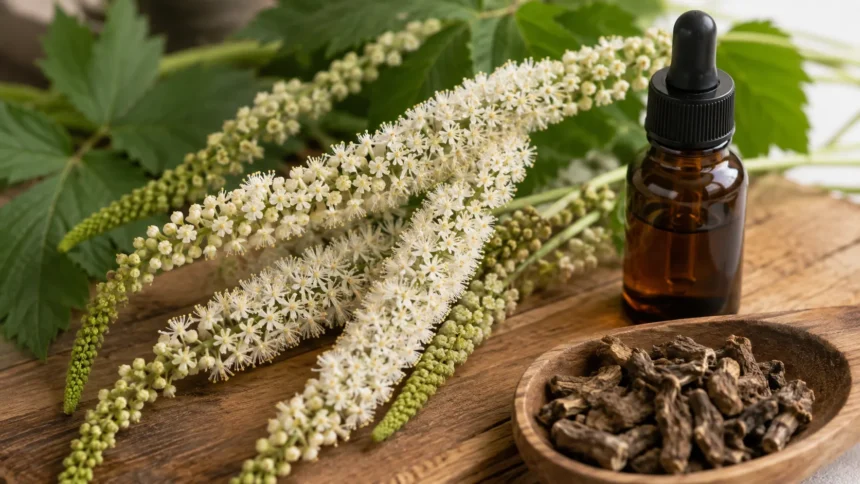
Black Cohosh: Benefits, Uses & Side Effects
Black cohosh is an herbal supplement best known for its use in managing menopause-related symptoms such as hot flashes, night sweats, sleep disturbance, and mood changes. The herb comes from the roots and underground stems of Actaea racemosa, a plant native to North America. It has been used traditionally for various women’s health concerns and is now widely available as capsules, tablets, liquid extracts, and combination menopause supplements. Despite its popularity, research on many black cohosh benefits remains mixed.
The strongest interest in black cohosh involves menopausal symptom relief, particularly for people seeking nonhormonal options. Some clinical studies report meaningful improvements, while others find little difference from placebo, making its effectiveness difficult to predict. Black cohosh can also cause side effects and has been linked to rare reports of liver injury, although a direct cause has not always been established. Understanding its uses, limitations, safety concerns, and potential interactions can help people decide whether black cohosh is appropriate for them.
What Is Black Cohosh?
Black cohosh is a flowering perennial plant belonging to the buttercup family. Its botanical name is Actaea racemosa, although older supplement labels may use the name Cimicifuga racemosa. The plant grows naturally in wooded parts of eastern North America. Supplements are normally produced from the root and rhizome rather than the leaves or flowers. These underground portions contain several naturally occurring compounds believed to contribute to the herb’s biological effects.
Black cohosh has a long history of use in traditional Native American practices. Various preparations were historically used for menstrual discomfort, childbirth-related concerns, musculoskeletal pain, and other conditions. Modern commercial use has shifted strongly toward menopause. Today, most consumers encounter black cohosh in products marketed for hot flashes, night sweats, irritability, sleep problems, and other symptoms associated with declining estrogen levels.
The plant contains triterpene glycosides, phenolic compounds, flavonoids, and other plant chemicals. Actein and related triterpene compounds are frequently discussed in quality testing and black cohosh research. Scientists continue to investigate how these substances affect the nervous system and other tissues. The herb does not simply function as a concentrated form of estrogen, despite the way it is sometimes described in advertisements.
Black cohosh should not be confused with blue cohosh. Blue cohosh is a completely different plant with different compounds and a substantially different safety profile. Products that combine multiple “women’s herbs” can make this distinction easy to miss. Anyone buying black cohosh should check the botanical name and complete ingredient list rather than relying only on the front label.
Black cohosh is available as standardized extracts, dried root capsules, tinctures, powders, and combination formulas. Different manufacturing processes can produce products containing different concentrations of plant compounds. This variability may partly explain why clinical study results are inconsistent. It also means the number of milligrams on two product labels does not automatically make those products equivalent.
Black Cohosh Benefits for Menopause
Menopause is the primary reason people use black cohosh. As estrogen levels decline, many women develop hot flashes, night sweats, sleep disruption, mood changes, vaginal symptoms, and other physical or emotional changes. Black cohosh is often considered by people who prefer a nonhormonal approach or who want to explore complementary options. Its popularity has made menopause symptom relief the most extensively researched use of the herb.
Some clinical trials have reported reductions in overall menopausal symptom scores after black cohosh supplementation. Participants in certain studies experienced fewer hot flashes, improved sleep, or reductions in other symptoms compared with their starting levels. However, placebo responses are often substantial in menopause trials, making controlled comparisons essential. Not every study has found black cohosh significantly better than placebo.
The mixed evidence means black cohosh cannot be guaranteed to work for everyone. Product differences, dosage, symptom severity, study duration, and individual biology may all affect results. Some people report noticeable relief within several weeks, while others experience no meaningful change. A reasonable trial should have a clear goal, such as reducing hot flashes or improving nighttime symptoms, rather than taking the supplement indefinitely without evaluating whether it helps.
Black cohosh should also not be treated as medically equivalent to menopausal hormone therapy. Hormone therapy has established effects on hot flashes and several other menopausal symptoms but also has specific risks and eligibility considerations. Black cohosh works differently and has a much less predictable evidence base. The best option depends on symptom severity, medical history, personal preferences, and individual risk factors.
People with disruptive menopause symptoms have several nonhormonal treatment options beyond black cohosh. Certain prescription medications, behavioral strategies, sleep interventions, and lifestyle adjustments can provide relief depending on the symptom. Discussing these choices with a healthcare professional can help avoid relying on a supplement that may not provide enough improvement when symptoms significantly affect quality of life.
Black Cohosh for Hot Flashes and Night Sweats
Hot flashes are sudden sensations of heat that commonly affect the face, chest, and upper body. They may be accompanied by sweating, flushing, anxiety, or a rapid heartbeat. When similar episodes occur during sleep, they are often called night sweats. These vasomotor symptoms are among the most common reasons people search for black cohosh supplements.
Research investigating black cohosh for hot flashes has produced conflicting results. Some trials suggest that standardized extracts may reduce frequency or intensity, while others find little meaningful difference from placebo. Reviews of the evidence generally conclude that a benefit is possible but not consistently demonstrated. This uncertainty makes strong claims such as “clinically proven to stop hot flashes” more confident than the evidence supports.
Someone who wants to try black cohosh can track hot flashes before starting the supplement. Recording how many episodes occur each day and how severe they feel creates a useful baseline. After several weeks, the same diary can show whether the number or intensity has actually changed. Tracking prevents normal symptom fluctuations from being automatically credited to the supplement.
Lifestyle factors may also influence hot flashes. Alcohol, spicy foods, hot rooms, stress, smoking, and excessive caffeine can trigger symptoms in some people. Wearing breathable layers, using fans, maintaining comfortable bedroom temperatures, and practicing relaxation techniques may help alongside or instead of supplementation. Individual triggers vary, so broad restrictions are not always necessary.
Severe hot flashes deserve medical attention when they interfere with work, sleep, relationships, or mental wellbeing. Prescription hormonal and nonhormonal treatments can provide stronger and more predictable relief than supplements for many people. Black cohosh may be one option in a broader discussion, but persistent symptoms do not need to be endured simply because menopause is a natural transition.
Black Cohosh for Sleep and Mood Changes
Sleep difficulties are common during perimenopause and menopause. Night sweats may repeatedly wake someone, while hormonal changes, stress, anxiety, restless legs, sleep apnea, and other factors can also contribute. Some women report sleeping better after starting black cohosh, particularly when nighttime hot flashes become less disruptive. However, black cohosh is not primarily a sedative or conventional sleep medicine.
Research examining sleep outcomes has been relatively limited. Some studies using black cohosh alone or in combination products have reported improvements in sleep-related measures. The challenge is determining whether sleep improved directly or because other menopause symptoms became less troublesome. Combination products also make it difficult to identify which ingredient produced the effect.
Mood changes during menopause can include irritability, anxiety, emotional sensitivity, and low mood. Black cohosh is sometimes marketed as a natural mood stabilizer, but evidence supporting a direct antidepressant or anti-anxiety action in humans is limited. Mood symptoms can have many causes, including disrupted sleep, life stress, hormonal changes, and underlying mental health conditions.
Persistent depression or severe anxiety should not be self-treated only with black cohosh. Symptoms such as loss of interest, hopelessness, intense panic, major changes in appetite, or thoughts of self-harm require appropriate professional assessment. Menopause can overlap with mental health conditions, and effective treatment may include therapy, medication, sleep support, or other interventions.
For milder sleep and mood concerns, a broader approach often works best. Regular sleep timing, physical activity, reduced evening alcohol, stress management, and addressing night sweats can all contribute to better rest. Black cohosh may be considered as part of this strategy if other safety factors allow, but expectations should remain realistic.
Other Possible Uses of Black Cohosh
Black cohosh has historically been used for menstrual discomfort, but modern evidence for this purpose is limited. Some supplement manufacturers continue to include it in formulas marketed for premenstrual symptoms or menstrual cramps. However, conditions such as severe cramping, heavy bleeding, or irregular periods can have several causes. Black cohosh should not delay evaluation of symptoms that are new, severe, or progressively worsening.
The herb has also been marketed for bone health because menopause increases the risk of bone loss. Laboratory research has raised questions about whether black cohosh compounds could influence bone cells, but human evidence showing meaningful fracture prevention is insufficient. People concerned about osteoporosis need established strategies such as appropriate calcium and vitamin D intake, weight-bearing exercise, bone-density screening, and medication when medically indicated.
Some products claim that black cohosh can improve fertility, regulate hormones, or increase the chance of pregnancy. Evidence supporting these claims is weak, and supplement use around conception deserves additional caution because pregnancy safety has not been established. Fertility problems can result from ovulation disorders, age-related changes, sperm factors, structural conditions, or other causes requiring individualized care.
Black cohosh is occasionally promoted for arthritis, headaches, blood pressure, and general inflammation because of its traditional uses. Reliable clinical evidence supporting these purposes remains inadequate. A plant may demonstrate biological activity in laboratory experiments without providing a useful human treatment. Consumers should be especially skeptical when one black cohosh product claims to treat many unrelated diseases.
Overall, menopause remains the main reason to consider black cohosh. Using it for conditions outside this area often relies more on traditional use or preliminary research than on strong clinical evidence. Supplements are most useful when taken for a clearly defined goal that can be evaluated rather than as broad “hormone balance” products with vague promises.
How Does Black Cohosh Work?
Scientists do not fully understand how black cohosh produces its possible effects. Early theories suggested it might act directly like estrogen because it was used for menopausal symptoms. Later research has made the mechanism appear more complicated. Black cohosh does not consistently produce the same biological effects as estrogen, and many researchers now focus on actions involving neurotransmitters and other signaling systems.
Certain components may interact with serotonin pathways involved in body-temperature regulation and mood. This is one proposed explanation for why black cohosh could influence hot flashes without acting as traditional estrogen therapy. Other compounds may affect inflammatory pathways or receptors in the nervous system. These mechanisms remain areas of ongoing research rather than fully established explanations.
The lack of a clear mechanism is not automatically a reason to conclude that the herb has no effect. Many natural products contain numerous compounds that work through multiple pathways. However, uncertainty makes safety predictions and product comparisons more difficult. One extract may contain a chemical profile that differs substantially from another formulation sold under the same general name.
Researchers also investigate whether some black cohosh products may be contaminated or incorrectly identified. Closely related plant species can sometimes be substituted during manufacturing if quality controls are poor. Such substitutions can change both effectiveness and safety. Botanical authentication is therefore particularly important for herbal supplements with complicated chemistry.
The practical takeaway is that black cohosh should not be described simply as “natural estrogen.” That phrase can mislead people into assuming its benefits and risks are identical to hormone therapy. Its biological actions appear different and remain incompletely understood. Decisions should be based on clinical evidence and personal safety factors rather than simplified marketing explanations.
How to Take Black Cohosh
Black cohosh is usually taken as a capsule, tablet, or liquid extract. Many research products use standardized extracts rather than plain powdered root. Standardization attempts to provide more consistent concentrations of selected plant compounds from one dose to another. Consumers should follow the product instructions rather than automatically using doses found in unrelated clinical studies.
There is no single universally accepted dose for every black cohosh product. Common supplement formulations may provide roughly 20 to 80 milligrams of an extract per day, but extraction methods and concentration ratios differ. A small dose of a concentrated standardized extract can potentially contain different amounts of active compounds than a much larger amount of raw root powder.
People should avoid increasing the dose simply because symptoms have not improved after several days. Herbal supplements often require several weeks before any potential benefit becomes apparent, and higher exposure may increase side effects without improving effectiveness. If there is no meaningful benefit after a reasonable trial period, continuing indefinitely may not make sense.
Black cohosh can generally be taken with or without food depending on the individual product. Taking it with food may reduce stomach discomfort for some people. Combination menopause supplements require more careful label reading because they may contain soy isoflavones, red clover, dong quai, vitamins, or other ingredients with separate safety considerations.
Anyone using black cohosh regularly should tell their healthcare providers. This becomes particularly important before surgery, when starting new medication, or when symptoms such as abdominal pain, dark urine, unusual fatigue, or jaundice develop. Supplements are part of a medication history even when they are purchased without a prescription.
How Long Can You Take Black Cohosh?
Most clinical studies of black cohosh have lasted several weeks or months rather than many years. Long-term safety information is therefore less complete than short-term information. Some product labels recommend limiting continuous use unless a healthcare professional advises otherwise. Taking a supplement indefinitely simply because menopause symptoms continue is not automatically appropriate.
A common practical approach is to reassess after a few months. If symptoms have not improved, there may be little reason to continue. If the supplement helps, the user can discuss the ongoing need and safety with a healthcare professional. Symptoms of menopause often change naturally over time, so the amount of treatment required may also change.
Long-term use becomes especially important when liver health is a concern. Rare reports of liver injury have occurred in people taking black cohosh products, although not every report proves that black cohosh itself was responsible. Because severe liver injury can be serious, unnecessary long-term exposure should be avoided when the supplement provides little benefit.
Another reason for periodic review is that new medications or health conditions may change the risk profile. Someone who safely started black cohosh at age 48 may later begin medications, develop liver disease, or receive a new diagnosis that warrants reconsideration. Supplement safety should be reassessed in the same way other long-term treatments are reviewed.
People should also remember that symptoms attributed to menopause can sometimes have another cause. Persistent sweating, sleep problems, mood changes, heart palpitations, or abnormal bleeding may require evaluation rather than increasingly long supplement use. Regular medical care helps ensure that an important condition is not being masked.
Black Cohosh Side Effects
Black cohosh is generally well tolerated by many people at commonly used doses, but side effects can occur. Mild gastrointestinal symptoms are among the most frequently reported problems. These may include stomach discomfort, nausea, cramping, or indigestion. Taking the supplement with food can sometimes improve tolerance, although persistent symptoms are a reason to stop using it.
Headache, dizziness, and a feeling of heaviness have also been reported. These symptoms can have many causes, making it difficult to know whether black cohosh is always responsible. If symptoms repeatedly appear after taking the supplement and improve when it is stopped, the connection becomes more plausible. Severe dizziness or fainting deserves medical assessment.
Skin reactions such as rash or itching can occasionally occur. Any widespread hives, facial swelling, difficulty breathing, or throat tightness could indicate a serious allergic reaction and requires urgent medical attention. Botanical products can cause allergies even when a person has previously tolerated other herbal supplements.
Some users report breast tenderness, vaginal spotting, or menstrual-like bleeding. Any unexpected postmenopausal bleeding should be medically evaluated rather than assumed to be a harmless supplement side effect. Bleeding after menopause can have several causes, including conditions requiring treatment. Stopping the supplement does not replace appropriate investigation.
The most serious safety discussion involves possible liver injury. Although such reports appear rare and a direct causal relationship is not always certain, consumers should know the warning signs. Yellowing of the eyes or skin, dark urine, unusual itching, severe fatigue, persistent nausea, or upper abdominal pain should prompt immediate discontinuation and medical evaluation.
Black Cohosh and Liver Safety
Concerns about black cohosh and liver injury developed after reports of hepatitis, elevated liver enzymes, and in rare cases severe liver failure in people using products containing the herb. Determining causation has been difficult because some reports involved multiple supplements, uncertain product identity, preexisting disease, or other medications. Nevertheless, the potential seriousness of liver injury makes the warning clinically important.
Most people who use black cohosh do not develop liver problems. The overall risk appears low, but there is no reliable way to predict exactly who might react. People with existing liver disease may have less ability to tolerate additional liver stress and should generally seek professional advice before taking black cohosh.
Combining several supplements or medications that can affect the liver may increase complexity. Alcohol use, acetaminophen overuse, certain prescription medicines, and other herbs may also influence liver health. A pharmacist or physician can review the complete medication and supplement list rather than evaluating black cohosh in isolation.
Warning signs of liver dysfunction should never be ignored. Symptoms can include yellow skin or eyes, dark urine, pale stools, persistent nausea, loss of appetite, unusual tiredness, itching, or discomfort under the right ribs. Liver injury can occasionally develop before obvious symptoms appear, so people with known risk factors may need additional caution.
Someone who has previously experienced suspected black cohosh-related liver problems should generally avoid restarting the product. Trying a different brand does not guarantee safety because the underlying reaction may involve the plant itself. A safer menopause treatment can usually be chosen after discussing the original reaction with a healthcare professional.
Black Cohosh Drug Interactions
Information about black cohosh drug interactions is incomplete because supplements are not studied as extensively as prescription medicines. Laboratory findings suggest the herb may influence certain metabolic pathways, but the clinical importance of many proposed interactions remains uncertain. This lack of evidence should not be interpreted as proof that interactions cannot occur.
People taking medicines with potential liver toxicity deserve particular caution. Combining several substances that can affect the liver can make adverse effects harder to predict or identify. Anyone taking long-term prescription medication should ideally have their medication list reviewed before starting concentrated herbal supplements.
Hormone-related medications also require discussion. Black cohosh is sometimes taken specifically because a person wants to avoid estrogen, but its exact effects on hormone-sensitive tissues remain incompletely understood. People using hormone therapy, tamoxifen, aromatase inhibitors, or other treatments for hormone-sensitive conditions should seek specialist advice before combining them with black cohosh.
Combination supplements can create more interactions than black cohosh alone. A menopause formula may also contain red clover, soy isoflavones, St. John’s wort, dong quai, or other botanicals. St. John’s wort in particular interacts with many prescription drugs. Reading the entire ingredient list is therefore essential before judging whether a product is safe with medication.
Before surgery, tell the surgical team about every supplement you take. Healthcare professionals may advise temporarily stopping certain herbal products because of uncertain effects on bleeding, blood pressure, anesthesia, or medication metabolism. Do not assume a supplement is irrelevant simply because it was purchased without a prescription.
Who Should Avoid Black Cohosh?
Pregnant individuals should generally avoid black cohosh unless specifically directed by a qualified healthcare professional. Traditional use related to menstruation and childbirth does not establish pregnancy safety. Herbs capable of influencing reproductive or muscular pathways deserve particular caution during pregnancy. Self-treatment is inappropriate when fetal safety data are limited.
Breastfeeding individuals should also seek professional advice before use. Reliable information about whether black cohosh compounds enter breast milk or affect nursing infants is insufficient. Menopause treatment is rarely the reason for supplementation during breastfeeding, so unnecessary exposure can usually be avoided until better safety information is available.
People with active liver disease or a history of unexplained liver injury should generally avoid black cohosh unless a specialist advises otherwise. This includes individuals with hepatitis, cirrhosis, significant liver-enzyme abnormalities, or previous suspected supplement-induced liver injury. Potential benefit for hot flashes rarely justifies taking avoidable liver risks without supervision.
People with a history of breast cancer, uterine cancer, ovarian cancer, endometriosis, or other hormone-sensitive conditions should discuss black cohosh with their medical team. Research has not clearly shown that black cohosh acts like estrogen in these tissues, but long-term safety in hormone-sensitive disease remains insufficiently established. Cancer treatment decisions require more certainty than ordinary supplement marketing provides.
Children and adolescents should not routinely use black cohosh unless a healthcare professional recommends it for a specific reason. Most evidence and commercial use relate to adult menopause symptoms. Products developed for adult hormonal concerns are not automatically suitable for younger age groups, and unexplained menstrual or hormonal symptoms in teenagers deserve appropriate evaluation.
How to Choose a Black Cohosh Supplement
Start by looking for the botanical name Actaea racemosa or Cimicifuga racemosa on the label. This reduces the risk of confusing black cohosh with blue cohosh or another plant. The manufacturer should also clearly state which plant part is used, preferably the root or rhizome traditionally included in black cohosh supplements.
Standardized extracts may offer greater consistency than poorly defined powders, although standardization itself does not guarantee clinical effectiveness. Look for clear serving information rather than vague proprietary blends. A reputable manufacturer should explain how much extract is provided and how the product should be taken.
Third-party quality testing can provide additional reassurance about ingredient identity and selected contaminants. Herbal products can be affected by adulteration, heavy metals, microorganisms, or substitution with related species. Independent testing does not prove that a supplement works, but it can increase confidence that the bottle contains what the label claims.
Avoid products making unrealistic promises such as “balances all hormones,” “replaces estrogen safely,” “cures menopause,” or “prevents osteoporosis.” Menopause is a complex biological transition, and no supplement completely eliminates every symptom or risk. More responsible companies use cautious language rather than promising dramatic medical outcomes.
Combination formulas require extra scrutiny. Several herbs may make a label appear more powerful, but every additional ingredient introduces another possible side effect or interaction. Someone specifically interested in testing whether black cohosh helps may prefer a simpler product so results and reactions are easier to interpret.
When to See a Doctor
Seek medical advice when menopause symptoms significantly interfere with sleep, work, relationships, or daily functioning. Hot flashes can sometimes be treated much more effectively than people realize. A healthcare professional can discuss hormonal and nonhormonal options and help determine whether black cohosh is reasonable within the broader treatment plan.
Unexpected vaginal bleeding always deserves attention, particularly after menopause. Even if spotting begins while taking black cohosh, do not assume the supplement is the only explanation. Postmenopausal bleeding may require examination or imaging to identify its cause. Early evaluation is important when significant conditions need to be ruled out.
Stop black cohosh and seek prompt medical care if possible liver symptoms develop. Yellowing of the skin or eyes, dark urine, severe nausea, unusual fatigue, or persistent upper abdominal pain can indicate liver dysfunction. Continuing the supplement while waiting for symptoms to disappear could worsen a serious problem.
New breast lumps, unexplained pelvic symptoms, major mood changes, or persistent headaches should also be evaluated rather than managed only with herbal products. Menopause overlaps with an age when several other health conditions become more common. Regular health screening remains important even when symptoms seem hormonal.
Anyone with a complex medication list, previous cancer, liver disease, or other significant health conditions should discuss black cohosh before starting it. A short conversation with a pharmacist or clinician can identify concerns that may not be obvious from the supplement label. Complementary medicine is safest when it is integrated with the rest of a person’s healthcare.
Conclusion
Black cohosh is a herbal supplement made from the root and rhizome of Actaea racemosa. It is most commonly used for menopause-related symptoms, especially hot flashes, night sweats, sleep disturbances, and general menopausal discomfort. Its long traditional history and modern popularity have led to considerable research, but clinical findings remain mixed.
Some people report meaningful improvement in hot flashes and related symptoms, while others experience little or no benefit. Research has not established black cohosh as consistently effective for every person or every menopause symptom. It should therefore be viewed as a possible complementary option rather than a guaranteed replacement for hormone therapy or established nonhormonal treatment.
Black cohosh is generally well tolerated in many short-term studies, but side effects can include stomach discomfort, headache, dizziness, skin reactions, and unusual bleeding. Rare reports of serious liver injury have created additional concern. Anyone who develops jaundice, dark urine, severe fatigue, persistent nausea, or significant abdominal pain should stop using the product and seek medical evaluation.
People who are pregnant, breastfeeding, living with significant liver disease, or managing a hormone-sensitive condition should use particular caution. Drug-interaction information is incomplete, and combination supplements may introduce additional risks. Choosing a reputable product with clear botanical identification and independent quality testing can reduce some manufacturing concerns but cannot guarantee medical suitability.
Ultimately, black cohosh may be useful for selected people seeking relief from menopausal symptoms, but expectations should remain realistic. Track whether symptoms actually improve, avoid unnecessarily high doses, and review continued use periodically. Persistent or severe menopause symptoms deserve proper medical care because several effective treatment options are available beyond herbal supplementation.
FAQs About Black Cohosh
What is black cohosh mainly used for?
Black cohosh is primarily used to help manage menopause-related symptoms such as hot flashes, night sweats, and sometimes sleep or mood changes. Evidence is mixed, so it does not work reliably for everyone.
How long does black cohosh take to work?
If black cohosh is going to help, some people may notice improvement after several weeks of regular use. If symptoms remain unchanged after a reasonable trial, continuing indefinitely is unlikely to provide much value.
Can black cohosh cause liver damage?
Rare cases of serious liver injury have been reported in people using black cohosh products, although direct causation has not always been proven. Stop use and seek medical attention if jaundice, dark urine, severe fatigue, persistent nausea, or upper abdominal pain develops.
Is black cohosh safe for breast cancer survivors?
Safety in hormone-sensitive conditions remains uncertain, so breast cancer survivors should discuss black cohosh with their oncology team before using it. This is especially important when taking tamoxifen, aromatase inhibitors, or other hormone-related treatments.
Can I take black cohosh every day?
Some people take black cohosh daily for several weeks or months, but long-term safety is less well established. Regular use should be periodically reviewed, especially if you take prescription medications or have liver or hormone-sensitive health concerns.