
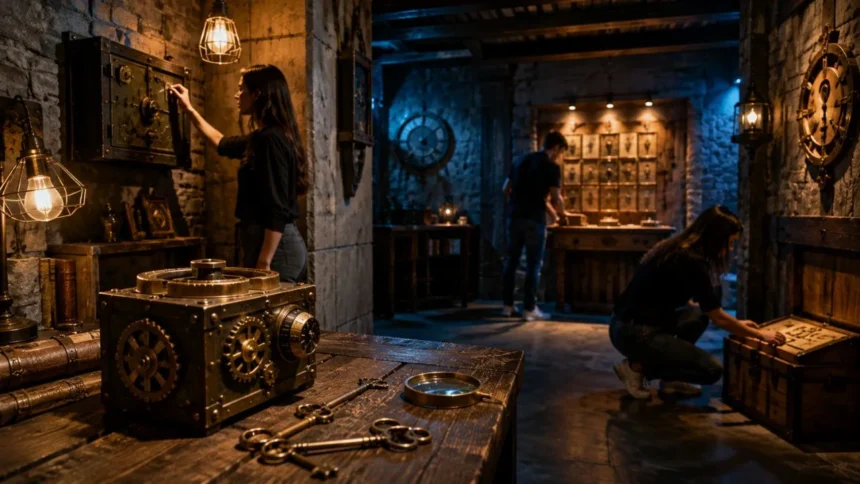
Starting an escape room business can be an exciting opportunity for entrepreneurs who want to combine entertainment, creativity, and customer experiences. Escape rooms attract friends, families, tourists, students, and corporate teams looking for interactive activities. However, building a profitable escape room requires much more than creating puzzles. You need a strong concept, realistic budget, safe location, reliable operations, and consistent marketing.
The escape room industry works particularly well because customers pay for experiences rather than physical products. Once a room is built, it can serve hundreds or even thousands of groups before requiring a major redesign. That creates attractive revenue potential when bookings remain consistent. At the same time, owners must continually maintain props, refresh experiences, train staff, and attract new customers to keep the business competitive.
If you are wondering how to start an escape room business, the process becomes easier when you approach it systematically. Instead of immediately renting a building or buying expensive props, begin by understanding your market and building a practical business model. This guide walks through every major stage, from market research and escape room design to pricing, marketing, staffing, and long-term growth.
Understand the Escape Room Business Model
An escape room is an interactive game where participants solve puzzles, discover clues, and complete a mission within a limited period. Most games last around an hour, although the complete customer experience also includes check-in, instructions, and post-game activities. Customers usually pay per person or reserve an entire private room. Your income therefore depends heavily on capacity, ticket prices, session frequency, and booking occupancy.
Unlike traditional retail businesses, escape room operators can repeatedly sell access to the same experience. Once construction, decoration, puzzles, and technology have been completed, each additional booking generally carries lower direct costs. Rent, staff wages, utilities, marketing, software, repairs, and insurance remain ongoing expenses. Strong profitability comes from keeping rooms booked often enough to cover those operating costs while maintaining a healthy margin.
The biggest challenge is that most customers will not replay exactly the same room after learning its solutions. Successful operators therefore create several themes or periodically refresh existing games. Corporate events, birthday packages, gift cards, private sessions, and seasonal experiences can also generate additional revenue. Thinking beyond individual ticket sales makes the escape room business model more sustainable over the long term.
Research Your Local Escape Room Market
Before investing money, research how much demand exists within your target area. Search for escape rooms, arcades, bowling centers, virtual reality venues, cinemas, trampoline parks, and other entertainment businesses nearby. Compare their pricing, reviews, themes, capacities, opening hours, and booking schedules. This competitive analysis helps you understand whether your market needs another escape room and where existing operators may be leaving opportunities.
Online reviews provide especially valuable insights because customers openly explain what they loved or disliked. Look for repeated complaints about confusing puzzles, poor customer service, weak themes, broken equipment, limited parking, or excessive prices. Positive comments reveal what people value most, including immersive environments, helpful staff, realistic sets, and creative challenges. Use those patterns to design a stronger customer experience rather than copying competitors.
Your research should also examine population, tourism, universities, office districts, nearby businesses, and local entertainment habits. A city with corporate offices may generate strong team-building demand, while a tourist destination may depend heavily on weekend visitors. Understanding where customers come from affects your location, marketing strategy, pricing, and room themes. Good market research reduces expensive assumptions before you sign contracts or start construction.
Identify Your Ideal Escape Room Customers
Your escape room can attract several customer groups, but your marketing becomes stronger when you know which audiences matter most. Common customers include groups of friends, couples, families, tourists, university students, birthday parties, and experienced escape room enthusiasts. Each group approaches the experience differently. Understanding their expectations helps you create rooms, packages, and advertising messages that feel relevant rather than trying to appeal to everyone equally.
Corporate customers are another valuable audience because companies frequently need team-building activities and employee experiences. These groups may book several rooms together and often prefer weekday sessions that leisure customers use less frequently. They also value professional communication, easy invoicing, scheduling flexibility, and activities that encourage teamwork. Building corporate packages can therefore improve both booking volume and the utilization of quieter operating periods.
Create simple customer personas before designing your experience. Consider your customers’ ages, budgets, preferred difficulty levels, group sizes, reasons for visiting, and how they discover entertainment options. A family-friendly venue will require different themes and communication than an attraction targeting experienced puzzle enthusiasts. Clear audience positioning influences everything from puzzle complexity and room design to advertising platforms and business partnerships.
Write a Practical Escape Room Business Plan
An escape room business plan transforms your creative idea into an organized strategy. Start by describing your concept, target audience, location preferences, number of rooms, ticket pricing, competitive advantages, and expected opening date. Include information about staffing, marketing, operations, customer acquisition, and future expansion. The goal is to determine how the business will actually make money rather than simply explaining why escape rooms are entertaining.
Your plan should contain realistic financial projections covering startup investment, monthly expenses, revenue expectations, and cash flow. Estimate how many sessions you can operate each day and how many customers are likely to attend each session. Avoid assuming every room will always be full. Conservative projections help you understand whether the business can survive during slower months, weekdays, or periods when marketing results take longer to develop.
Include clear goals that can be measured after launch. These might include monthly booking targets, average occupancy, customer review ratings, corporate enquiries, repeat customers, and average revenue per booking. Your business plan should not remain a document you forget after opening. Review it regularly and compare predictions against actual performance so you can make smarter decisions about pricing, staffing, marketing, and expansion.
Calculate Your Escape Room Startup Costs
Escape room startup costs vary significantly because every location and concept is different. Major expenses can include property deposits, rent, construction, interior decoration, electrical work, furniture, props, puzzle mechanisms, cameras, lighting, computers, software, signage, insurance, permits, and professional services. Your theme also affects costs. A highly immersive room using advanced technology will normally require more investment than a simpler puzzle-focused experience.
Marketing expenses should also be included before opening. You may need professional branding, website development, photography, video content, local advertising, social media campaigns, signage, and launch promotions. Staff recruitment and training create additional costs before your first paying customers arrive. Owners sometimes focus heavily on construction while forgetting how much money is required to actually introduce the new venue to potential customers.
Keep additional working capital available rather than spending your entire budget before opening. Bookings may grow gradually, while rent, wages, utilities, advertising, and software bills begin immediately. Unexpected construction changes or equipment problems can also increase expenses. Creating a contingency budget provides financial breathing room and prevents small problems from becoming serious cash-flow difficulties during the critical first months of your escape room startup.
Choose the Right Escape Room Location
The best location balances accessibility, customer convenience, operating requirements, and affordable rent. Your venue should be reasonably easy to find and reach by car or public transportation. Parking availability can also matter, particularly when customers arrive in groups. Consider nearby restaurants, entertainment districts, offices, hotels, shopping centers, and universities because complementary destinations can help generate additional traffic and make your venue more attractive for complete outings.
Do not choose a property based only on low rent. Inspect its usable floor space, entrances, emergency exits, bathrooms, ceiling height, electrical capacity, heating and cooling, accessibility, reception area, and room layout. Some inexpensive spaces may require expensive modifications before they can operate safely. Evaluate the total cost of converting the property rather than focusing only on the monthly rental figure.
Consider expansion when evaluating potential locations. You may initially open with two rooms but later want to introduce additional experiences, party areas, meeting rooms, or corporate facilities. Moving an established entertainment business can be expensive and disruptive. If your budget allows, choosing a flexible property with reasonable growth potential can make future expansion easier without forcing you to completely relocate your escape room business.
Handle Licenses, Permits, Insurance, and Safety
Before construction begins, determine which business licenses, zoning approvals, building permits, occupancy requirements, and fire inspections apply in your area. Requirements differ between locations, so never assume another escape room’s setup automatically applies to your business. Contact relevant local authorities and qualified professionals early. Discovering compliance problems after expensive construction has already been completed can create delays and costly redesigns.
Safety must remain central to every room design. Customers should understand how to receive assistance, and emergency procedures should never depend on solving puzzles. Fire protection, emergency lighting, exits, electrical installations, occupancy limits, accessibility, cameras, and communication systems may all require careful planning. Immersion is important, but no story effect or puzzle mechanic should compromise the ability to respond quickly during an emergency.
Appropriate business insurance provides another layer of protection. Depending on your location and operations, coverage may include general liability, property, equipment, workers’ compensation, and other business risks. Discuss your activities clearly with an insurance professional rather than purchasing generic coverage without explanation. Documenting safety inspections, staff training, emergency procedures, and maintenance also helps create a more responsible and professionally managed operation.
Develop a Memorable Escape Room Theme
Your theme gives customers an immediate reason to become emotionally invested in the game. Popular concepts include mysteries, heists, laboratories, ancient ruins, detective investigations, supernatural stories, historical adventures, and fictional emergencies. Instead of choosing a theme only because it sounds exciting, consider whether it can support strong puzzles and immersive storytelling. Every element should contribute to the mission rather than feeling like unrelated decoration.
Develop a clear story that players can understand quickly. They should know who they are, what they need to accomplish, why the mission matters, and what happens if they fail. Complicated stories can become distracting because customers are primarily focused on solving challenges. A simple but engaging narrative often works better when the environment, sounds, props, and puzzles consistently reinforce the same story.
Differentiation matters when nearby competitors already offer similar themes. Research existing rooms before committing heavily to your concept and identify ways to make your version distinctive. That difference might come from stronger storytelling, innovative mechanics, better scenery, unexpected room transitions, or unusual player interactions. Customers are more likely to recommend experiences that contain memorable moments they have not encountered elsewhere.
Design Puzzles That Feel Challenging but Fair
Escape room puzzles should make customers think without making them feel cheated or completely confused. Combine different challenge types such as observation, logic, patterns, searching, sequencing, communication, codes, and physical interaction. This variety gives different players opportunities to contribute. Avoid designing every challenge around combination locks because repetition can make even an attractive room feel predictable and outdated.
Each puzzle should have enough information for players to reasonably discover its solution. Difficulty can be challenging, but customers should not need to guess what the designer was thinking. When several test groups misunderstand the same clue, the problem usually belongs to the game design rather than the players. Clear puzzle logic creates satisfying moments where customers recognize how the clues connect and feel rewarded for solving them.
Consider how puzzles connect throughout the overall game flow. Some experiences use linear progression where one solution unlocks the next challenge, while others allow several puzzles to be solved simultaneously. Both approaches can work when pacing remains balanced. Large groups especially benefit from having multiple meaningful tasks available because players become frustrated when everyone must stand around watching one person solve a single challenge.
Playtest the Entire Escape Room Experience
Playtesting should begin before paying customers enter your escape room. Invite people who have never seen the puzzles and observe their behavior without immediately helping them. Record completion times, missed clues, confusing instructions, bottlenecks, technical problems, and moments where players lose engagement. Designers already know every answer, so outside testers are essential for understanding how the experience actually feels to new customers.
Use different types of test groups rather than inviting only escape room enthusiasts. Beginners reveal whether instructions and puzzle progression are understandable, while experienced players can identify predictable mechanics or weaknesses. Families and larger groups may expose completely different problems involving communication, room capacity, or difficulty. Testing with diverse audiences gives you more reliable information before finalizing your game.
Continue refining the room based on patterns rather than individual opinions. If one person dislikes a puzzle, that does not necessarily mean it needs changing. If five groups become stuck at exactly the same point, investigate the clue or game flow carefully. Testing should continue even after opening because real customers can discover unexpected solutions, equipment weaknesses, or confusing interactions that your original testers missed.
Build an Immersive Yet Durable Venue
Escape room construction needs to create atmosphere while surviving repeated customer use. Players will touch furniture, doors, books, locks, decorations, switches, and props hundreds of times. Materials that look impressive but break easily can create constant maintenance problems. Choose durable components wherever possible and design high-contact elements so they can be repaired or replaced without rebuilding large sections of the room.
Lighting, sound, texture, furniture, and environmental details can dramatically improve immersion. Customers should feel as though they have entered the world described in your story rather than walking into an ordinary commercial room covered with decorations. Small details often produce stronger atmosphere than expensive technology. Consistency matters because modern objects or poorly hidden cables can quickly break the illusion created by an otherwise impressive set.
Design your venue around operational efficiency as well as customer appearance. Staff need convenient access for resetting puzzles, replacing props, troubleshooting electronics, and performing maintenance between games. Hidden service areas or removable panels can simplify repairs. A beautiful room that requires forty minutes to reset may limit daily booking capacity, so construction decisions should support both immersion and smooth operations.
Use Technology Without Creating Unnecessary Problems
Technology can create impressive escape room moments when it supports the story naturally. Sensors, magnetic locks, RFID systems, sound effects, lighting changes, video displays, automated doors, and electronic puzzles can respond dynamically to player actions. These interactions can feel magical because customers see immediate consequences from solving challenges. However, adding technology simply because it looks advanced does not automatically improve the overall game.
Every electronic component introduces another potential failure point. Design systems so employees can quickly identify and resolve problems during a session. Manual overrides are useful when an automated effect stops responding, while spare components should be available for important equipment. Reliable simple technology usually produces a better customer experience than complicated systems that regularly malfunction and interrupt gameplay.
Technology is equally important outside the rooms. Reliable booking software should display available sessions, accept payments, send confirmation messages, manage capacity, and provide customers with clear reservation information. Your website, email system, payment processing, customer database, cameras, and game-monitoring tools should work together efficiently. Strong digital infrastructure reduces administrative work and helps staff focus more attention on customers.
Create a Smart Escape Room Pricing Strategy
Research local competitors before deciding how much to charge, but do not automatically become the cheapest option. Customers judge escape rooms based on entertainment value, theme quality, reviews, service, and convenience. A premium experience can often support higher pricing when customers clearly understand what makes it different. Your prices must ultimately cover operating expenses while generating enough profit to maintain and improve the business.
Decide whether customers will pay individually or reserve entire rooms for private groups. Per-person pricing may feel accessible to smaller groups, while private pricing can simplify reservations and increase session revenue. Minimum booking requirements can also protect profitability during busy periods. Test different structures and monitor average revenue per session rather than judging pricing decisions only by the total number of bookings.
Consider peak and off-peak pricing if demand varies significantly throughout the week. Weekend evenings may naturally attract more customers, while weekday sessions can be encouraged through targeted promotions, student offers, or corporate packages. Avoid excessive discounting that teaches customers to wait for promotions. The objective is to improve room utilization while maintaining the perceived value of your escape room experience.
Hire and Train Reliable Game Masters
Game masters strongly influence how customers remember your business. They welcome groups, explain rules, monitor games, deliver hints, resolve technical issues, reset rooms, and often take post-game photographs. Look for employees who communicate confidently, remain attentive, and enjoy interacting with people. Someone with enthusiasm and emotional awareness can often create a better customer experience than an employee who simply understands puzzle solutions.
Create standardized training for every employee rather than allowing each game master to develop completely different procedures. Training should cover customer greetings, safety instructions, hint delivery, room monitoring, puzzle resets, cleaning, technical troubleshooting, complaints, and emergencies. Employees should practice running games before supervising real customers. Consistency becomes especially important when several employees work different shifts throughout the week.
Teach game masters how to recognize when players genuinely need help. Giving hints too quickly can remove the satisfaction of solving puzzles independently, while waiting too long can create frustration. The best game masters understand each group’s mood and adjust accordingly. Their role is not merely to watch cameras but to quietly protect the pacing, safety, and enjoyment of the entire experience.
Make Booking and Operations Simple
Customers should be able to book an escape room without unnecessary confusion. Your website should clearly display themes, available times, ticket prices, group capacity, game duration, difficulty, age recommendations, location details, and cancellation policies. Avoid hiding essential information behind several pages. The easier customers can understand their options, the more likely they are to complete their reservation instead of abandoning the booking process.
Send automatic confirmation and reminder messages containing arrival instructions. Explain when customers should arrive, where they can park, what they should bring, and what happens if they are late. These details reduce repetitive questions and prevent operational delays. When groups arrive prepared and on time, employees can maintain a consistent schedule without forcing later customers to wait because an earlier session started late.
Room resets deserve particular attention because mistakes directly affect gameplay. Create detailed reset checklists showing the correct location and condition of every clue, lock, prop, and electronic component. Employees should verify rooms before admitting the next group. Even one incorrectly reset puzzle can reveal an answer prematurely or make a challenge impossible to complete, damaging an otherwise excellent customer experience.
Build a Strong Escape Room Brand and Website
Your brand should communicate the type of experience customers can expect before they visit. Choose a memorable business name, professional visual identity, consistent tone, and clear positioning. Avoid branding so narrowly around one room theme that future expansion feels disconnected. A flexible escape room brand allows you to introduce mysteries, adventures, horror experiences, or family-friendly games under one recognizable identity.
Your website is one of your most important sales tools because many customers will research and book online. Use high-quality images, compelling room descriptions, visible customer reviews, simple navigation, and clear booking buttons. Each experience should have its own page explaining the theme, difficulty, duration, group size, and suitability. Give visitors enough information to become excited without revealing puzzle solutions or major surprises.
Mobile usability is especially important because customers often search for nearby activities from smartphones. Pages should load quickly, text should remain readable, and the booking process should work smoothly on smaller screens. Complicated forms or slow pages can cause potential customers to leave. Treat your website like a digital receptionist whose purpose is to answer questions, build trust, and convert visitors into bookings.
Use Local SEO to Generate Consistent Bookings
Local SEO helps your business appear when people search for an escape room near them. Optimize important website pages around relevant local terms such as “escape room in [city],” “escape room near me,” “group activities,” and “team-building activities.” Use keywords naturally rather than repeating them aggressively. Search engines need clear location and service information, while customers still need enjoyable and helpful content.
Create and maintain an accurate local business profile with your address, phone number, opening hours, photographs, booking information, and business category. Encourage satisfied customers to leave genuine reviews after completing their game. Reviews improve trust because potential visitors can see experiences from real customers. Respond professionally to feedback, including criticism, to demonstrate that your business actively cares about customer satisfaction.
Develop useful local content when it genuinely supports your audience. Articles about birthday activities, rainy-day entertainment, date ideas, corporate events, or group activities in your city can attract people before they specifically decide to book an escape room. Internal links can then guide interested readers toward your room pages. Strong local search visibility can generate bookings consistently without relying entirely on paid advertising.
Promote Your Escape Room Through Multiple Channels
Start marketing before your official opening rather than waiting until construction is finished. Share selected behind-the-scenes progress, theme teasers, set details, and launch announcements through social media without revealing important puzzles. Building anticipation creates an early audience that can become your first customers. You can also collect email subscribers and offer early booking opportunities once your opening schedule becomes available.
Social media works particularly well for visual entertainment businesses. Short videos can show customer reactions, atmospheric lighting, staff personalities, room details, and post-game celebrations. Encourage customers to tag friends and share photographs after their sessions. User-generated content can extend your reach naturally because people trust recommendations from friends more than they trust traditional advertisements from businesses they have never visited.
Paid advertising can support launches, quiet periods, special events, and corporate campaigns. Search advertising reaches customers actively looking for escape rooms, while social platforms can introduce the experience to people interested in local entertainment. Track bookings generated from each campaign rather than focusing only on clicks. Marketing should ultimately produce profitable reservations, not simply impressive traffic statistics or social engagement numbers.
Build Partnerships and Corporate Packages
Local partnerships can introduce your escape room to customers who may never discover it through traditional advertising. Restaurants, hotels, event planners, tourism companies, universities, coworking spaces, and complementary entertainment venues may be valuable partners. Develop offers that benefit both sides rather than simply asking businesses to promote you. Cross-promotions can help customers build complete evenings or group activities around multiple local experiences.
Corporate team building deserves special attention because businesses can generate larger bookings and valuable weekday demand. Create dedicated packages explaining group capacity, duration, pricing, invoicing, scheduling, and what participants can expect. Some companies may want several teams competing simultaneously. Having clear solutions for larger groups makes it easier for HR managers and event organizers to confidently choose your venue.
Contact local companies directly through email, professional networks, and business communities. Position the escape room as an engaging group experience rather than simply another recreational activity. Highlight teamwork, communication, problem-solving, and shared memories without making exaggerated development claims. A positive corporate event can produce future bookings from different departments and employees who later return with friends or family.
Launch Carefully and Measure Performance
Consider running a soft opening before your full public launch. Invite selected groups to experience the complete journey from booking and arrival through gameplay and departure. This reveals operational problems that puzzle testing alone cannot identify. You might discover unclear signs, slow check-in procedures, reset delays, confusing booking messages, or staffing gaps before those weaknesses affect large numbers of paying customers and public reviews.
After opening, track more than total sales. Useful escape room metrics include occupancy rate, average group size, revenue per session, customer acquisition cost, cancellation rate, review score, corporate enquiries, and booking source. Compare performance across rooms, days, and time slots. These numbers show which experiences generate the strongest demand and which parts of your schedule may require improved marketing or pricing.
Listen carefully to recurring customer feedback. Comments about confusing puzzles, staff attitude, room temperature, cleanliness, technical problems, parking, or booking instructions can reveal opportunities for improvement. One unusual complaint may not require immediate change, but repeated feedback should receive attention. Businesses that continuously refine the complete customer journey often build stronger reputations than operators who focus only on designing new puzzles.
Conclusion
Starting an escape room business requires a balance between creativity and disciplined business planning. A memorable theme can attract attention, but profitability depends on market research, realistic budgeting, reliable operations, safety, pricing, staff, and effective marketing. Build the business around genuine customer demand rather than creating an expensive experience first and hoping people will eventually discover and book it.
Focus on delivering a polished experience from the first website visit to the moment customers leave your venue. Creative puzzles, immersive environments, smooth booking, helpful game masters, reliable equipment, and consistent service all influence customer satisfaction. Every group also represents a potential review, recommendation, or repeat customer for another room, making experience quality one of your most valuable marketing assets.
Once your first rooms perform consistently, explore opportunities such as additional themes, corporate packages, events, partnerships, and new locations. Expand based on proven demand and financial performance rather than growth for its own sake. A successful escape room business is built step by step through careful planning, memorable experiences, strong operating systems, and continuous improvement based on what real customers value.
Frequently Asked Questions
How much does it cost to start an escape room business?
Startup costs vary widely depending on location, property renovations, number of rooms, theme complexity, technology, permits, and equipment. Create a detailed local budget and keep extra working capital available for unexpected expenses.
Is an escape room business profitable?
Yes, an escape room business can be profitable when booking volume, pricing, rent, staffing, and operating costs are managed effectively. Profitability depends heavily on local demand and how consistently available sessions are filled.
How many escape rooms should I start with?
Starting with one or two high-quality rooms can be more practical than building several experiences immediately. This approach reduces startup costs while allowing you to test demand and improve operations before expanding.
Do escape rooms need special permits?
Requirements depend on your location and property. You may need business licenses, zoning approval, building permits, occupancy approval, fire inspections, and other local permissions before opening your escape room to customers.
How do escape rooms get customers?
Escape rooms attract customers through local SEO, online reviews, social media, paid advertising, referrals, business partnerships, and corporate team-building packages. Strong customer experiences also generate valuable word-of-mouth recommendations.