
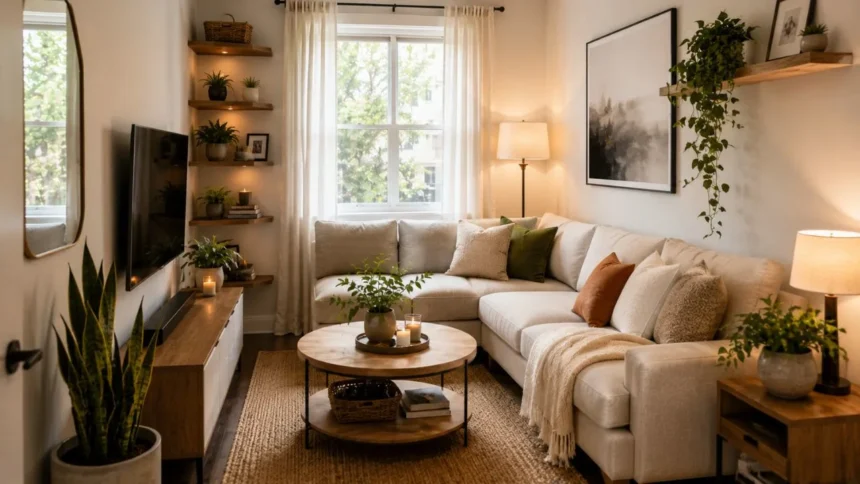
Decorating a small living room can feel challenging when every piece of furniture competes for limited floor space. The goal is not simply to make the room look bigger, but to create a comfortable space that supports relaxing, entertaining, storage, and everyday living. Smart furniture choices, thoughtful layouts, and visual tricks can make even a compact room feel open and welcoming.
Small living room decor works best when every item earns its place. Oversized furniture, unnecessary accessories, and poorly positioned storage can quickly make a room feel crowded. In contrast, multifunctional furniture, lighter colors, vertical storage, and carefully chosen decorative pieces can improve both appearance and functionality without requiring major renovations or a large decorating budget.
The best small living room ideas balance style with practical use. You do not need to remove your personality or decorate everything in white to create a spacious feeling. With the right proportions, lighting, storage, and furniture placement, you can make a compact living room feel organized, comfortable, and visually larger while still expressing your preferred interior design style.
Start With a Clear and Functional Layout
Before buying new decor, study how people naturally move through the room. Identify entrances, windows, doorways, and pathways that need to remain clear. Furniture positioned directly in major walking routes can make even a moderately sized room feel cramped. A simple floor plan helps you determine which pieces genuinely fit and where they should be placed.
Start with the largest item, usually the sofa, and build the layout around it. Avoid automatically pushing every piece against a wall because this can sometimes create an awkward empty center. A slightly floated sofa or angled chair may improve circulation depending on the room. Test several arrangements before deciding which setup feels most comfortable and visually balanced.
Keep frequently used areas easy to access. You should be able to reach seating, tables, storage, and doorways without squeezing around furniture. Clear pathways create an immediate sense of order and openness. In a small living room, a successful layout often makes a greater difference than adding new decorative items, so prioritize function before styling the room.
Choose Furniture That Fits the Scale
Furniture scale is one of the most important considerations when decorating a small living room. A deep sectional or oversized recliner may look attractive in a showroom but overwhelm a compact space at home. Measure the room carefully before shopping and compare furniture dimensions with available floor space rather than relying only on how a piece looks online.
Look for sofas with slimmer arms, raised legs, and moderate seat depth. These design details make furniture appear lighter and expose more visible floor area. Loveseats, apartment-size sofas, and compact accent chairs can provide comfortable seating without dominating the room. The goal is not to use tiny furniture everywhere but to maintain proportions that support movement and visual balance.
Avoid filling every available corner with additional seating. Choose enough furniture for your typical needs and add flexible options when guests visit. Small stools, poufs, or folding chairs can provide temporary seating without permanently occupying valuable space. Thoughtful editing helps the room feel intentional instead of crowded with pieces that are rarely used.
Use Multifunctional Furniture to Save Space
Multifunctional furniture is especially useful in small living rooms because one piece can perform several jobs. An ottoman with hidden storage, for example, can function as a footrest, coffee table, extra seat, and place to store blankets. Choosing versatile furniture reduces the number of separate items required and keeps the room more organized.
Consider nesting tables that can be separated when needed and stacked afterward. A console table with drawers can offer storage while also serving as a small desk or display surface. Sleeper sofas are another useful option for homes without a guest room. The best multifunctional pieces should solve real needs without making the room complicated to use.
Think about your everyday routine before purchasing convertible furniture. A complicated table that must be rearranged constantly may become frustrating, even if it saves space on paper. Choose pieces that transition easily between functions. Practical flexibility allows a small living room to support working, relaxing, entertaining, and storage without requiring additional square footage.
Make the Most of Vertical Wall Space
When floor space is limited, walls become valuable storage and decorating areas. Tall shelving units, floating shelves, and wall-mounted cabinets can hold books, plants, photographs, and everyday items without occupying additional floor area. Vertical storage naturally draws the eye upward, which can also make the ceiling feel higher and the room more spacious.
Install shelves carefully so they do not make the walls feel overly busy. A few well-spaced shelves often look cleaner than covering every available section with storage. Mix practical items with decorative objects and leave some empty space between them. Visual breathing room prevents open shelving from becoming another source of clutter in an already compact living room.
Wall-mounted media units can also free valuable space around the television. Instead of using a deep entertainment center, consider a slim floating console or compact cabinet. Conceal cords where possible to maintain a tidy appearance. The more efficiently you use vertical surfaces, the less pressure you place on the limited floor area below.
Choose Light Colors Without Making the Room Boring
Light colors can reflect more natural and artificial light, helping a small living room feel open and airy. Soft white, warm beige, pale gray, cream, and muted neutral tones work well on larger surfaces such as walls and ceilings. However, a light color palette does not mean the entire space needs to feel plain or lacking personality.
Add depth through texture and subtle color variation. A cream sofa can be paired with woven cushions, warm wood furniture, patterned textiles, and soft-toned artwork. Layers of similar colors create interest without visually dividing the room into too many competing areas. This approach maintains an open feeling while giving the living room a comfortable, designed appearance.
Darker colors can still work in a small living room when used intentionally. A deep accent wall, dark shelving, or rich-colored accessories can create contrast and character. Keep the overall palette coordinated so the room does not feel fragmented. Balance matters more than following a strict rule that small spaces must always be completely white.
Use Mirrors to Create a More Open Feeling
Mirrors are a classic small-space decorating tool because they reflect light and create the impression of greater depth. A large mirror opposite or near a window can bounce natural light into darker parts of the room. This can make the entire living area feel brighter while adding a decorative focal point without consuming floor space.
Choose mirror size based on the available wall rather than selecting several small mirrors automatically. One larger piece often creates a cleaner effect and reflects more of the room. Decorative frames can also introduce color, metal, wood, or texture. Keep the style consistent with your existing decor so the mirror feels integrated rather than added solely as a space-enhancing trick.
Pay attention to what the mirror reflects. Positioning it opposite cluttered shelves or an unattractive doorway can double visual distractions instead of improving the room. Ideally, reflect a window, artwork, plant, or attractive section of the living room. Strategic placement makes a mirror both functional and visually appealing.
Maximize Natural Light Wherever Possible
Natural light can make a small living room feel significantly more spacious. Avoid blocking windows with tall furniture, heavy curtains, or bulky decor. Keep the area around windows relatively open so daylight can travel deeper into the room. Even modest windows can have a strong effect when they are not visually crowded.
Choose window treatments that provide privacy without eliminating light. Lightweight curtains, sheer panels, blinds, or shades can offer flexibility depending on your needs. Hanging curtains closer to the ceiling and extending the rod slightly beyond the window frame can also make windows appear larger and ceilings seem taller.
Keep window glass clean and nearby surfaces uncluttered to maximize brightness. Light-colored walls and mirrors can help distribute daylight further through the space. If privacy is not a major concern, consider leaving some windows minimally dressed. Natural light creates depth and reduces the need for excessive decorative tricks intended to make the room feel bigger.
Layer Lighting Instead of Relying on One Fixture
A single overhead light can leave corners dark and make a small living room feel flat. Layer several light sources instead, including ceiling lighting, floor lamps, table lamps, wall sconces, and task lights. Different sources create depth and allow you to adjust the atmosphere depending on whether you are reading, entertaining, or relaxing.
Wall-mounted lights are especially useful when floor and table space are limited. Plug-in sconces can provide focused lighting without requiring large side tables. Slim floor lamps placed behind seating can also illuminate dark corners without occupying much room. Choose fixtures with visually light frames so they do not overpower the small space.
Warm, balanced lighting can make compact rooms feel cozy without becoming closed in. Avoid extremely bright lighting that makes the space feel harsh, but ensure darker corners receive enough illumination. Using dimmers where possible gives you additional flexibility. Thoughtful lighting can change the perceived size and mood of the room more than many decorative accessories.
Select the Right Rug Size
A rug can visually organize a small living room, but choosing the wrong size may make the space appear smaller. Very small rugs often create an island effect that separates furniture awkwardly. When possible, select a rug large enough for at least the front legs of your main seating pieces to rest comfortably on it.
A larger rug creates continuity across the seating area and can make the room feel more unified. Light or medium tones often maintain an airy appearance, but pattern can also work when it complements the rest of the decor. Avoid designs that feel overwhelmingly busy if the room already contains several strong colors or decorative elements.
Consider rug texture as well as appearance. Low-pile rugs are usually easier to maintain in high-traffic small rooms and allow furniture to move more easily. If the living area connects directly with another space, the rug can help define its boundaries without constructing physical divisions that would reduce the open feeling.
Use Curtains to Make Ceilings Look Higher
Curtain placement can significantly influence how large a small living room appears. Hanging curtain rods several inches above the window frame, or closer to the ceiling, visually stretches the height of the wall. Curtains that extend nearly to the floor create long vertical lines that draw attention upward and make the room feel taller.
Allow curtain panels to extend beyond the sides of the window when open. This exposes more glass and lets additional daylight enter the room. It can also make the window appear wider than it actually is. Lightweight fabrics are particularly effective when you want privacy without creating a heavy visual barrier around the window.
Keep curtain styles relatively simple in very small rooms. Large valances, excessive layering, and bulky fabrics may overwhelm limited wall space. Choose colors that coordinate with the walls for a seamless effect or introduce subtle contrast for added interest. Well-proportioned window treatments can improve both the room’s scale and overall polish.
Add Storage Without Creating Visual Clutter
Storage is essential in compact living rooms because visible clutter quickly makes the space feel smaller. Look for furniture with built-in drawers, cabinets, or hidden compartments. Closed storage is useful for remote controls, chargers, paperwork, toys, and other everyday items that can make open surfaces look disorganized when left visible.
Use baskets and attractive boxes for smaller items that need to remain easily accessible. Matching or coordinated containers help open shelving look more intentional. Avoid filling every shelf completely because dense storage can make walls feel crowded. Leave some sections open and display only objects that contribute to the room’s style or functionality.
Regularly review what you store in the living room. Items rarely used may belong somewhere else in the home. Small spaces benefit significantly from thoughtful editing because unnecessary possessions require valuable storage. Creating designated places for everyday objects makes cleaning easier and helps the room maintain a calmer, more spacious appearance.
Keep the Coffee Table Visually Light
Traditional large coffee tables can consume a surprising amount of floor space. Consider a slim table, round design, nesting tables, or upholstered ottoman instead. Transparent glass or acrylic tables can also make the center of the room feel less crowded because they allow more of the floor and surrounding furniture to remain visible.
Round coffee tables work particularly well in tight layouts because they eliminate sharp corners and improve movement around seating. They can also soften rooms dominated by rectangular furniture. Choose a diameter that leaves comfortable walking space between the table and sofa rather than selecting the largest option that technically fits.
If you rarely use a coffee table, consider removing it completely. Small side tables may provide enough surface area for drinks, books, and lamps while keeping the central floor space open. Decorating should respond to how you actually live. There is no rule requiring every living room to include a traditional coffee table.
Float Selected Furniture When It Improves Flow
Pushing every piece of furniture directly against the walls does not always make a small room feel larger. In some layouts, slightly floating the sofa can create clearer zones and improve movement. Even a few inches between furniture and the wall can make the arrangement feel more intentional rather than tightly packed around the perimeter.
Floating furniture is particularly helpful in open-plan homes where the living room shares space with a dining area or kitchen. The back of a sofa can create a subtle boundary without blocking light or visibility. A slim console behind the sofa can also provide storage or a display surface without introducing a solid divider.
Do not float furniture simply because it is considered stylish. Small rooms need enough circulation space for the arrangement to work comfortably. Test the layout and observe whether pathways improve or become more restricted. The best furniture placement is the one that balances openness, conversation, and daily movement through the room.
Use Transparent and Leggy Furniture
Furniture that exposes more floor area can make a small living room feel visually lighter. Sofas, chairs, consoles, and tables with raised legs allow the eye to see beneath them, creating a stronger sense of openness. In contrast, several heavy pieces sitting directly on the floor can make the room feel dense and crowded.
Glass and acrylic furniture offer a similar advantage because they take up physical space without creating the same visual weight as solid pieces. A clear side table or glass coffee table can provide practical surface area while appearing almost invisible. Use transparent furniture selectively so the room does not feel overly modern if that is not your preferred style.
Mixing visual weights usually produces the best result. A solid comfortable sofa can anchor the room while lighter tables and chairs prevent the arrangement from becoming bulky. You do not need every item to have thin legs or transparent surfaces. Balance one substantial piece with several visually lighter elements to create a more spacious composition.
Create a Simple Focal Point
A focal point gives the eye somewhere to rest and makes a small living room feel more organized. This could be a fireplace, television wall, large artwork, statement mirror, or attractive window. Without a focal point, several decorative elements may compete for attention, making the room feel busier than its actual size.
Keep supporting decor quieter around the main feature. If you use a large artwork above the sofa, you may not need several smaller pieces covering surrounding walls. A television can be integrated with a simple media unit or subtle shelving. Intentional restraint helps the focal point stand out while preserving visual breathing room.
Avoid creating multiple dramatic features in a very compact space. Bold wallpaper, a gallery wall, colorful shelving, and oversized artwork can all work individually, but combining them may overwhelm the room. Choose one or two strong elements and let the remaining decor support them. Simplicity often makes small-space design feel more sophisticated.
Decorate With Fewer but Larger Accessories
Many small decorative objects can make a living room feel cluttered even when each item is attractive. Instead of covering every surface with candles, frames, figurines, and bowls, choose fewer pieces with stronger visual impact. A large vase, substantial artwork, or sculptural lamp often creates a cleaner and more deliberate appearance.
Group accessories rather than spreading them evenly across every available surface. Three coordinated objects on one shelf can look more polished than individual pieces placed throughout the room. Vary height and texture within each grouping while maintaining some empty space around it. Negative space gives decorative items room to stand out.
Rotate accessories seasonally if you enjoy changing your decor. Store unused items and bring out a smaller curated collection at one time. This keeps the room feeling fresh without adding more objects permanently. A small living room does not need to feel minimal, but editing accessories helps maintain balance between personality and visual openness.
Add Plants Without Crowding the Floor
Plants bring color, softness, and natural texture to a small living room. Choose sizes based on available space rather than filling every corner with large pots. One statement plant may create more impact than several smaller plants scattered across tables. Select species that suit the available light and your ability to maintain them.
Use hanging planters, wall-mounted pots, or narrow plant stands to introduce greenery without sacrificing much floor area. Plants can also soften shelving and visually connect different sections of the room. Avoid positioning large foliage where it blocks pathways, windows, or important sightlines, as this can make the room feel more enclosed.
Artificial plants can be a practical alternative if natural light is limited or maintenance is difficult. Choose realistic options and keep them clean so they continue looking attractive. Whether real or artificial, greenery should complement the room rather than overwhelm it. Strategic placement provides freshness while preserving valuable space.
Use Built-In Storage When Possible
Built-in storage can use awkward walls, alcoves, and corners more efficiently than freestanding furniture. Floor-to-ceiling shelves around a television, fireplace, or doorway can provide substantial storage without introducing several separate cabinets. Custom solutions can be expensive, but simple modular systems may create a similar effect at a lower cost.
Paint built-ins the same color as surrounding walls when you want them to visually recede. This creates a more seamless appearance and prevents storage from dominating the room. Alternatively, a contrasting color can make shelving a focal point. Keep the contents organized so the storage enhances the room rather than becoming an oversized display of clutter.
Closed cabinets at the bottom and open shelving above can provide a useful balance. Everyday items remain hidden, while books and decorative objects stay visible. This combination is particularly effective in small living rooms that need significant storage. Well-designed built-ins can replace several pieces of furniture and free additional floor space.
Define Zones in an Open Small Living Area
Small homes often combine living, dining, and working areas within one open space. Creating subtle zones helps each function feel organized without adding physical walls. Rugs, furniture placement, lighting, and color can visually separate areas while allowing natural light and movement to continue throughout the room.
A sofa can divide the living zone from a dining table, while a narrow console may define a workspace. Keep furniture heights relatively low where possible so sightlines remain open. Avoid tall room dividers unless privacy is necessary because solid barriers can make a compact open-plan area feel significantly smaller.
Use repeated colors and materials to connect the different zones. Similar wood tones, textiles, or accent colors create continuity even when each section serves another purpose. The goal is distinction without complete separation. A cohesive visual language makes a multifunctional small space feel intentional rather than like several unrelated rooms squeezed together.
Personalize the Room Without Overdecorating
A small living room should still reflect your personality. Family photographs, artwork, travel objects, books, and meaningful accessories can make the space feel warm and individual. The key is editing rather than eliminating personal decor. Choose items you genuinely enjoy and display them in thoughtful groups instead of filling every available surface.
Gallery walls can work in compact spaces when the arrangement feels organized. Use frames with a consistent color, shape, or spacing to prevent the display from becoming chaotic. Alternatively, one large artwork may provide a cleaner effect. Both options can express personality without requiring additional furniture or valuable floor space.
Let your lifestyle guide decoration choices. If you love reading, prioritize book storage and a comfortable chair. If you frequently host friends, flexible seating may matter more than decorative cabinets. A successful small living room should not simply look larger in photographs; it should function comfortably for the people who actually use it every day.
Avoid Common Small Living Room Decorating Mistakes
One common mistake is buying furniture before measuring the room. Oversized sofas, wide media units, and deep chairs can quickly restrict movement. Always compare furniture dimensions with your available space and mark approximate footprints on the floor if necessary. A beautiful piece is not useful when it makes the entire room difficult to navigate.
Another mistake is trying to make every item small. A room filled with many miniature pieces can feel cluttered and visually fragmented. One appropriately sized sofa, large rug, or statement artwork may create better balance than several tiny alternatives. Focus on proportion and function rather than assuming small rooms require only small furniture.
Excessive decoration can also reduce the feeling of space. Too many patterns, colors, wall displays, and accessories compete for attention and make surfaces feel crowded. Choose a consistent palette and allow some areas to remain visually quiet. Editing is one of the easiest and least expensive ways to make a small living room feel more spacious.
Conclusion
Small living room decor works best when every design decision supports both appearance and function. Start with a practical layout, correctly scaled furniture, effective storage, and enough open space for comfortable movement. Multifunctional pieces, wall-mounted storage, mirrors, and layered lighting can maximize limited square footage without making the room feel overly complicated.
Use color, texture, plants, artwork, and accessories to add personality while maintaining visual balance. You do not need to remove all decorative character to create a spacious feeling. The most effective approach is choosing fewer items intentionally, maintaining clear surfaces, and allowing natural light and sightlines to move freely through the room.
Ultimately, the best small living room is one that works comfortably for your lifestyle. Measure carefully, experiment with furniture placement, and remove items that do not provide enough practical or visual value. With thoughtful planning, even a compact living room can feel organized, stylish, welcoming, and surprisingly spacious without requiring expensive structural changes.
What colors make a small living room look bigger?
Light neutrals such as soft white, cream, beige, and pale gray can reflect light and create an open feeling. You can still use darker colors as accents to add depth and personality.
What furniture is best for a small living room?
Choose apartment-size sofas, slim-arm chairs, nesting tables, storage ottomans, and furniture with raised legs. Multifunctional pieces are especially useful because they provide several functions without occupying additional floor space.
Should a small living room have a large or small rug?
A larger rug usually works better because it visually connects the seating area. Ideally, the front legs of major furniture pieces should sit on the rug rather than surrounding a tiny isolated rug.
How can I add storage without making the room look crowded?
Use vertical shelves, built-in cabinets, floating units, storage ottomans, and furniture with hidden compartments. Keep frequently used items organized and combine closed storage with selectively styled open shelving.
Where should a sofa go in a small living room?
Place the sofa where it maintains clear pathways and supports conversation or your main focal point. It can sit against a wall or float slightly, depending on which arrangement improves circulation and balance.