
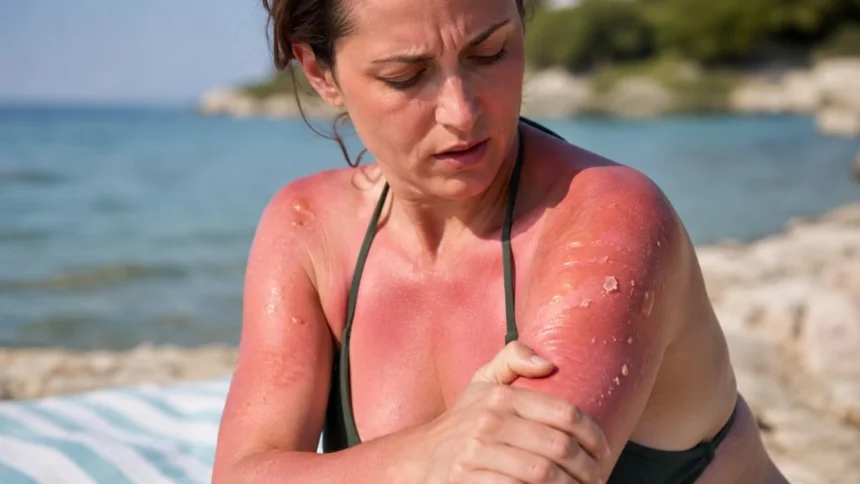
Sun poisoning often looks like an unusually severe sunburn. The affected skin may appear intensely red, darkened or discoloured, and it can feel hot, swollen and extremely painful. Fluid-filled blisters may develop across the exposed area, followed by peeling as the damaged skin begins to heal.
The condition may also cause symptoms that go beyond the skin. A person might develop a headache, dizziness, nausea, chills, weakness or a raised temperature after spending too long in strong sunlight. These whole-body symptoms are one reason severe sunburn is sometimes described as sun poisoning.
However, the term “sun poisoning” can be confusing because it is not an actual poisoning and does not describe one specific medical diagnosis. People may use it to describe severe sunburn, dehydration, a sun-triggered rash or illness caused by overheating. The correct response depends on which symptoms are present.
Most mild sunburns can be managed with cooling, fluids and protection from further sunlight. Severe blistering, extensive swelling or feeling seriously unwell requires medical advice. Confusion, fainting, seizures or difficulty waking someone may indicate heatstroke and should be treated as a medical emergency.
Quick Answer: What Does Sun Poisoning Look Like?
Sun poisoning may look like bright red, deep pink, purplish or darker-than-usual skin, depending on a person’s natural skin tone. The affected area often appears swollen and feels hot, tight or painful. In severe cases, clusters of clear fluid-filled blisters may cover the shoulders, back, chest, face or legs.
The skin can be extremely sensitive to clothing, bedding or even a light touch. Some people develop an itchy or stinging rash alongside the burn. After several days, the surface may become dry and begin peeling in sheets or smaller flakes as the damaged outer skin is replaced.
A person may also look pale, sweaty, exhausted or visibly unwell. They may complain of dizziness, headache, nausea, chills, muscle cramps or intense thirst. These signs can suggest dehydration or heat exhaustion in addition to the damage caused by ultraviolet radiation.
Sun poisoning becomes more concerning when a severe skin reaction is combined with confusion, fainting, vomiting, rapid breathing or an inability to drink. A person who is difficult to wake, having a seizure or acting strangely may have heatstroke rather than a simple sunburn and needs emergency help.
What Does the Term Sun Poisoning Mean?
Sun poisoning is an informal expression commonly used for a severe reaction to excessive sunlight. In many cases, the person has a serious sunburn affecting a large area of skin and also feels ill. The phrase does not mean that sunlight has placed a poison inside the body.
A severe sunburn is a form of radiation injury caused by too much ultraviolet exposure. The skin responds with inflammation, producing heat, tenderness, redness or discolouration and swelling. When the damage extends beneath the outermost skin layer, painful blisters can form.
Some people also use “sun poisoning” to describe polymorphic light eruption or another photosensitivity reaction. These conditions can produce itchy bumps, patches, hives or small blisters after sun exposure, sometimes without the widespread painful redness expected from an ordinary sunburn.
The term may also be confused with sunstroke, which is another name often used for heatstroke. Heatstroke affects the body’s temperature-control system and can be life-threatening. It may occur with or without sunburn, so the appearance of the skin alone cannot determine the seriousness of the situation.
What Does Severe Sunburn Look Like?
A severe sunburn usually has clear boundaries that match areas exposed to sunlight. You may see lines around swimwear, sleeves, sandals, sunglasses or watch straps. The exposed skin looks noticeably different from areas that remained covered, although the colour difference may be subtle on darker skin.
The surface may appear shiny or stretched because of inflammation and swelling. Touching the affected area can cause sharp pain, burning or throbbing. Even when redness is difficult to see, the skin may feel much warmer than the surrounding area and be unusually tender.
Blisters are a sign that the burn has damaged deeper layers of the skin. They may appear as small scattered bubbles or join together into larger fluid-filled areas. The skin around them may look swollen, raw or intensely inflamed, and movement can become uncomfortable when the burn is over a joint.
As healing begins, the skin may feel itchy and start peeling. Peeling does not remove the original ultraviolet damage or turn the burn into a healthy tan. It is part of the body’s response to injured skin cells and should not be pulled or scrubbed away.
What Does Sun Poisoning Look Like on the Face?
Sun poisoning on the face can cause marked redness or discolouration across the forehead, cheeks, nose and chin. The skin may look puffy, particularly around the eyes and lips. Because facial skin is sensitive, the burning, tightness and discomfort can feel severe even when the affected area is relatively small.
Blisters may develop on the nose, cheeks, forehead, lips or ears. The lips can become dry, swollen and cracked, while the eyelids may become so puffy that opening the eyes is difficult. Sunburn around the eyes may also occur alongside eye pain or sensitivity to bright light.
Facial swelling should be watched carefully because it can occasionally resemble an allergic reaction. Emergency help is needed when swelling affects the tongue or throat, breathing becomes difficult, or the person develops widespread hives. These signs are not typical features of an uncomplicated sunburn.
A severe facial burn also deserves medical advice when blisters cover a large area, pain is difficult to control or the eyes are affected. Avoid placing harsh skincare ingredients, fragranced products, exfoliating acids or retinoids on burned skin while it is healing.
What Does Sun Poisoning Look Like on Dark Skin?
People with black or brown skin can experience sunburn and severe ultraviolet damage, although visible redness may be less obvious. Instead of turning bright pink, the affected skin may appear deeper brown, purple, greyish, ashy or simply darker than the surrounding area.
Colour should not be the only sign used to judge a possible burn. The skin may feel hot, painful, tight, itchy or unusually sensitive. Swelling, blistering and peeling can occur in every skin tone and may provide clearer evidence that the sun exposure caused significant damage.
Check the area under good natural lighting and compare it with nearby covered skin. Gently feeling for increased warmth or tenderness can also help identify inflammation. Do not press directly on blisters or raw areas, as this can cause pain and increase the chance of breaking the skin.
Darker skin contains more protective melanin, but it does not provide complete protection from sunburn, photosensitivity or skin cancer. Everyone can benefit from shade, protective clothing and broad-spectrum sunscreen, especially during long outdoor activities or when the ultraviolet index is high.
Symptoms of Sun Poisoning Beyond the Skin
A severe sun reaction may cause headache, nausea, dizziness, weakness or chills. The person may feel as though they have the flu, even though the main trigger was prolonged ultraviolet and heat exposure. These symptoms are more concerning than local soreness alone.
Dehydration can develop because heat increases sweating and a serious burn draws fluid towards the damaged skin. Warning signs may include intense thirst, a dry mouth, dark urine, reduced urination, fatigue or light-headedness when standing. Vomiting can make the fluid loss worse.
A raised temperature can occur with a severe reaction, but it should not be ignored. Fever, persistent chills or worsening weakness may require medical assessment, particularly when the burn is extensive. Similar symptoms can also occur with an infection or heat-related illness.
Mental changes are not a normal feature of an ordinary sunburn. Confusion, unusual behaviour, slurred speech, loss of coordination or reduced consciousness suggest a more dangerous heat illness. The person needs urgent cooling and emergency medical attention rather than home treatment alone.
Sunburn vs Sun Poisoning: What Is the Difference?
A mild sunburn usually affects only the exposed skin. It causes warmth, redness or colour change, soreness and later peeling. The person may feel uncomfortable, but they can normally drink, think clearly and continue basic activities while the burn heals.
Sun poisoning generally describes a more severe reaction. The skin damage may include extensive swelling, strong pain and blisters, while the person may also feel dizzy, nauseated, feverish or unusually weak. Symptoms affecting the entire body help separate it from a straightforward mild burn.
The boundary between the two is not always precise because sun poisoning is not a formal diagnosis. A sunburn can gradually appear worse over the first day, and someone who initially feels well may later develop blisters or illness. Continued monitoring is therefore important after heavy sun exposure.
When you are uncertain, consider the extent of the burn and the person’s general condition. A small painful patch without blisters is usually less concerning than widespread blistering combined with vomiting, faintness or fever. Babies, young children and medically vulnerable adults should be assessed more cautiously.
Sun Poisoning Rash vs Sun Allergy
A severe sunburn usually causes broad areas of hot, painful and evenly inflamed skin. A sun allergy or polymorphic light eruption more often causes clusters of itchy bumps, raised patches or small blisters. The rash commonly appears on areas such as the upper chest, arms, neck or legs.
A sun allergy may begin within minutes or several hours after exposure. It often develops on skin that has recently been covered during cooler months and is suddenly exposed to stronger sunlight. The itching can be more noticeable than the burning pain typically associated with sunburn.
Some reactions are triggered by medicines, skincare ingredients or plant chemicals that make skin unusually sensitive to ultraviolet light. The resulting rash may have irregular shapes, streaks or patches instead of the clear clothing lines seen with a conventional sunburn.
Repeated rashes after limited sun exposure should be evaluated by a healthcare professional or dermatologist. Do not stop a prescribed medicine without advice, even when you suspect photosensitivity. A clinician can review possible triggers and rule out conditions that also produce sun-sensitive rashes.
Sun Poisoning vs Heat Exhaustion
Heat exhaustion occurs when the body loses too much water and salt while trying to cool itself. The person may sweat heavily, feel weak or dizzy and develop headache, nausea, cramps or a rapid pulse. Their skin may feel cool, pale or clammy rather than severely burned.
Sun poisoning and heat exhaustion can occur together because the same outdoor exposure may involve both intense ultraviolet radiation and high temperatures. A person can have blistered skin while also becoming dehydrated and overheated. Treating only the visible burn may therefore miss an important part of the problem.
Move someone with possible heat exhaustion into shade or an air-conditioned space. Loosen unnecessary clothing, cool the body with damp cloths and offer small amounts of cool fluid when the person is fully awake and able to swallow. They should not immediately return to outdoor activity.
Symptoms that do not begin improving with cooling require medical advice. Repeated vomiting, increasing weakness, fainting or mental changes may indicate that the illness is becoming more serious. Do not leave the person alone when they appear very unwell.
Sun Poisoning vs Heatstroke
Heatstroke is a medical emergency in which the body can no longer control its temperature effectively. The person may have hot skin, heavy sweating or unexpectedly dry skin. More importantly, they develop changes in brain function such as confusion, agitation, slurred speech or collapse.
A person with heatstroke may also experience seizures, rapid breathing, a strong pulse or loss of consciousness. These symptoms are far more dangerous than the redness and pain of a sunburn. The condition can damage the brain, heart, kidneys and other organs if treatment is delayed.
Call emergency services immediately when heatstroke is suspected. Move the person away from the heat and begin cooling them while help is coming. Use cool wet cloths, remove unnecessary outer clothing and place cool packs around the neck, armpits and groin when available.
Do not force an unconscious, confused or vomiting person to drink, as they may choke. Do not assume that the condition will resolve after resting in the shade. Heatstroke requires urgent professional treatment even when the person temporarily appears calmer.
What Causes Sun Poisoning?
Sun poisoning is usually caused by excessive exposure to ultraviolet radiation from sunlight or artificial tanning devices. The skin can be damaged even on cool, windy or cloudy days because ultraviolet rays are not the same as heat. Water, sand, snow and pale surfaces can also reflect radiation.
The risk rises when someone remains outdoors for a long time without adequate shade, clothing or sunscreen. Missing areas during sunscreen application, using too little or failing to reapply after swimming and sweating can leave the skin exposed for several hours.
Sunburn can happen more quickly at high altitudes, near the equator and during seasons with stronger ultraviolet levels. Certain medicines and skincare treatments may also increase photosensitivity, allowing a serious reaction to develop after less exposure than the person normally tolerates.
Tanning beds are not a safe alternative to outdoor sunlight. They expose the skin to concentrated ultraviolet radiation and can cause burns as well as long-term damage. A tan itself is evidence that the skin has responded to injury rather than a sign of protection or good health.
Who Is More Likely to Develop a Severe Reaction?
People with fair skin, light eyes, freckles or hair that is naturally red or blonde may burn more quickly because they have less protective melanin. However, people with every skin tone can develop ultraviolet damage, especially after prolonged or unusually intense exposure.
Babies and young children require particular care because their skin is sensitive and they can become dehydrated more quickly. Older adults may also be vulnerable, especially when they have limited mobility, reduced thirst awareness or medical conditions affecting temperature regulation.
People taking photosensitising medicines may react strongly to sunlight. Possible categories include some antibiotics, acne treatments, diuretics and anti-inflammatory medicines, although risk varies by product. The patient information leaflet or a pharmacist can explain whether a specific medicine increases sun sensitivity.
Outdoor workers, athletes, travellers and people spending time near water are often exposed for longer periods. Risk can also increase when alcohol is involved because it may reduce judgement, encourage dehydration and make people less likely to notice early symptoms.
How Soon Does Sun Poisoning Appear?
Early sunburn symptoms may begin within a few hours of exposure, but the full severity is not always visible immediately. Skin that looks slightly pink or feels warm in the afternoon may become much more painful and swollen later that evening or the following day.
Blisters can develop hours after the person has left the sun. This delayed progression is why returning outdoors because the skin “does not look too bad yet” can lead to a more serious burn. Further ultraviolet exposure adds damage before the original reaction has fully appeared.
Sun-triggered allergic rashes may follow a different timeline. Itchy bumps or raised patches can develop within minutes or several hours, depending on the type of reaction. Some plant-related photosensitivity reactions may not become obvious until the next day.
Monitor symptoms for at least the first 24 hours after heavy exposure. Increasing pain, spreading swelling, large blisters or feeling progressively unwell are reasons to seek advice. Severe mental changes, breathing problems or collapse require immediate emergency help.
How Long Does Sun Poisoning Last?
A mild sunburn may begin improving within several days, but a severe reaction can take one to two weeks or longer to settle. Pain and warmth are often strongest during the first day or two, while peeling tends to appear later in the healing process.
Blisters may require additional time because the deeper skin layers have been damaged. Larger areas can remain tender, itchy or sensitive after the fluid has gone. The new skin underneath may be delicate and more vulnerable to further sunlight.
Whole-body symptoms such as dizziness or nausea should improve with appropriate cooling, hydration and recovery. When these symptoms persist, worsen or return, the person should be medically assessed. Continuing illness may indicate dehydration, infection, heat exhaustion or another condition.
Avoid direct sunlight on the affected skin until all pain and visible inflammation have resolved. Even after healing, the area may remain sensitive for a while. Covering it with loose clothing provides more dependable protection than applying sunscreen to raw or blistered skin.
What to Do Immediately After a Severe Sunburn
Move indoors or into complete shade as soon as you notice burning, tenderness or unusual skin warmth. Continuing the activity for another hour can deepen the injury. Remove hot or tight clothing carefully, but do not pull fabric that has become attached to broken skin.
Cool the area with a cool shower, bath or damp cloth. The water should feel soothing rather than painfully cold. Do not apply ice directly to burned skin because extreme cold can create additional tissue injury and increase discomfort.
Apply a gentle, fragrance-free moisturiser while the skin is slightly damp. Products containing aloe vera or soy may feel soothing, but they cannot reverse ultraviolet damage. Avoid heavy perfumes, exfoliants and products that sting when applied.
Drink additional water and rest in a cool environment. An appropriate over-the-counter pain reliever may reduce discomfort when it is safe for you and taken according to the label. Ask a pharmacist when you have medical conditions, take other medicines or are treating a child.
How to Care for Sunburn Blisters
Do not intentionally pop sunburn blisters. The layer of skin covering the fluid helps protect the tissue underneath from infection. Breaking it creates an open wound and can make the area more painful, slow healing and allow bacteria to enter.
Wear loose, soft clothing that does not rub the affected area. A clean, non-stick dressing may protect a blister in a place where friction is difficult to avoid. Do not place adhesive directly over fragile or burned skin.
When a blister opens naturally, wash your hands before gently cleaning the area. Do not peel away skin that is still attached. Cover the wound with an appropriate sterile dressing and change it whenever it becomes wet, dirty or loose.
Seek medical advice for very large blisters, extensive blistering or burns affecting the face, hands, genitals or a major joint. Increasing pain, pus, bad odour, spreading warmth or worsening swelling can indicate an infection that needs professional treatment.
What Not to Put on Sun-Poisoned Skin
Do not place ice, frozen packs or extremely cold water directly against severe sunburn. Although cooling helps, excessive cold can injure already damaged tissue. Wrap a cool pack in cloth or use a damp compress instead.
Avoid butter, cooking oil and thick home remedies that trap heat against the skin. These substances do not repair the burn and can make cleaning more difficult. Fragranced lotions and alcohol-containing products may also sting or increase irritation.
Do not scrub peeling skin with a towel, brush or exfoliating product. Scratching and pulling can expose tender new skin and create small wounds. Allow loose skin to separate naturally while continuing gentle moisturising.
Avoid applying unprescribed numbing creams or unfamiliar herbal mixtures to blistered areas. Some ingredients can cause contact dermatitis or make the reaction worse. A pharmacist or healthcare professional can recommend products that are appropriate for the severity and location of the burn.
When Should You Seek Medical Help?
Ask for prompt medical advice when the skin is severely swollen or blistered, particularly when a large part of the body is affected. You should also seek help when pain is intense, the face is significantly swollen or the burn involves a baby or young child.
Fever, chills, headache, nausea, dizziness, muscle cramps or unusual exhaustion can indicate a severe reaction. These symptoms deserve attention when they are persistent, worsening or combined with difficulty drinking and reduced urination.
Medical assessment is also important when the burn appears infected. Warning signs include increasing warmth, redness or discolouration beyond the original area, pus, bad smell, worsening pain or new fever several days after the exposure.
Call emergency services for confusion, collapse, seizure, loss of consciousness, breathing difficulty or severe agitation. These signs may indicate heatstroke, a serious allergic reaction or another medical emergency rather than sunburn alone.
Sun Poisoning in Babies and Children
A baby or child with sunburn should be watched closely because fluid loss and heat illness can develop more quickly. Their skin may appear red or darker, feel hot and become unusually sensitive. Younger children may communicate discomfort through crying, restlessness or refusing feeds.
Blisters, facial swelling, fever, vomiting or unusual sleepiness require medical advice. A child who is difficult to wake, confused, floppy or having trouble breathing needs emergency help. Do not assume that irritability is simply caused by tiredness after a day outdoors.
Move the child into a cool indoor space and offer age-appropriate fluids when they are fully awake. Cool the skin gently and dress them in loose clothing. Ask a healthcare professional or pharmacist before giving medicine, especially when treating a baby.
Prevention is particularly important for children. Keep babies out of direct strong sunlight, use shade and protective clothing and follow age-appropriate sunscreen guidance. Hats should shade the face, ears and neck rather than covering only the top of the head.
How to Prevent Sun Poisoning
Check the ultraviolet index before spending extended time outdoors. Protection becomes more important as the index rises, even when the weather feels cool. Plan demanding activities for earlier or later in the day when possible and take regular breaks in real shade.
Wear tightly woven clothing that covers the shoulders, back and legs. Add a wide-brimmed hat and ultraviolet-protective sunglasses. Clothing remains effective without needing to be reapplied and can protect areas that are easy to miss with sunscreen.
Use a broad-spectrum sunscreen with at least SPF 30 for exposed skin. Apply a generous, even layer before going outdoors and remember frequently missed areas such as the ears, scalp, neck, feet and backs of the hands.
Reapply sunscreen at least every two hours and sooner after swimming, sweating or towel drying. Water resistance does not mean the product lasts all day. Sunscreen works best as one part of a wider plan that also includes shade and clothing.
Common Sunburn Prevention Mistakes
One common mistake is applying too little sunscreen. A thin or uneven layer may provide much less protection than the number printed on the bottle suggests. Rushing can leave gaps around clothing edges, straps, ears and hairlines.
Another mistake is applying sunscreen once and assuming protection will last throughout the day. Swimming, sweating, friction and towel drying gradually remove the product. Scheduled reapplication is important during long outdoor events.
People can also burn on cloudy, cool or windy days. Comfortable temperatures may encourage them to remain outside longer without noticing the exposure. Ultraviolet radiation can still reach the skin even when the sun does not feel intense.
Do not use tanning as preparation for a holiday. A base tan provides limited protection and represents existing ultraviolet damage. Protective habits are safer and more dependable than trying to make the skin “used to” the sun.
Can One Severe Sunburn Cause Lasting Damage?
The visible redness, blistering and peeling usually heal, but ultraviolet damage can remain within skin cells. A severe burn is therefore more than a temporary cosmetic problem. Repeated exposure contributes to premature skin ageing and increases the risk of skin cancer.
Children and teenagers should be protected carefully because intense burns early in life add to cumulative ultraviolet damage. However, prevention remains worthwhile at every age. It is never too late to reduce further exposure and begin using better sun protection.
Watch for new or changing moles, unusual patches and sores that do not heal. A burn does not mean that skin cancer will immediately develop, but regular awareness makes it easier to notice changes that deserve professional examination.
People with repeated severe burns, extensive sun exposure or a family history of skin cancer may benefit from discussing their individual risk with a clinician. Personalised advice may include regular skin checks and stronger protection during work or outdoor hobbies.
Final Answer: What Does Sun Poisoning Look Like?
Sun poisoning usually looks like a severe sunburn with hot, painful and swollen skin. The area may appear red, pink, purple, greyish or darker than normal depending on skin tone. Blisters and later peeling are common signs that the damage is more serious.
The person may also look and feel generally unwell. Headache, chills, nausea, dizziness, weakness, dehydration or fever can occur alongside the skin reaction. These symptoms separate severe sunburn from a small area of ordinary redness.
An itchy bumpy rash may represent a sun allergy or photosensitivity reaction rather than a conventional burn. Confusion, fainting, seizures or altered behaviour point towards dangerous heat illness and require emergency attention.
Move out of the sun, cool the skin gently, drink fluids and protect blisters from damage. Seek medical care for extensive blistering, severe swelling or whole-body symptoms. Call emergency services immediately when the person is confused, unconscious or having difficulty breathing.
Frequently Asked Questions
What are the first signs of sun poisoning?
Early signs may include unusually hot, tender and red or discoloured skin after sun exposure. Headache, dizziness, nausea, chills or marked tiredness suggest that the reaction is more severe than a mild sunburn.
Does sun poisoning always cause blisters?
No, but blisters are a common sign of a deeper and more serious sunburn. Severe pain, swelling or whole-body symptoms can still require medical advice even when no blisters are visible.
Can sun poisoning look like hives?
A sun-triggered allergy or photosensitivity reaction can produce itchy bumps, raised patches or hives. Repeated reactions after limited exposure should be assessed because they may not be ordinary sunburn.
How long does sun poisoning take to appear?
Skin symptoms may begin within a few hours and become more severe over the first 24 hours. Blisters can appear later, while some sun-sensitive rashes develop within minutes or several hours.
When is sun poisoning an emergency?
It is an emergency when someone becomes confused, collapses, has a seizure, cannot be awakened or struggles to breathe. These symptoms may indicate heatstroke or another serious condition requiring immediate care.