
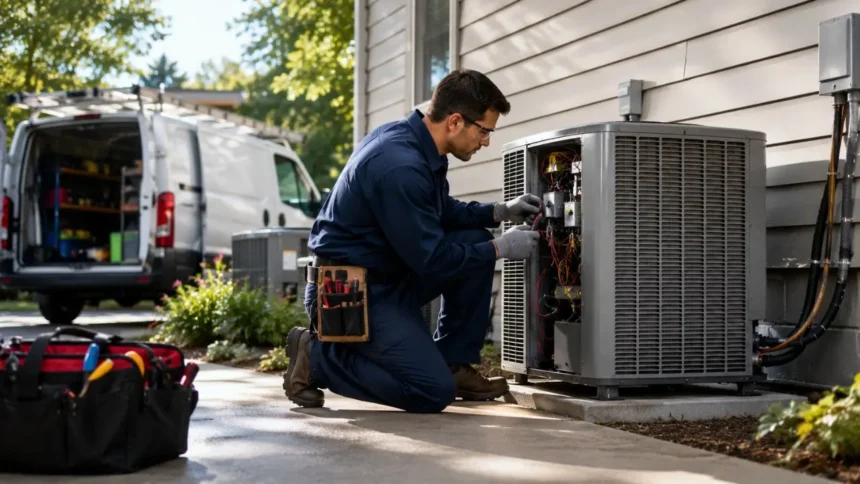
Starting a heating and air conditioning business can be a strong opportunity for someone with HVAC skills, industry experience, and an interest in building a service-based company. Homes and commercial properties continually need heating, cooling, ventilation, maintenance, and repairs. Because these systems are essential for comfort and safety, dependable HVAC contractors can build long-term relationships with customers.
However, knowing how to repair an air conditioner is different from knowing how to operate a profitable HVAC company. Owners must understand licensing, insurance, equipment, pricing, hiring, marketing, customer service, and cash flow. Poor planning can create problems even when technical work is excellent. Building the right systems early makes it easier to deliver consistent service while protecting profitability.
If you are wondering how to start a heating and air conditioning business, the process becomes easier when broken into practical stages. You need to research your market, determine your services, calculate startup costs, establish a legal business, and create a reliable lead-generation strategy. This guide explains each step while focusing on sustainable growth rather than quick but unstable expansion.
Understand the HVAC Business Opportunity
An HVAC business installs, maintains, and repairs heating, ventilation, and air conditioning systems in residential or commercial buildings. Common services include air conditioner repair, furnace maintenance, heat pump installation, ductwork, indoor air quality services, and seasonal tune-ups. Depending on your skills and certifications, you may specialize in selected services or provide complete heating and cooling solutions.
Demand for HVAC services tends to remain steady because heating and cooling equipment eventually needs maintenance, repairs, or replacement. Extreme temperatures can also create urgent service calls when air conditioners or heating systems suddenly fail. This gives established contractors opportunities to earn both scheduled maintenance revenue and emergency repair income. Strong customer trust can also produce valuable repeat business.
The industry is competitive, so simply opening a company does not guarantee customers. Homeowners often compare local HVAC companies based on reviews, response times, pricing transparency, professionalism, and warranties. Successful businesses combine technical expertise with excellent service and efficient operations. Building a trustworthy reputation can become one of your strongest advantages against larger competitors.
Decide Which HVAC Services You Will Offer
Begin by deciding exactly what your heating and air conditioning company will provide. Services might include AC repair, furnace repair, HVAC installation, preventive maintenance, heat pump services, duct cleaning, thermostat replacement, or indoor air quality improvements. Offering too many services immediately can stretch your tools, staffing, and expertise. Start with areas where you can consistently deliver high-quality results.
Residential HVAC services can provide a large customer base because virtually every homeowner needs climate-control equipment. Residential jobs may include seasonal maintenance, emergency repairs, system replacements, and energy-efficiency upgrades. Homeowners also value responsive communication and clear explanations. Creating maintenance plans can help convert occasional customers into recurring clients while providing predictable revenue throughout the year.
Commercial HVAC work can involve larger contracts, specialized equipment, and more complicated service requirements. Restaurants, offices, warehouses, retail stores, and other businesses depend heavily on reliable temperature control. Commercial clients may also require preventive maintenance agreements and scheduled inspections. You can eventually serve both residential and commercial customers, but choosing a clear starting focus simplifies marketing and operations.
Research Your Local HVAC Market
Market research helps you understand the demand, competition, and pricing environment before investing heavily in your company. Search for HVAC contractors operating within your intended service area and review their services, ratings, positioning, and customer feedback. Pay attention to whether competitors focus on low prices, premium installations, emergency repairs, maintenance agreements, or particular HVAC brands.
Customer reviews provide valuable information about weaknesses within your local market. Look for complaints involving missed appointments, unclear pricing, slow responses, poor communication, unfinished work, or repeated system problems. These complaints reveal opportunities to differentiate your company. Providing reliable scheduling, professional technicians, and transparent communication can create a competitive advantage without competing solely through lower prices.
Research the types of properties in your service area as well. Older neighborhoods may have aging HVAC systems requiring frequent repairs or replacement, while growing communities can produce new installation opportunities. Commercial districts may create demand for maintenance contracts and larger equipment. Understanding your local customer base helps you select profitable services and create marketing messages that match actual needs.
Write a Heating and Air Conditioning Business Plan
A practical HVAC business plan should explain how your company will operate and generate profit. Include your service area, target customers, core services, pricing approach, staffing needs, marketing strategy, equipment requirements, and expected startup costs. You should also identify what makes your business different. Clear positioning makes it easier for potential customers to understand why they should choose you.
Your financial section should estimate monthly revenue and all expected expenses. Include vehicle payments, fuel, tools, insurance, software, payroll, advertising, office costs, parts, taxes, and other operating expenses. Calculate how many service calls or installations you need each month to cover those costs. Conservative estimates are safer than assuming your schedule will immediately remain fully booked.
Set realistic goals for your first year and review them regularly. You might track monthly revenue, average job value, maintenance-plan memberships, customer acquisition cost, repeat customers, and online reviews. A business plan should evolve as you learn more about the market. Comparing forecasts against real performance helps you make better decisions about hiring, pricing, and future investments.
Calculate Your HVAC Business Startup Costs
The cost of starting an HVAC business depends heavily on your existing equipment, certifications, vehicle needs, and service model. Expenses can include a work van, diagnostic equipment, hand tools, ladders, safety gear, refrigerant equipment, inventory, software, uniforms, marketing, licensing, and insurance. Contractors starting alone may require significantly less capital than companies immediately hiring multiple technicians.
Your service vehicle will likely represent one of your largest startup investments. It should have enough space for tools, common replacement parts, safety equipment, and materials while remaining dependable for daily travel. Vehicle branding can also turn your van into a mobile advertisement. However, avoid purchasing an unnecessarily expensive vehicle that places excessive pressure on early cash flow.
Keep working capital available after purchasing equipment. New HVAC businesses can experience uneven cash flow while customers, referrals, and maintenance agreements gradually increase. Parts and materials may also need to be purchased before customers fully pay invoices. Maintaining a financial reserve gives your business more flexibility when unexpected repairs, slow periods, or additional marketing expenses occur.
Meet HVAC Licensing and Certification Requirements
Heating and air conditioning work is regulated in many locations, and requirements vary depending on your state, province, country, or municipality. You may need an HVAC contractor license, business registration, trade certification, or documented work experience. Some jurisdictions also require examinations before contractors can legally provide specific services. Always understand local requirements before accepting customer work.
Technicians working with refrigerants may need additional certification because refrigerant handling is regulated. Electrical, gas, plumbing, or mechanical work may also require separate qualifications depending on the job and local rules. Never assume one general HVAC credential automatically allows every type of installation. Understanding your legal scope protects both customers and your business from avoidable compliance problems.
Licensing also builds customer confidence because homeowners want qualified professionals working on expensive mechanical systems. Keep certifications current and ensure employees hold any credentials required for their responsibilities. Maintain organized records of training, licenses, inspections, and renewals. Compliance may feel administrative, but it supports professionalism and makes future growth easier as your company takes on larger projects.
Register Your HVAC Business Properly
Choose a business name that sounds professional, is easy to remember, and does not restrict future growth. A name based only on air conditioning, for example, may become limiting if you later expand heavily into heating, ventilation, or indoor air quality services. Check business-name availability before creating branding materials, vehicle graphics, or a website.
Select an appropriate legal business structure based on your location and circumstances. Depending on available options, you might operate as a sole proprietor, partnership, limited liability company, or corporation. Each structure can affect taxation, paperwork, ownership, and liability differently. An accountant or business professional can help you determine which structure best suits your expected revenue and risk level.
Complete required registrations and obtain any tax identification numbers or local business permits your jurisdiction requires. Create a dedicated business bank account rather than mixing personal and company transactions. Separate financial records make bookkeeping and tax preparation easier. Professional financial organization also provides a clearer picture of whether your heating and cooling business is genuinely profitable.
Get the Right HVAC Business Insurance
HVAC contractors work inside customer properties, handle expensive equipment, travel frequently, and perform tasks that can create significant liability. Appropriate business insurance is therefore essential. General liability coverage can help protect against certain property damage or injury claims connected with your work. Commercial vehicle coverage may also be necessary for vans or trucks used for business activities.
If you hire technicians or office employees, additional insurance requirements may apply. Workers’ compensation is commonly required in many places and helps address work-related employee injuries. You may also consider tools, equipment, property, or other specialized business coverage based on your operations. Discuss your exact services with an insurance professional rather than selecting coverage based solely on price.
Insurance costs should be included when calculating service prices. Charging too little because you overlooked insurance, taxes, fuel, and administrative expenses can quickly reduce profitability. Customers may prefer contractors who are properly licensed and insured because it signals professionalism. Keep documentation organized so you can provide proof when commercial clients, property managers, or homeowners request it.
Buy Essential HVAC Tools and Equipment
You need dependable tools to diagnose problems accurately and complete work efficiently. Common HVAC tools include multimeters, manifold gauges, vacuum pumps, leak detectors, thermometers, tubing cutters, recovery equipment, drills, hand tools, ladders, and safety equipment. The exact list depends on your services. Prioritize reliable tools you will use regularly instead of purchasing every specialized device immediately.
Organize your service vehicle so technicians can find tools and commonly used parts quickly. Poor organization wastes time between appointments and increases the possibility of losing equipment. Stock frequently needed components based on the systems common in your service area. However, avoid carrying excessive inventory that ties up cash in parts that may sit unused for months.
Create a maintenance and replacement schedule for important equipment. Diagnostic tools must remain accurate, while damaged electrical equipment or safety gear should never remain in daily use. Tracking tools also becomes increasingly important when additional technicians join your company. Good equipment management reduces downtime, improves productivity, and helps employees arrive at customer homes properly prepared for each job.
Choose Reliable HVAC Suppliers
Strong supplier relationships can directly affect the speed and profitability of your HVAC business. You need dependable access to replacement parts, heating systems, air conditioning equipment, thermostats, filters, refrigerant supplies, and installation materials. Compare local distributors based on availability, pricing, delivery options, technical support, and return policies rather than simply choosing the cheapest supplier available.
Reliable inventory access becomes particularly important during extreme weather when HVAC demand increases rapidly. Customers with broken equipment expect quick solutions, and waiting several days for a common component can cost you both revenue and trust. Maintaining relationships with more than one supplier provides flexibility when specific equipment or replacement parts become temporarily difficult to obtain.
As your purchasing volume grows, ask suppliers about contractor pricing, credit terms, training programs, and manufacturer support. Better purchasing terms can improve your margins without raising customer prices. Supplier representatives may also provide information about new products and technical training. Treat strong distribution relationships as part of your business infrastructure rather than just a place to buy parts.
Set Profitable HVAC Service Prices
Pricing is one of the most important decisions in a heating and air conditioning business. Your rates need to cover technician time, travel, fuel, tools, parts, insurance, advertising, taxes, software, administrative work, and profit. Looking only at what competitors charge can be dangerous because you do not know their exact expenses, margins, or business model.
Decide whether you will use hourly rates, flat-rate pricing, service-call fees, or a combination of approaches. Flat-rate pricing can make costs easier for customers to understand, while hourly pricing may suit certain complex jobs. Whichever approach you choose, communicate charges clearly before beginning work. Unexpected fees can damage trust even when the repair itself is completed correctly.
Review pricing regularly as wages, fuel, equipment, insurance, and material costs change. New business owners sometimes keep prices too low because they fear losing customers. However, a company that cannot generate enough margin to replace tools, train staff, and deliver dependable service will eventually struggle. Compete through value and professionalism rather than making low prices your only selling point.
Create HVAC Maintenance Plans
Maintenance agreements can provide recurring revenue while helping customers keep heating and cooling equipment operating efficiently. A typical HVAC maintenance plan may include scheduled inspections, cleaning, filter checks, system testing, and priority scheduling. Customers appreciate predictable service, while your company benefits from future appointments that are already planned instead of relying entirely on new leads.
Membership programs also create regular opportunities to identify legitimate repair or replacement needs before systems completely fail. A technician visiting twice a year can build familiarity and trust with homeowners. When customers eventually need major HVAC work, they are more likely to contact the company they already know rather than searching from scratch for another contractor.
Design maintenance plans around genuine customer value rather than filling them with complicated benefits that people rarely use. Clearly explain what is included, how often service occurs, and whether members receive additional advantages. Track renewals and customer retention closely. A growing base of maintenance customers can make monthly revenue more predictable and reduce dependence on seasonal emergency calls.
Build a Professional HVAC Brand
Your brand should make customers feel confident before a technician ever arrives at their property. Use a professional name, clean logo, recognizable vehicle graphics, consistent uniforms, and clear communication. Customers often allow HVAC technicians into their homes, so trust matters enormously. Small details such as identification, shoe covers, polite behavior, and tidy work areas can strengthen your reputation.
Create a clear value proposition explaining why customers should choose your company. You might focus on fast response, transparent pricing, skilled technicians, reliable maintenance, quality installations, or excellent communication. Avoid vague claims such as being “the best” without explaining what makes your service different. Specific promises are easier for customers to understand and remember.
Consistency matters across your website, advertisements, phone calls, invoices, vehicles, and technician behavior. A professional website cannot compensate for employees who arrive late without communicating. Similarly, excellent technical work may remain unnoticed if your business presentation appears unreliable. Strong HVAC branding connects the quality of your service with a consistent experience customers feel comfortable recommending.
Build an SEO-Friendly HVAC Website
Your website should make it easy for customers to understand your services and request help. Create dedicated pages for important services such as AC repair, heating repair, HVAC installation, furnace maintenance, and heat pump service when relevant. Explain what customers can expect without overwhelming them with technical language. Include visible calls to action for phone calls and service requests.
Local SEO should be built into the website naturally. Mention your actual service locations and create useful content around heating and cooling problems your customers commonly search for. Avoid creating dozens of nearly identical city pages with only the place name changed. Helpful, locally relevant content can build stronger organic visibility and provide a better experience for potential customers.
Make sure the website performs well on mobile devices because many urgent HVAC searches happen on smartphones. A homeowner with a broken air conditioner wants quick contact information, not complicated navigation. Pages should load quickly and display phone numbers clearly. Testimonials, licenses, warranties, financing information, and service guarantees can also strengthen trust when accurately presented.
Use Local SEO to Generate HVAC Leads
Local SEO can become one of the most valuable marketing channels for an HVAC contractor because customers usually search for companies within their immediate area. Optimize your online business profile with accurate contact information, operating hours, service areas, photographs, and categories. Consistency between your website and local listings makes it easier for customers to find accurate information about your company.
Customer reviews strongly influence local service decisions. Ask satisfied homeowners to share genuine feedback after completed jobs without pressuring them to leave only positive comments. Respond professionally to reviews and address complaints constructively. A consistent flow of detailed customer experiences can help potential clients feel more comfortable contacting your company when comparing several heating and air conditioning contractors.
Target search terms that reflect actual services and intent, including air conditioner repair, furnace repair, HVAC maintenance, heating installation, heat pump repair, and emergency HVAC service where appropriate. Combine those services with your real location naturally. Focus on helping searchers solve problems rather than repeating keywords excessively. Relevant pages generally perform better when they answer the questions customers genuinely have.
Market Your HVAC Business Beyond Search
Do not rely on only one marketing channel for new HVAC customers. Referral programs, vehicle branding, community sponsorships, social media, direct mail, email marketing, and paid search can support your SEO efforts. Test channels based on measurable leads rather than simply following what other contractors use. Marketing should generate profitable jobs, not just website traffic or social media engagement.
Referral marketing can be particularly valuable because homeowners trust recommendations from friends, neighbors, and family members. Encourage satisfied customers to recommend your service and make the referral process simple. You might create a structured referral program when appropriate. Excellent service naturally strengthens this strategy because people are more comfortable recommending contractors who communicated clearly and solved their problem properly.
Build relationships with complementary local businesses as well. Plumbers, electricians, builders, real estate agents, property managers, and remodeling contractors may encounter customers who need HVAC help. Ethical referral relationships can generate consistent leads for both sides. Focus on reliability because other professionals will only continue recommending your company when they trust you to treat their customers well.
Create a Fast and Professional Sales Process
HVAC leads can become cold quickly, especially when customers are dealing with uncomfortable temperatures or broken equipment. Answer calls promptly and return missed enquiries as soon as practical. Train whoever handles phones to collect useful information, explain your service process, and schedule appointments clearly. A customer may contact another company immediately when reaching voicemail repeatedly or receiving confusing information.
Technicians also influence sales because customers rely on their recommendations when deciding whether to repair or replace equipment. Train technicians to explain problems clearly, provide honest options, and avoid unnecessary pressure. Customers should understand why a recommendation is being made. Trust-based selling creates healthier long-term relationships than pushing expensive replacements whenever a repair could reasonably solve the problem.
For larger installations, provide clear written estimates that explain equipment, labor, warranties, optional upgrades, and payment expectations. Follow up professionally when customers need time to decide. Avoid calling repeatedly in ways that create pressure. An organized sales system helps you track open estimates, follow-up dates, acceptance rates, and the reasons potential customers choose or reject proposed work.
Deliver Excellent HVAC Customer Service
Customer service begins before your technician arrives. Provide realistic arrival windows, confirm appointments, and communicate when delays occur. Homeowners become frustrated when contractors simply fail to appear without explanation. Even when your schedule changes because of emergency calls, a quick update demonstrates respect for the customer’s time and can prevent unnecessary dissatisfaction.
During the appointment, technicians should explain what they are checking and communicate findings in understandable language. Avoid unnecessary jargon or attempts to make simple problems sound complicated. Protect floors and furniture, keep work areas organized, and clean up before leaving. Technical expertise matters, but professionalism often determines whether customers remember the experience positively enough to recommend your company.
Follow up after major repairs or installations to ensure equipment is working as expected. A simple check-in can identify minor concerns before they become negative reviews. Keep records of previous work so returning customers do not need to explain their complete history repeatedly. Strong service creates repeat business, maintenance memberships, reviews, referrals, and long-term customer value.
Use HVAC Software to Improve Operations
HVAC business software can help organize scheduling, dispatching, customer records, estimates, invoices, payments, and technician activity. When your company handles several appointments per day, manual calendars and scattered notes can quickly create mistakes. A centralized system gives office staff and technicians access to the information needed to deliver consistent service and reduce administrative confusion.
Field service software can also improve communication by sending appointment reminders and helping technicians access customer histories from mobile devices. Digital estimates and invoices make paperwork faster and reduce duplicate data entry. Choose software based on your actual business needs rather than selecting the platform with the longest feature list. Complex systems are not helpful when employees avoid using them.
Track important performance metrics through your systems whenever possible. Monitor booked calls, average ticket value, conversion rates, technician productivity, maintenance memberships, marketing sources, callbacks, and outstanding invoices. Numbers reveal problems that intuition may miss. Reviewing operational data regularly helps you identify where revenue is being lost and which processes deserve improvement as your HVAC company grows.
Manage Cash Flow and HVAC Finances Carefully
Revenue alone does not determine whether an HVAC company is financially healthy. You may generate significant sales while still struggling with cash flow because equipment, labor, parts, taxes, and advertising require payment. Track income and expenses consistently. Understanding gross margin and net profit is more useful than celebrating high revenue without knowing how much money remains afterward.
Create separate budgets for operating expenses, taxes, equipment replacement, and marketing. Large HVAC installations may require significant material purchases before final payment arrives, so payment terms need careful planning. Deposits may be appropriate for certain projects where legally permitted. Clear invoice processes and timely collection help prevent completed work from turning into long-standing unpaid balances.
Work with a qualified accountant or bookkeeper when financial administration becomes difficult to manage alone. Accurate records help you understand taxes, payroll, expenses, and profitability. Review financial statements rather than waiting until year-end. Strong financial control allows you to invest confidently in vehicles, employees, advertising, and equipment because you understand what the business can realistically afford.
Hire and Train HVAC Technicians Carefully
Hiring becomes necessary when customer demand exceeds what you can serve effectively alone. Do not wait until your schedule is completely overwhelmed before thinking about recruitment. Determine whether you need another technician, an apprentice, dispatcher, or office employee based on where your bottleneck exists. The right hire should remove constraints and allow the company to serve customers more efficiently.
Technical ability matters, but reliability and customer communication are equally important for field employees. Technicians represent your brand inside customers’ homes and businesses. Verify licenses, experience, driving requirements, and any necessary background information according to applicable laws. Create clear expectations around punctuality, workmanship, safety, documentation, appearance, and how technicians communicate repair recommendations.
Provide ongoing training as equipment, refrigerants, controls, heat pumps, and efficiency standards continue changing. Training can reduce diagnostic mistakes and give technicians confidence when working with newer systems. Create career paths when possible so strong employees can see opportunities for advancement. Retaining skilled HVAC professionals is often less expensive and disruptive than continually recruiting replacements.
Build Systems Before Scaling Your HVAC Company
Growth can become dangerous when revenue increases faster than your operational systems. More technicians create additional scheduling, quality control, inventory, payroll, vehicle, and customer-service responsibilities. Document core processes before expanding aggressively. Your business should not depend entirely on the owner’s memory for how appointments, estimates, maintenance, complaints, and installations are handled.
Create standard procedures for incoming calls, dispatching, diagnostics, estimates, purchases, installations, invoicing, review requests, and follow-up. These systems give employees clearer expectations and make training easier. Standardization does not mean treating customers mechanically. Instead, it creates consistency behind the scenes so employees can spend more attention solving customer problems rather than figuring out basic procedures.
Scale only when demand and finances support expansion. Adding vehicles and technicians before generating enough work can create expensive idle capacity. On the other hand, refusing to hire when customers consistently wait several days can limit growth. Track utilization, lead volume, closing rates, and profitability to determine when the company has genuinely earned its next stage of expansion.
Build Recurring Revenue and Long-Term Customer Value
A strong HVAC business should not restart its marketing effort from zero every month. Maintenance agreements, repeat customers, and referrals create a base of recurring demand that becomes more valuable over time. Keep accurate customer records and send useful seasonal reminders before heating and cooling demand peaks. Regular communication helps customers remember your company before equipment suddenly fails.
Offer relevant services based on customer needs rather than constantly trying to sell something. A homeowner who recently installed a system may later need maintenance, filters, thermostat upgrades, or indoor air quality solutions. Keeping customers satisfied creates opportunities naturally. Long-term value grows when people view your business as their trusted HVAC provider rather than a company they used once.
Track customer retention as carefully as new lead generation. Acquiring new customers repeatedly can become expensive when existing customers disappear after one service call. Follow-up communication, maintenance plans, quality workmanship, and accurate records encourage repeat relationships. As your customer database grows, recurring work can make revenue more predictable and reduce the pressure to continuously spend heavily on new-customer advertising.
Avoid Common HVAC Business Mistakes
One common mistake is charging prices based only on technician wages and parts. Owners often overlook travel time, insurance, office administration, advertising, tools, vehicle costs, taxes, and callbacks. This creates busy schedules without healthy profits. Calculate your true cost of providing service before establishing prices, and review margins regularly as operating expenses change.
Another mistake is trying to grow faster than your service quality can support. Adding technicians without strong training, scheduling, and supervision may increase complaints and callbacks. Poor reviews can quickly damage local reputation. Controlled growth allows you to protect quality while building stronger systems. It is better to serve fewer customers exceptionally well than disappoint a larger number.
Avoid depending completely on emergency repairs or one marketing channel. Seasonal demand can fluctuate, advertising costs can rise, and search rankings can change. Maintenance agreements, referrals, organic search, partnerships, and repeat customers create a more balanced lead pipeline. Diversification makes your heating and air conditioning business more resilient when one source temporarily produces fewer opportunities.
Conclusion
Learning how to start a heating and air conditioning business requires more than technical HVAC knowledge. You need a clear service strategy, proper licensing, reliable equipment, realistic pricing, strong financial controls, and consistent marketing. Building these foundations before aggressively pursuing growth helps you avoid many of the operational problems that can make an otherwise promising HVAC company difficult to manage.
Customer trust should remain central to your strategy. Arrive when promised, diagnose problems accurately, communicate honestly, protect customer property, and stand behind your workmanship. Those habits create reviews, referrals, repeat service calls, and maintenance memberships. Over time, a trustworthy reputation can become more valuable than aggressive advertising because existing customers begin helping your company attract new ones.
Start at a scale you can manage and improve your systems as demand grows. Track your finances, marketing results, customer retention, and technician performance rather than making decisions entirely through guesswork. With disciplined operations and excellent service, a heating and air conditioning business can develop from a small local operation into a recognized HVAC company with recurring revenue and long-term growth.
How much does it cost to start an HVAC business?
Startup costs depend on licensing, tools, service vehicles, insurance, inventory, and whether you hire employees immediately. A solo technician with existing equipment usually needs less capital than a multi-vehicle HVAC company.
Do I need a license to start a heating and air conditioning business?
In many locations, HVAC contractors need specific trade licenses, certifications, or documented experience. Requirements vary by jurisdiction and by the type of heating, cooling, electrical, gas, or refrigerant work performed.
Is an HVAC business profitable?
An HVAC business can be profitable when pricing covers labor, materials, overhead, marketing, and operating expenses while leaving a healthy margin. Recurring maintenance plans and repeat customers can make revenue more stable.
How do new HVAC companies get customers?
New HVAC businesses can attract customers through local SEO, online reviews, referrals, paid search, vehicle branding, partnerships, and community marketing. Fast response times and excellent service also generate valuable word-of-mouth recommendations.
Can I start an HVAC business by myself?
Yes, many HVAC businesses begin with an owner-operator handling service calls and administration. Starting alone can reduce payroll costs, but you need strong scheduling, bookkeeping, customer service, and technical skills to manage everything effectively.