
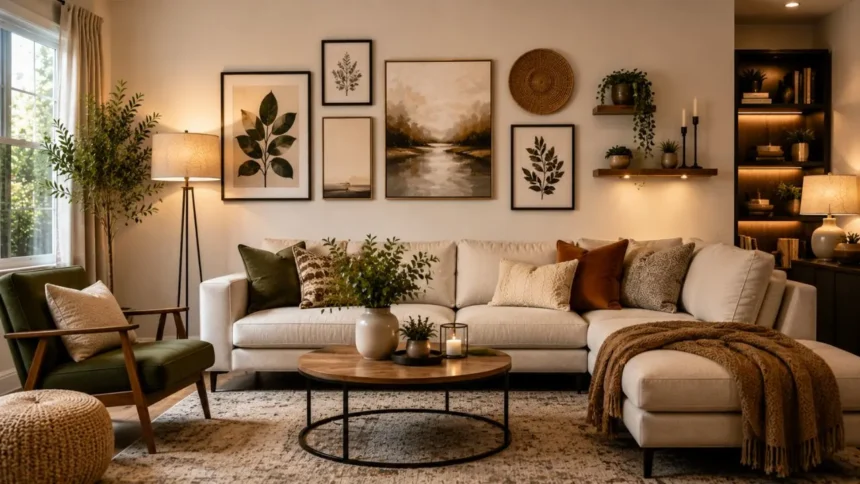
An empty living room wall can make an otherwise comfortable space feel unfinished. Even when the sofa, rug, and lighting are carefully chosen, a large blank surface may leave the room without a clear focal point. The right wall decor can connect your furniture, introduce personality, improve visual balance, and make the entire living area feel more welcoming.
Decorating a blank wall does not mean covering every available inch. A successful design gives the eye somewhere to focus while preserving enough open space for the room to breathe. Depending on your home, that focal point might be oversized artwork, a gallery wall, a mirror, floating shelves, textured paneling, decorative lighting, or a meaningful personal collection.
Current living room wall decor trends are moving toward character, texture, and personal storytelling rather than generic matching prints. Three-dimensional finishes, sculptural plaster, wood paneling, textured wallpaper, curated gallery walls, and mixed-media displays are gaining attention because they make rooms feel layered and individual.
Before choosing a design, consider the wall’s size, location, surrounding furniture, natural light, and practical purpose. The best blank wall ideas do more than fill space. They respond to the proportions of the room, complement your decorating style, and reflect the people who actually live in the home.
Assess the Empty Wall Before Adding Decor
Begin by identifying why the wall feels empty. It may be unusually wide, positioned above a low sofa, surrounded by tall ceilings, or disconnected from the rest of the room. Taking a photograph from the main entrance can help you see the space more objectively and reveal whether the problem involves scale, placement, color, or a lack of visual contrast.
Next, decide whether the wall should become the room’s main focal point or quietly support an existing feature. A wall behind the sofa can usually handle a strong decorative statement, while a wall beside a fireplace may require a simpler treatment. When several walls compete for attention, the living room can feel busy instead of thoughtfully layered.
Measure the available wall area and the furniture positioned beneath it. Include the width of the sofa, console, fireplace, television, windows, and nearby doors. Accurate measurements prevent you from purchasing wall art that looks impressive online but appears too small, too large, or awkwardly positioned after installation.
For artwork above a sofa, designers commonly recommend a display measuring roughly 60% to 75% of the sofa’s width. For example, a 100-inch sofa generally works well with artwork or a grouped arrangement measuring approximately 60 to 75 inches wide. This creates a visual relationship between the furniture and the wall decor.
Make an Impact with Oversized Wall Art
One oversized artwork is one of the easiest ways to decorate a large living room wall. A substantial painting, photograph, textile, or framed print creates an immediate focal point without requiring a complicated arrangement. It can also introduce the color palette that guides your cushions, rug, curtains, and smaller decorative accessories.
Choose an image that feels connected to the atmosphere you want to create. Abstract artwork can add movement and contemporary energy, while landscapes often create a calmer mood. Botanical prints, architectural photographs, minimalist line drawings, and expressive paintings can all work, provided their colors and visual weight complement the furniture below.
Large wall art does not need to match every color in the room. Instead, look for one or two shades that relate to your existing decor. A piece containing subtle green, rust, blue, or warm neutral tones can connect separate furnishings without making the living room look overly coordinated or similar to a furniture showroom.
Oversized artwork works particularly well in rooms with high ceilings or above a long, low console. It can create a stronger design statement than several undersized prints and may make a small living room feel more intentional by reducing visual clutter.
Build a Gallery Wall That Tells a Story
A gallery wall is ideal when you have multiple photographs, prints, paintings, sketches, or meaningful objects to display. Rather than treating it as a random collection of frames, give the arrangement a connecting element. This may be a shared color palette, matching frames, similar subjects, consistent matting, or a repeated visual shape.
For a clean and formal look, arrange equal-sized frames in a structured grid. Keep the spacing consistent and use similar frames throughout the display. This approach works well with family photography, black-and-white images, botanical prints, architectural drawings, or a series of artworks from the same artist.
For a relaxed, collected appearance, mix frame sizes, materials, and art styles. Begin with one visually strong central piece, then build outward using smaller items. Architectural Digest highlights this center-first method as an effective way to create a balanced arrangement that gradually tapers toward the outer edges.
The newer “memento wall” approach takes gallery walls beyond framed art by including letters, postcards, children’s drawings, maps, newspaper clippings, travel keepsakes, and inherited objects. This personalized style has become increasingly relevant because it prioritizes memory and character over purchasing an instantly coordinated set of prints.
Use Mirrors to Add Light and Visual Space
A mirror can decorate an empty wall while making the living room appear brighter and more open. It reflects daylight, lamps, artwork, and architectural details, creating additional visual depth. This makes mirror wall decor particularly useful in apartments, narrow living rooms, darker spaces, and rooms with limited windows.
Before hanging a mirror, check what it will reflect. A mirror facing a window, attractive light fixture, plant, or artwork can enhance the room. One positioned opposite visible cables, a cluttered entryway, or an unfinished corner may draw unwanted attention to the very details you would prefer to minimize.
A large round mirror can soften a room filled with rectangular furniture, windows, and frames. Arched mirrors introduce an architectural shape, while rectangular mirrors can visually extend a console or fireplace. Antique, wooden, black metal, brass, and frameless designs each create a different mood, so choose a finish that relates to other materials in the room.
Avoid using a mirror that is noticeably narrower than the furniture beneath it unless the styling is intentionally asymmetrical. Above a sofa or console, the mirror should feel substantial enough to anchor the arrangement. You can balance a smaller mirror by adding wall sconces, plants, ceramics, or artwork on either side.
Turn the Wall into an Accent Feature
Paint is one of the most affordable ways to transform an empty living room wall. A deeper or warmer color can create contrast behind a pale sofa, highlight architectural details, or define a seating zone in an open-plan home. Olive green, clay, chocolate brown, muted blue, burgundy, and charcoal can produce a sophisticated backdrop.
An accent wall works best when there is a clear reason for emphasizing that particular surface. Suitable locations include the wall behind the sofa, fireplace, media console, bookcase, or main artwork. Selecting a random wall purely because it is empty can make the color feel disconnected from the furniture layout.
Wallpaper introduces pattern, texture, and visual movement that paint alone cannot provide. Large botanical designs, soft murals, grasscloth-inspired finishes, geometric patterns, and vintage-style florals can all create a memorable living room feature wall. Wallpaper is also experiencing renewed interest as homeowners move toward more expressive and layered interiors.
Renters can create a similar effect with removable wallpaper or peel-and-stick murals. Test a sample first because adhesive products respond differently to paint finishes, humidity, and wall texture. For a smaller commitment, frame sections of wallpaper as artwork or apply the pattern inside wall molding rather than covering the entire surface.
Add Texture with Paneling and Architectural Details
Textured wall treatments can make a plain living room feel custom-designed. Vertical wood slats, fluted panels, picture-frame molding, beadboard, limewash, plaster effects, and decorative trim introduce dimension through light and shadow. These options are especially effective when the room needs visual interest but you prefer a restrained color palette.
Picture-frame molding suits classic, transitional, and Parisian-inspired interiors. It can be painted the same color as the wall for a subtle architectural effect or finished in a contrasting shade for stronger definition. Artwork may be positioned inside the molding, although the panels can also remain empty when their proportions are attractive.
Wood wall paneling adds warmth and can help connect a modern living room with natural materials elsewhere in the space. Full-height panels create a dramatic statement, while a half-wall treatment may feel more suitable in a smaller room. Applying paneling to one section can also define a reading corner, fireplace, or television area.
Three-dimensional wall treatments are among the notable living room wall decor directions for 2026. Designers are using sculptural plaster, textured wallpaper, tile, and wood paneling to create walls that provide a tactile experience rather than functioning only as flat backgrounds.
Style Floating Shelves and Picture Ledges
Floating shelves combine decoration with practical storage. They provide space for books, framed prints, plants, ceramics, candles, and personal objects without occupying valuable floor area. This makes them useful for small living rooms, narrow walls, reading corners, and spaces where freestanding cabinets would feel too heavy.
Avoid filling every section of a shelf. Combine vertical books with horizontal stacks, vary the height of decorative items, and leave some negative space between groups. A limited color palette can help unrelated objects feel connected, while repeating materials such as wood, black metal, pottery, or glass creates rhythm.
Picture ledges are shallower than standard shelves and allow artwork to be layered rather than permanently arranged. You can place a large print at the back and overlap it with smaller frames in front. This setup makes it easy to update the display seasonally or add new photographs without creating additional holes in the wall.
When installing ledges above a sofa, consider head clearance as well as appearance. They should be high enough to prevent people from leaning against the frames but low enough to remain visually connected to the seating. Picture ledges can also extend across a long wall to create one continuous, organized display.
Decorate Around the Television Thoughtfully
The television often occupies the largest living room wall, but it does not need to dominate the room visually. Begin by choosing a media console that is wider than the screen. This creates a stable foundation and prevents the television from appearing top-heavy or disconnected from the furniture below.
A gallery wall can help a black television screen blend into its surroundings. Use frames in different sizes while maintaining a common color, finish, or subject. Keep enough space around the screen for ventilation and avoid positioning delicate objects where heat, cables, or frequent adjustments could cause problems.
Built-in cabinetry, floating shelves, slatted wood panels, or a painted background can turn the television area into an intentional feature wall. Dark paint may reduce the contrast between the screen and the wall, while lighter wood paneling can add warmth. Closed storage helps conceal gaming equipment, remote controls, routers, and loose cables.
Art-displaying televisions provide another option for homeowners who dislike looking at a blank screen. Recent popular living room projects on Houzz have incorporated televisions that display artwork when not in use, allowing the media wall to remain visually calm and connected to the rest of the decor.
Fill Large Walls and High-Ceiling Living Rooms
A large wall requires decor with enough scale to relate to the architecture. One small frame positioned in the center will usually appear lost. Consider a large painting, oversized textile, structured gallery arrangement, tall mirror, substantial shelving system, or architectural wall treatment that occupies a meaningful portion of the available area.
For a long wall, create visual zones rather than spreading unrelated objects from one end to the other. You might position artwork above the sofa, a mirror over a console, and a tall plant near the corner. Repeating colors or materials across these zones will help the full wall feel connected.
High ceilings often make furniture appear concentrated in the lower half of the room. Draw the eye upward with vertically arranged artwork, tall paneling, large curtains, sculptural lighting, or a floor-to-ceiling bookcase. The goal is not necessarily to fill the wall to the ceiling but to create enough height to balance the room’s proportions.
Large-scale art is particularly effective in rooms with tall ceilings and above low storage furniture. Expansive gallery walls can also work, but the individual pieces should relate to the overall scale. Larger walls generally need larger artwork or broader groupings to create a cohesive effect.
Explore Fabric, Baskets, and Sculptural Wall Decor
Not every living room wall needs framed artwork. Fabric wall hangings, quilts, tapestries, and woven textiles add softness while improving the room’s sense of warmth. They work especially well in spaces containing many hard surfaces, such as tile flooring, glass tables, stone fireplaces, or metal furniture.
A collection of woven baskets can introduce pattern, natural texture, and organic shape. Choose baskets with variations in size and weaving style but maintain a connecting color story. Arrange them closely enough to read as one composition rather than scattering small pieces across the entire wall.
Sculptural wall decor can include ceramic forms, carved wood, metal pieces, decorative plates, masks, or three-dimensional installations. These objects create shifting shadows as daylight changes, adding depth without requiring bright color. Designers increasingly recommend considering textiles, woven pieces, wall sculptures, and vintage finds as alternatives to conventional framed art.
When displaying heavier decorative objects, use appropriate anchors and check the product’s weight. This is particularly important above sofas, chairs, play areas, and walkways. A wall arrangement should not only look attractive but also remain stable and suitable for the way your household uses the room.
Highlight Wall Decor with Thoughtful Lighting
Even carefully selected artwork can disappear in a poorly lit living room. Position floor lamps, table lamps, wall washers, or picture lights so they draw attention to the display without creating distracting reflections. Lighting can strengthen color, reveal texture, and make the wall feel more visually important after sunset.
Picture lights create a traditional gallery-inspired effect and work well above large paintings, framed photographs, and bookcases. Rechargeable versions provide a practical option when electrical wiring is unavailable. Select a fixture that is proportional to the artwork and relates to the room’s other metal finishes.
Wall sconces can frame a mirror, large artwork, shelving unit, or fireplace. A symmetrical pair produces a formal effect, while one sculptural sconce can contribute to an asymmetrical layout. Plug-in sconces offer renter-friendly flexibility, although visible cords should be managed with safe cable covers.
Living room lighting should support both the wall display and everyday activities. Houzz recommends positioning lighting in relation to artwork you want to illuminate while maintaining suitable light for reading and other functions. The strongest spaces combine decorative effect with practical comfort.
Try Budget-Friendly and Renter-Friendly Wall Ideas
Decorating an empty wall does not require original paintings or expensive custom framing. Downloadable prints, thrift-store artwork, secondhand frames, family photographs, book illustrations, fabric remnants, maps, and children’s art can all become polished displays when presented with consistent matting or coordinated frames.
For a low-cost oversized artwork, stretch patterned fabric over a lightweight wooden frame or cover a blank canvas with removable wallpaper. Wallpaper-covered canvases create graphic impact without requiring advanced painting skills and can be updated when your style changes.
Command-style strips, removable hooks, leaning frames, picture ledges, and lightweight textiles provide decorating options for renters. Always check the weight limit and follow the manufacturer’s installation instructions. Test removable adhesives in a hidden area because some wall finishes may still experience peeling or discoloration.
Another affordable strategy is to shop your own home. Move artwork from a bedroom, frame an unused scarf, display a vintage tray, or group objects that were previously stored separately. Creating new combinations from meaningful belongings often produces a more personal result than purchasing a complete wall decor set.
Hang Wall Art at the Right Height
Artwork that is positioned too high can appear disconnected from the room. As a general starting point, place the center of a standalone artwork approximately 57 to 60 inches from the floor. This aligns the piece near average eye level, although ceiling height, furniture, and the viewer’s position may require adjustment.
When hanging artwork above a sofa, console, or sideboard, treat the furniture and artwork as one composition. The bottom of the frame is often positioned around 6 to 10 inches above the furniture. Excessive space between them can make the artwork appear as though it is floating independently.
For a multi-frame arrangement, measure the outside dimensions of the complete group rather than treating every piece separately. Keep the gaps consistent, commonly around two to four inches for compact gallery walls. Wider spacing may cause the individual pieces to look unrelated rather than part of a unified display.
Before making holes, trace each frame on paper and attach the templates to the wall with painter’s tape. This allows you to test the height, spacing, and overall composition from different areas of the room. Mocking up wall arrangements with paper is an established way to reduce placement mistakes.
Avoid Common Living Room Wall Decor Mistakes
The most common mistake is choosing wall decor that is too small. A single miniature print above a long sofa may look accidental, even when the image itself is attractive. Increase the scale, combine several pieces into one arrangement, or use a larger mat and frame to give a smaller image more presence.
Another mistake is decorating every wall with equal intensity. Rooms need quieter areas where the eye can rest. When one wall contains a bold gallery arrangement, the adjoining walls may require only a mirror, a simple print, or no decoration at all. Balance matters more than the total number of decorated surfaces.
Avoid selecting artwork only because it matches the sofa. Wall decor should complement the living room, but it can also introduce contrast, personality, history, and emotion. Generic prints selected solely by color may make the room feel coordinated yet impersonal, especially when every frame comes from the same collection.
Finally, do not ignore practicality. Shelves placed too low, heavy items installed without suitable anchors, highly reflective art opposite a television, and delicate objects within children’s reach can cause ongoing frustration. The most effective modern living room wall design supports safety, comfort, maintenance, and everyday routines.
Final Thoughts
The best living room wall decor ideas for empty walls begin with proportion and purpose. Before purchasing anything, decide whether the wall needs a focal point, practical storage, architectural texture, additional light, or a more personal connection to the people living in the home.
Oversized wall art provides simplicity and impact, while gallery walls offer flexibility and storytelling. Mirrors can increase brightness, floating shelves add display space, and wallpaper or paneling can completely change the architecture. The right solution depends on the room rather than on one universal decorating rule.
Take time to test your arrangement before installing it permanently. Use paper templates, painter’s tape, digital mockups, or temporary leaning displays to evaluate the scale. Viewing the design from the entrance, sofa, and adjoining rooms can reveal issues that are difficult to notice while standing directly in front of the wall.
An empty wall is not simply a space that needs to be filled. It is an opportunity to introduce art, memories, texture, and character into your living room. By choosing meaningful pieces and arranging them thoughtfully, you can create a polished wall that feels connected to both your interior design and your everyday life.
Frequently Asked Questions
What is the best decor for a large empty living room wall?
Oversized artwork, a substantial gallery wall, tall shelving, a large mirror, or textured wall paneling can fill a large wall effectively. Choose one strong concept rather than spreading many small, unrelated objects across the surface.
How do I choose the right size wall art above a sofa?
Aim for artwork or a grouped arrangement measuring around 60% to 75% of the sofa’s width. Position the bottom approximately 6 to 10 inches above the sofa so the pieces feel visually connected.
Are gallery walls still fashionable?
Yes, but current gallery walls feel more personal and collected. Mixing photographs, original art, sketches, travel items, and meaningful mementos creates more character than using a completely matching set of generic prints.
How can I decorate a living room wall on a small budget?
Use downloadable prints, thrifted frames, family photos, fabric panels, removable wallpaper, DIY canvases, or artwork moved from another room. Consistent framing and careful spacing can make inexpensive wall decor look polished.
Should every wall in a living room be decorated?
No. Leaving some walls open gives the eye a place to rest and prevents the room from feeling crowded. Focus on one or two important walls and keep the remaining surfaces quieter for better visual balance.