
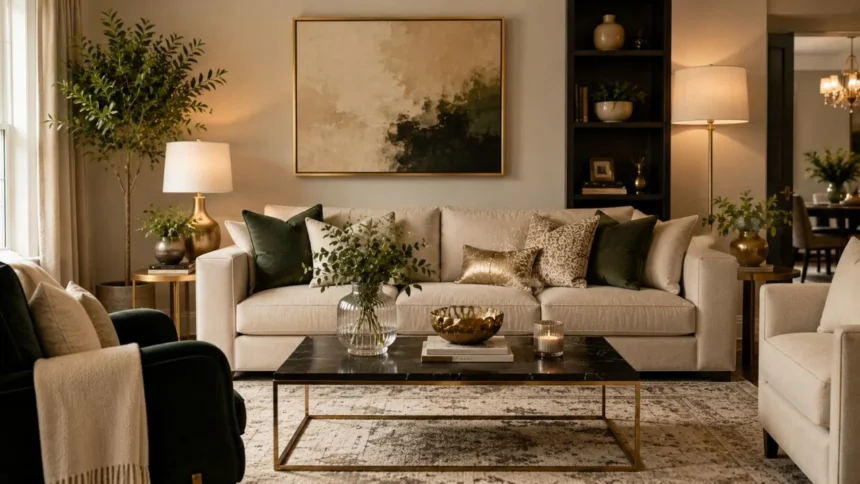
An elegant living room does not need designer furniture, rare artwork, or an unlimited decorating budget. The most luxurious spaces usually feel expensive because every element appears intentional. A coordinated color palette, balanced furniture layout, flattering lighting, and a few carefully selected accessories can make affordable pieces look far more polished than their original price suggests.
The secret is to focus on visual impact rather than filling the room with more belongings. Instead of purchasing several inexpensive decorative items, direct your budget toward improvements that change the whole atmosphere. Paint, curtains, lighting, textiles, furniture placement, and clutter control can deliver a surprisingly effective affordable living room makeover without requiring major renovation work.
Current interior design is also moving away from cold, overly perfect rooms. Recent design coverage emphasizes livable luxury, mood-enhancing lighting, natural materials, layered textures, and comfortable spaces that express personality. This makes an expensive-looking living room more achievable because warmth and thoughtful styling now matter more than matching furniture sets or obvious status symbols.
Before buying anything, study the room as it currently looks. Notice where the eye naturally lands, which objects create visual noise, and whether the furniture feels connected. Improving these details first helps you create a refined, cohesive living room while avoiding impulse purchases that consume your decorating budget without improving the overall design.
Create a Cohesive Design Plan Before Spending Money
A room often looks inexpensive when too many unrelated colors, furniture styles, and decorative themes compete for attention. Begin by choosing a clear design direction such as modern organic, warm minimalism, contemporary classic, transitional, or relaxed luxury. This direction will guide your decisions and prevent you from purchasing attractive items that do not work together once they enter the room.
Create a simple mood board using photographs of living rooms you genuinely enjoy. Look for repeated features across those images, including wall colors, wood tones, fabric choices, furniture shapes, and lighting styles. You may discover that you prefer warm cream walls, dark wood details, linen curtains, sculptural lamps, and a small amount of black for contrast.
Next, select three main colors and one or two supporting accent shades. A practical formula might include a warm neutral for the largest surfaces, a deeper tone for contrast, and a natural wood color for warmth. Smaller accents can appear through cushions, books, artwork, ceramics, or plants without making the living room feel excessively matched.
Measure the room before ordering furniture, rugs, curtains, or wall art. Record the wall lengths, window dimensions, sofa width, ceiling height, and available walking space. Accurate measurements help affordable products look custom-fitted, while incorrectly sized items can make even expensive living room furniture appear awkward, cramped, or disconnected from the surrounding space.
Choose a Sophisticated and Consistent Color Palette
Color is one of the most affordable tools for creating a high-end interior design effect. Warm white, ivory, oatmeal, taupe, mushroom, caramel, olive, charcoal, and muted blue can produce an elegant foundation. The best choice depends on your flooring, natural light, existing furniture, and whether you want the room to feel airy, intimate, dramatic, or calm.
Neutral does not have to mean plain or colorless. A successful neutral living room contains variation through different undertones, textures, and materials. Cream walls, a beige sofa, a walnut table, bronze lighting, and an oatmeal rug may all belong to a neutral palette while still creating depth, warmth, and enough contrast to prevent the room from looking unfinished.
Deeper colors can also make a budget living room feel luxurious. Moody green, chocolate brown, burgundy, navy, or charcoal can be used on a feature wall, built-in shelves, interior doors, or the entire room. Color drenching and richer, more comfortable palettes remain influential in 2026, particularly when they support a relaxed and livable atmosphere rather than a purely decorative trend.
Test paint samples on several walls before choosing a final shade. Observe them during the morning, afternoon, and evening because natural and artificial light can significantly change their appearance. A thoughtful paint choice can make existing furniture appear more coordinated, improve the atmosphere, and provide one of the highest-impact luxury living room ideas for a limited budget.
Use Layered Lighting to Create an Upscale Atmosphere
A single ceiling light rarely creates the soft, welcoming atmosphere associated with expensive living rooms. High-end spaces normally use several light sources at different heights. Combine ambient lighting for general visibility, task lighting for reading or working, and accent lighting to highlight art, plants, architectural features, or decorative objects.
Begin with the fixtures you already have. Replace harsh, cool bulbs with warm bulbs that share the same color temperature throughout the room. Consistent lighting makes paint, fabrics, wood, and skin tones appear more natural, while mismatched bulbs can make one corner look blue and another corner look yellow.
Add a floor lamp beside the sofa, a table lamp on a console, or a small rechargeable lamp on a shelf. Wall sconces can provide an architectural effect, but plug-in versions offer a renter-friendly alternative when rewiring is not possible. Current design guidance continues to emphasize layered, mood-enhancing lighting as an important part of comfortable and visually refined interiors.
Place lamps in separate parts of the room instead of gathering them in one area. This distributes light evenly and creates gentle pools of illumination after sunset. Using dimmers or smart bulbs gives you additional control, allowing the same modern living room to feel bright and practical during the day and intimate, relaxing, and sophisticated in the evening.
Make Your Windows and Walls Look Custom
Curtains can transform the proportions of a room when they are installed correctly. Hang the curtain rod several inches above the window frame and extend it beyond both sides of the glass. This allows the curtains to frame the window rather than cover it, making the opening appear larger and helping more natural light enter the living room.
Choose panels that reach the floor instead of stopping below the windowsill. Curtains that are too short can interrupt the visual height of the room, while floor-length curtains create cleaner vertical lines. Affordable linen-look, cotton-blend, or textured panels can look premium when they are steamed, evenly pleated, and installed with enough fabric to appear full.
Walls also offer opportunities for low-cost architectural detail. Picture-frame molding, simple wooden trim, removable paneling, or a painted border can give plain surfaces more character. Even painting the baseboards, door frames, and interior doors in a contrasting shade can create a custom appearance without the cost of a complete wall treatment.
Artwork should be positioned in relation to the furniture rather than floating close to the ceiling. A large piece above the sofa should feel visually connected to it, while a gallery wall should have consistent spacing. Large frames, oversized mats, and coordinated finishes can make inexpensive prints, personal photographs, or downloadable artwork look more deliberate and valuable.
Upgrade Textiles for a Richer, More Comfortable Look
Textiles soften hard surfaces and introduce the depth that an expensive-looking living room needs. A room containing only smooth upholstery, bare floors, and flat walls may feel incomplete even when the furniture is attractive. Layering woven fabrics, velvet, linen, wool-like materials, cotton, leather, and natural fibers creates a more tactile and professionally decorated result.
Start with the area rug because it visually connects the seating arrangement. Ideally, the front legs of the sofa and chairs should sit on the rug, creating one defined conversation zone. When a large premium rug is beyond your budget, consider a simple natural-fiber base rug with a smaller patterned or textured rug layered over it.
Replace decorative pillows rather than replacing the sofa. Use two or three complementary fabrics, vary the cushion sizes, and avoid purchasing a perfectly matching set. Pillow covers in velvet, bouclé, linen-look fabric, woven cotton, or subtle patterns can introduce an elegant living room color scheme while remaining easy to change as your taste develops.
Finish the seating area with a throw blanket arranged casually over the sofa or chair. Select a material that looks comfortable and suits the season rather than choosing something solely for decoration. Layered, lived-in interiors continue to feel relevant because they combine visual character with real comfort instead of making the home resemble an untouched furniture showroom.
Improve the Furniture Layout and Sense of Scale
You may not need new furniture to improve your living room. Rearranging existing pieces can create a stronger focal point, easier conversation, and more comfortable movement. Pulling the sofa slightly away from the wall, angling a chair toward the seating group, or moving a side table can make the room feel intentionally designed rather than simply filled.
Choose one main focal point and organize the furniture around it. This may be a fireplace, window, television wall, artwork, bookcase, or attractive coffee table. When every item faces a different direction, the room can feel unsettled. A clear visual hierarchy helps the eye understand the layout and makes ordinary furniture appear more purposeful.
Leave enough open space for people to move between the main entrance, seating, windows, and adjoining rooms. Good circulation is a subtle form of luxury because the room feels easier to use. Removing one unnecessary chair or side table may improve the appearance more than adding another decorative object, especially in a small living room.
Modern living room guidance often recommends functional furniture, clean visual relationships, and intentional negative space rather than excessive decoration. Rearranging furniture, relocating artwork, and changing pillow covers are also commonly recommended as effective ways to refresh a room without making major purchases.
Style Tables and Shelves Without Creating Clutter
Luxury styling is usually selective rather than crowded. Clear every coffee table, console, and shelf before deciding what should return. A nearly empty surface may feel strange at first, but it makes it easier to recognize which objects add beauty, meaning, height, texture, or function and which items simply create visual distraction.
On a coffee table, arrange objects in a small group rather than spreading them evenly across the surface. A tray, two stacked books, a candle, and a small sculptural object may be enough. Vary the height and shape of the pieces while leaving part of the table open for drinks, remote controls, or everyday use.
Bookshelves look more expensive when they have breathing room. Combine vertical books, horizontal stacks, framed photographs, pottery, baskets, and a limited number of decorative objects. Repeating one material or color across several shelves creates continuity, while negative space prevents the display from looking like storage disguised as decoration.
Professional surface styling frequently relies on a controlled color story, variation in scale, visual balance, and intentional empty space. These principles cost nothing to apply and can make inexpensive home accessories look carefully collected. The aim is not to display every object you own but to give your strongest pieces enough space to attract attention.
Mix Affordable, Vintage, and Statement Pieces
A complete matching furniture set can make a living room feel less personal, even when it was expensive. A more collected interior combines different periods, materials, and price levels. Pairing a simple modern sofa with a vintage side table, contemporary lamp, woven basket, and traditional artwork creates character without requiring every item to come from a luxury retailer.
Search secondhand shops, online marketplaces, estate sales, clearance areas, and local furniture resellers for solid wood tables, mirrors, frames, lamps, and decorative objects. Focus on construction and shape rather than the current finish. A dated piece with good proportions can often be improved through cleaning, new hardware, paint, wood stain, or a different lampshade.
Choose one statement item to lead the room instead of purchasing several weak focal points. This could be an oversized mirror, sculptural floor lamp, unusual coffee table, vintage cabinet, large artwork, or distinctive chair. Designers often build a room around one standout object because it gives the remaining decorating decisions a clear visual direction.
Spend more on items that must support daily use, such as the sofa, comfortable chair, or durable rug, and save on easily replaceable accessories. Curtains, pillow covers, vases, trays, frames, and decorative books can come from affordable sources. Combining investment pieces with budget-friendly home decor produces a layered result that is more convincing than trying to make everything appear expensive.
Add Natural Materials and Greenery
Natural materials bring variation that imitation finishes often struggle to reproduce. Wood grain, stone, terracotta, linen, rattan, wool, leather, and aged metal contain subtle differences in color and texture. You do not need large quantities; a wooden bowl, stone tray, woven basket, linen cushion, or ceramic vase can make the room feel warmer and more grounded.
When real stone furniture is outside your budget, use it in smaller forms. Marble or travertine coasters, a stone bookend, a ceramic lamp, or a textured planter can introduce the same visual language. Mixing these materials with affordable furniture creates contrast and gives the room a richer, more layered appearance.
Plants can soften empty corners, balance large furniture, and introduce natural shape. One healthy floor plant usually makes a stronger statement than several small, struggling plants placed around the room. Choose a variety suitable for your available light and use a simple planter that coordinates with the surrounding wood, fabric, or metal finishes.
Modern organic living rooms commonly combine natural materials, warm browns, soft whites, greenery, and abundant daylight. This approach works especially well in smaller homes because it can feel bright and relaxed without appearing cold. The goal is not to imitate a trend exactly but to borrow its emphasis on warmth, texture, nature, and comfortable simplicity.
Remove Visual Clutter and Finish the Small Details
Clutter can make even attractive furniture look less valuable. Begin by removing packaging, loose papers, tangled chargers, unused accessories, and objects that belong in another room. Store everyday necessities in decorative boxes, closed cabinets, drawers, lidded baskets, or an ottoman with hidden storage so the room remains functional without appearing disorganized.
Pay particular attention to television cables, extension cords, routers, gaming equipment, and charging stations. Use cable sleeves, clips, small storage boxes, or furniture placement to reduce their visibility. These practical items do not need to disappear completely, but organizing them helps the room look calmer, cleaner, and closer to a professionally styled interior.
Replace small details that make the space feel neglected. Crooked lampshades, damaged outlet covers, missing cabinet handles, scratched frames, wrinkled curtains, and dusty leaves can undermine the entire design. Cleaning, repairing, steaming, polishing, and aligning what you already own may create a more noticeable improvement than purchasing additional decor.
Do not overlook scent and sound. A clean room with fresh air, a subtle candle or diffuser, and comfortable background music often feels more welcoming. Luxury is experienced through more than appearance, so think about how the living room feels when someone enters, sits down, switches on a lamp, and spends time in the space.
Follow a Budget-Friendly Upgrade Order
Begin with free improvements before shopping. Remove unnecessary objects, clean thoroughly, rearrange the furniture, restyle the shelves, relocate artwork, and bring useful pieces from other rooms. These changes reveal what the living room genuinely needs and help prevent spending money on accessories that only hide deeper problems with layout, lighting, or visual balance.
Next, address the largest visual surfaces. Paint the walls, improve the curtains, choose the correct rug size, and update the main light sources. These elements influence a greater portion of the room than small accessories, so they should receive priority when you are deciding how to divide a limited decorating budget.
After the foundation is complete, add textiles and decorative details gradually. Purchase pillow covers, artwork, trays, books, plants, and ceramics only when they support the established color palette. Waiting between purchases gives you time to evaluate the room and usually leads to a more personal, collected, and expensive-looking result.
Keep a small amount of your budget available for unexpected opportunities. A quality secondhand mirror, discounted floor lamp, vintage table, or clearance rug may appear after your initial makeover. A flexible plan allows you to buy strong pieces when you find them rather than settling for weaker products simply because you want to finish the room immediately.
Common Budget Decorating Mistakes to Avoid
One common mistake is purchasing items that are too small for the room. Tiny artwork, short curtains, undersized rugs, and numerous miniature accessories can make the space feel fragmented. Fewer pieces with stronger proportions often create a more confident, luxurious effect while making the room easier to clean, organize, and enjoy.
Another mistake is following every decorating trend at the same time. Trend-driven objects can quickly make a room feel dated when they dominate the design. Use current ideas through inexpensive, replaceable details while keeping large furniture and permanent finishes connected to your personal taste, practical needs, and preferred level of comfort.
Avoid concentrating your entire budget on decorative accessories while ignoring function. A beautiful room will not feel luxurious when the seating is uncomfortable, the lighting is harsh, or people cannot move easily. Prioritize daily experience first, then use styling to strengthen the atmosphere rather than attempting to compensate for practical problems.
Finally, do not confuse an expensive look with a formal or untouchable room. The most successful living rooms reflect the people who use them. Family photographs, meaningful books, travel objects, inherited furniture, children’s needs, and personal collections can remain visible when they are arranged thoughtfully within a consistent and organized design.
Final Thoughts
Learning how to make your living room look expensive on a budget is largely about editing, proportion, and intention. A thoughtful color palette, layered lighting, floor-length curtains, properly scaled furniture, and controlled decorative styling can change the room more effectively than filling it with costly products.
Start with the upgrades that affect the greatest amount of visual space. Paint, lighting, layout, rugs, curtains, and clutter control should normally come before small accessories. Once the foundation feels balanced, you can add personality through cushions, artwork, plants, vintage finds, and objects that hold personal meaning.
Allow the room to develop slowly rather than trying to complete it in one shopping trip. Collected interiors often appear more sophisticated because their pieces have different origins and stories. Taking your time also makes it easier to compare prices, find secondhand furniture, wait for sales, and avoid purchases you may later regret.
Most importantly, create a living room that feels comfortable for your real life. A room looks genuinely luxurious when it is calm, inviting, functional, and personal. By focusing on atmosphere and thoughtful choices instead of price tags, you can create a polished designer look without placing unnecessary pressure on your budget.
Frequently Asked Questions
How can I make my living room look expensive without buying new furniture?
Rearrange the furniture, remove unnecessary clutter, improve the lighting, and restyle your existing accessories. Adding floor-length curtains, coordinated pillow covers, and properly positioned artwork can also transform the room affordably.
What colors make a living room look luxurious?
Warm white, cream, taupe, mushroom, chocolate brown, navy, olive, and charcoal can create an elegant atmosphere. Choose a limited palette and repeat the colors across textiles, furniture, artwork, and accessories.
What is the cheapest way to upgrade a living room?
Start by cleaning, decluttering, rearranging furniture, and moving decorative items between rooms. Paint and updated pillow covers are also relatively inexpensive improvements that can create a noticeable visual change.
How do I make a small living room look high-end?
Use correctly scaled furniture, a limited color palette, layered lighting, hidden storage, and fewer decorative objects. Hanging curtains higher and using one large mirror can also create a more spacious, polished appearance.
Which living room items are worth spending more money on?
Prioritize items used every day, including the sofa, main chair, durable area rug, and comfortable lighting. Save money on replaceable accessories such as cushion covers, vases, trays, decorative books, and seasonal decor.