
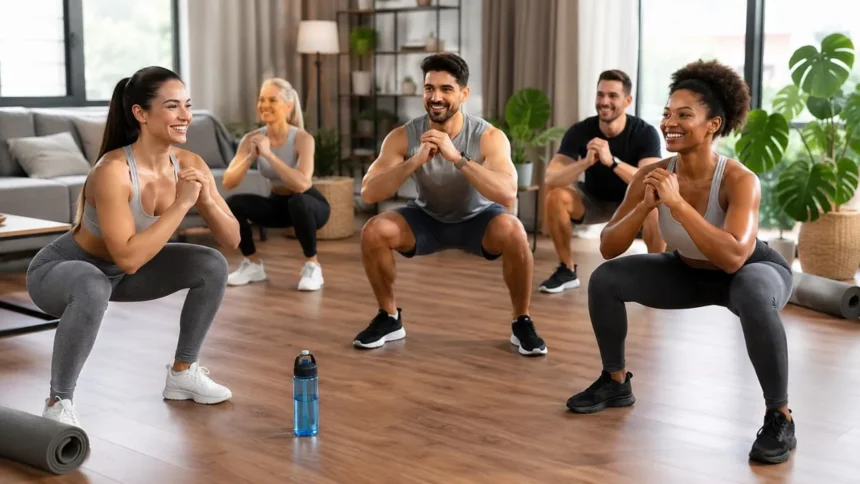
Exercising alone can sometimes feel repetitive, particularly when motivation begins to drop. Group exercises at home offer a more social and enjoyable way to stay active without paying for a gym membership. Whether you exercise with family members, friends, roommates, or coworkers online, sharing a workout can make each session feel more engaging and manageable.
A home group workout does not require expensive machines or a large dedicated fitness room. Many effective activities use body weight, music, resistance bands, chairs, or ordinary household space. The key is selecting exercises that everyone can modify according to their fitness level while still participating in the same routine.
Regular physical activity can support physical health, mental well-being, sleep, strength, and everyday function. Current public-health guidance recommends that most adults work toward at least 150 minutes of moderate-intensity aerobic activity each week, along with muscle-strengthening activities on two or more days. These minutes can be divided into shorter sessions throughout the week.
This guide explores the top five best group exercises at home for building strength, improving cardiovascular fitness, increasing mobility, and having fun together. Each option can be adapted for beginners or experienced participants, making these indoor group exercises suitable for many different ages, abilities, and fitness goals.
Why Group Exercises at Home Are Worth Trying
One of the biggest advantages of a group fitness routine is accountability. When several people agree to exercise at a particular time, skipping the session becomes less tempting. Group members can remind one another, celebrate progress, and provide encouragement during challenging exercises without turning every workout into an intense competition.
Exercising with other people can also make movement feel less like a chore. Music, conversation, friendly challenges, and shared goals create a more positive atmosphere than silently completing repetitions alone. Group-based formats may be especially useful for people who feel motivated by social connection, enjoyment, teamwork, or casual competition.
Home group fitness also removes many common barriers associated with traditional gyms. There is no commuting time, membership fee, crowded locker room, or pressure to use unfamiliar equipment. Participants can wear comfortable clothing, choose their own music, and create an environment that feels welcoming instead of intimidating.
The flexibility of exercising at home is especially valuable for busy households. A family workout can happen before breakfast, after work, or during a weekend gathering. Even a short 20-minute group workout can contribute to weekly activity goals because physical activity can be divided into manageable sessions rather than completed all at once.
What Makes a Good Group Workout at Home?
A good home group workout should be easy to understand and simple to modify. Complicated movements may leave beginners feeling confused, while overly intense routines can discourage people from returning. Familiar exercises such as squats, marching, dancing, wall push-ups, and gentle stretches allow everyone to participate at an appropriate pace.
The routine should also include variety. Combining cardiovascular movement, bodyweight strength training, balance exercises, and mobility work creates a more complete fitness experience. Functional movements such as squats and lunges may also support activities used in daily life, and they can be adapted for individual sessions or group formats.
Space and safety must be considered before the session begins. Move small furniture, secure loose rugs, protect slippery floors, and provide enough distance between participants. Everyone should be able to extend their arms and step in different directions without colliding with another person, a wall, or nearby objects.
Most importantly, the activity should be enjoyable enough to repeat. Consistency is usually more useful than choosing a complicated routine that nobody wants to continue. Recent resistance-training guidance also emphasizes that regular participation, individualization, enjoyment, and safety matter more for most adults than chasing a supposedly perfect program.
1. Full-Body Bodyweight Circuit
A full-body circuit is one of the best group exercises at home because it requires little or no equipment. Participants move through several exercise stations that target different muscle groups. A simple circuit might include chair squats, wall push-ups, alternating lunges, glute bridges, standing knee raises, and a plank variation.
Choose five or six movements and perform each exercise for 30 to 40 seconds. Allow approximately 20 seconds to rest or move to the next station. After completing every exercise, rest for one or two minutes before repeating the circuit two or three times, depending on the group’s energy and experience.
Every movement should have an easier and a more challenging version. Beginners can perform squats using a chair, complete push-ups against a wall, or hold a plank with their hands on a table. More experienced participants can use deeper squats, floor push-ups, longer plank holds, or faster repetitions while maintaining controlled form.
Bodyweight exercises can help participants train strength without purchasing weights or machines. Updated ACSM guidance notes that home-based routines, resistance bands, and bodyweight exercises can produce meaningful improvements in strength and physical function. Training major muscle groups regularly is more important than making the routine unnecessarily complex.
2. Group Dance Cardio Workout
Dance cardio is an energetic option for people who dislike traditional exercise routines. Choose a playlist that everyone enjoys and combine easy movements such as side steps, knee lifts, arm reaches, body rolls, gentle kicks, and forward-and-back steps. The aim is continuous movement rather than perfect choreography.
One person can lead the first song and demonstrate a few repeated moves. During the next song, another participant becomes the leader and adds a new sequence. Rotating leadership keeps the workout fresh, gives everyone a chance to contribute, and prevents one person from carrying the entire session.
Beginners can keep one foot on the floor and use smaller arm movements. Participants seeking greater intensity can add light jumps, deeper knee bends, wider steps, or quicker direction changes. A simple talk test can help control intensity: during moderate activity, people should usually be able to speak, although singing would feel difficult.
Dancing can count toward weekly aerobic activity when it raises the heart rate to a moderate or vigorous level. Physical activity can also provide immediate benefits, including improved mood, reduced short-term anxiety, and better sleep. These benefits make dance cardio a practical choice for a fun group workout at home.
3. Partner Resistance Exercises
Partner resistance training allows two people to exercise together while using controlled pressure, a towel, or a resistance band. Suitable movements include partner rows with a securely held band, seated towel pulls, standing palm presses, assisted squats, and controlled leg-resistance exercises. Clear communication is essential throughout every repetition.
Begin with light resistance so both partners can learn how the movement feels. The resisting person should apply smooth and predictable pressure rather than sudden force. Each partner can perform eight to twelve controlled repetitions before switching roles, although the number should be reduced whenever technique begins to deteriorate.
Partners do not need to have identical strength levels. The stronger participant can use less force, a lighter band, or a more stable position. The beginner can also perform a shorter range of motion, rest more frequently, or replace the partner movement with a solo bodyweight alternative.
This form of home strength training makes exercise more interactive and encourages participants to pay attention to one another. Resistance bands, bodyweight exercises, and home-based strength routines can all be effective when they are performed consistently and adjusted to the individual’s goals and abilities.
4. Group Yoga and Mobility Flow
A group yoga and mobility session is ideal when participants want a lower-impact workout. It can include cat-cow stretches, child’s pose, gentle downward-facing dog, seated twists, hip circles, supported lunges, and slow balance exercises. Participants should move comfortably rather than forcing themselves into a particular position.
Begin with three to five minutes of relaxed breathing and easy joint movements. Progress into standing poses, gentle strength positions, and flowing transitions before finishing with seated stretches. The entire session can last between 20 and 40 minutes depending on the group’s schedule and mobility level.
Chairs, walls, cushions, or folded towels can make the routine more accessible. Someone who struggles with floor exercises can complete seated stretches or standing mobility movements instead. Participants should be encouraged to choose the version that feels stable and comfortable rather than copying the most flexible person in the room.
This group exercise option can complement more intense cardio and strength sessions by focusing on movement quality, balance, and controlled range of motion. Older adults are specifically encouraged to include balance activities alongside aerobic and muscle-strengthening exercise, and multicomponent activity can be completed at home.
5. Team HIIT Relay Workout
A team high-intensity interval training relay adds friendly competition to a home fitness routine. Divide participants into two small teams and create several short stations. Examples include fast marching, step jacks, mountain climbers against a table, squat-to-reach movements, shadow boxing, and quick toe taps near a safe marker.
One member from each team completes an exercise for 20 to 30 seconds while the others rest or perform gentle marching. When the interval ends, the next teammate begins. Continue until everyone has completed every station, then rest before starting another round.
The word “high intensity” should be interpreted according to each participant’s current ability. A beginner may reach a challenging level through fast marching, while an experienced participant may choose jumping jacks or faster footwork. Nobody should feel pressured to match another person’s speed, impact level, or number of repetitions.
HIIT-style relays are best suited to participants who already tolerate moderate exercise and understand the movements being used. People who are inactive, have a disability, live with certain chronic conditions, or plan to begin vigorous exercise may need professional medical guidance before increasing intensity.
How to Organize a 30-Minute Group Workout
Start with a five-minute warm-up designed to gradually prepare the body for movement. March in place, roll the shoulders, circle the arms, perform gentle side steps, and practice shallow squats. The pace should increase gradually instead of moving directly from sitting to intense exercise.
Use approximately 18 to 20 minutes for the main workout. Select one of the five group exercise ideas or combine two compatible options, such as a bodyweight circuit followed by dance cardio. Keep the transitions simple so participants spend more time moving and less time trying to understand instructions.
Reserve the final five minutes for a gradual cool-down. Slow the pace through gentle walking, relaxed breathing, calf stretches, chest-opening movements, and comfortable lower-body stretches. Avoid suddenly sitting or lying down immediately after a demanding cardio interval unless someone feels unwell and requires assistance.
A 30-minute session completed five times per week can contribute to the general target of 150 minutes of moderate-intensity activity. However, the routine should also include muscle-strengthening exercises on at least two days each week. Participants can divide their weekly exercise differently according to their schedules and abilities.
Safety Tips for Exercising in a Group at Home
Before beginning, ask whether anyone has an injury, pain, balance concern, pregnancy-related restriction, or health condition that could affect participation. This does not mean sharing private medical information with the entire group. It simply gives each person an opportunity to choose a safer variation or sit out a particular movement.
Exercise should feel challenging, but sharp pain, chest discomfort, faintness, severe shortness of breath, confusion, or unusual weakness should not be ignored. Stop the activity when concerning symptoms appear. Seek appropriate medical assistance when symptoms are severe, persistent, or potentially urgent rather than attempting to push through them.
Participants should move at their own pace and maintain enough space to exercise safely. Avoid using unstable furniture for support, and never attach resistance bands to objects that may move or break. Water should be available, especially during longer sessions, warm weather, or energetic indoor cardio workouts.
Moderate physical activity is generally safe for most people, but individual circumstances matter. The CDC advises people with chronic conditions to discuss suitable types and amounts of activity with a healthcare professional and recommends medical guidance before vigorous exercise for certain inactive people or those with disabilities.
How to Keep Everyone Motivated
Set a consistent schedule that works for most participants, such as Monday and Thursday evenings or Saturday mornings. Treat the session as a shared appointment rather than something that happens only when everyone feels motivated. A reliable routine reduces the amount of weekly decision-making required.
Rotate the person who selects the workout, playlist, or group challenge. One participant may lead dance cardio, another may organize a strength circuit, and another may guide mobility exercises. This rotation creates variety while helping every group member feel involved in the experience.
Track participation and progress without focusing only on weight or appearance. Celebrate improvements such as completing an extra circuit, using better squat form, exercising consistently for four weeks, or needing fewer breaks. These achievements are often more encouraging and inclusive than comparing body measurements.
Keep competition friendly and optional. A group workout should provide support rather than embarrassment, punishment, or pressure. Welcoming new participants, explaining movements clearly, and offering modifications can reduce intimidation and improve the likelihood that people will return for future sessions.
Choosing the Right Exercise for Your Group
A bodyweight circuit is a strong choice when the primary goal is improving general strength and functional fitness. It is easy to organize, requires minimal equipment, and allows each person to select a suitable difficulty level. It also works well for groups with limited time.
Dance cardio may be better for participants who want an upbeat workout and enjoy music. Partner resistance exercises are suitable for pairs seeking an interactive strength routine, while yoga and mobility sessions work well on recovery days or for people who prefer controlled, lower-impact movement.
A team HIIT relay can add energy and friendly competition, but it should not be the automatic choice for every group. Beginners may benefit from developing movement confidence through moderate circuits and dance sessions before progressing to demanding intervals. Exercise intensity should always reflect individual ability.
The most effective option is usually the one your group enjoys enough to repeat. Physical-activity guidance emphasizes choosing activities that match personal abilities and preferences. A simple routine performed consistently is more valuable than an advanced routine that participants abandon after one difficult session.
Final Thoughts on the Best Group Exercises at Home
Group exercise can transform an ordinary living room, patio, or spare room into a supportive fitness space. You do not need matching equipment, advanced athletic skills, or complicated programming. A safe area, a simple routine, and a few willing participants are enough to begin.
The five options covered in this guide provide a balanced mix of fitness benefits. Bodyweight circuits develop strength, dance cardio supports aerobic activity, partner exercises create teamwork, yoga improves mobility, and HIIT relays provide an energetic challenge for participants who are ready for greater intensity.
Start with shorter workouts and allow the group to build confidence gradually. Even a modest amount of movement is better than remaining completely inactive, and the weekly target does not need to be completed in long sessions. Small, repeatable workouts can contribute to a more active lifestyle.
Ultimately, the best group workout at home is safe, inclusive, enjoyable, and sustainable. Encourage every participant to work at an appropriate level, provide modifications without judgment, and focus on consistent progress. When exercise becomes a shared positive experience, staying active can feel easier and far more rewarding.
Frequently Asked Questions
What is the best group exercise to do at home?
A full-body bodyweight circuit is one of the most versatile choices because it requires minimal equipment and can be modified easily. Squats, wall push-ups, lunges, glute bridges, and planks can serve different fitness levels.
How long should a home group workout last?
A session can last between 20 and 45 minutes, depending on the group’s ability and schedule. Beginners can start with shorter sessions and gradually increase the duration as their stamina and confidence improve.
Can beginners participate in group HIIT workouts?
Beginners can participate when every exercise has a low-impact modification and the intervals remain manageable. Fast marching, wall mountain climbers, and step jacks can replace jumping or advanced floor movements.
Do we need equipment for group exercises at home?
Most home group workouts can be completed without equipment. Chairs, towels, resistance bands, exercise mats, and water bottles may add variety, but bodyweight exercises and dance workouts are enough to begin.
How many times a week should we exercise as a group?
Two to five group sessions per week can work, depending on session length, intensity, and individual recovery needs. Aim for a weekly routine that combines aerobic activity, muscle strengthening, mobility, and adequate rest.