
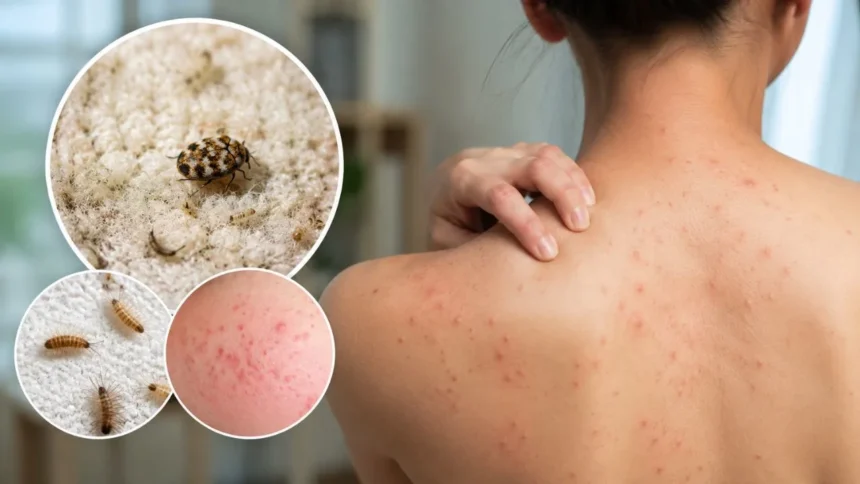
Carpet Beetle Rash: Signs You Should Treat Today
An unexplained cluster of itchy red bumps can make you wonder whether insects are biting you while you sleep. When carpet beetles are present, however, the irritation usually does not come from a bite. It is typically an allergic skin reaction to tiny hairs released by carpet beetle larvae.
Carpet beetle dermatitis may resemble bed bug bites, flea bites, eczema, hives, or another contact rash. The bumps can appear suddenly, itch intensely, and return after seeming to improve, especially when contaminated clothing, bedding, furniture, or stored fabrics remain in use.
Treating the skin can reduce discomfort, but the rash may continue until the household source is found and removed. Larvae often hide in dark, undisturbed places containing wool, fur, feathers, lint, pet hair, dead insects, or other natural materials.
This guide explains carpet beetle rash symptoms, common locations, treatment options, and warning signs that need medical care. It also shows how to identify an infestation, clean affected belongings, distinguish carpet beetles from bed bugs, and prevent the problem from returning.
What Is a Carpet Beetle Rash?
A carpet beetle rash is an allergic or irritant skin reaction associated with carpet beetle larvae. Healthcare professionals may describe it as carpet beetle dermatitis, allergic contact dermatitis, or a papular skin reaction caused by exposure to insect hairs.
Carpet beetle larvae are covered with stiff bristles that help protect them from predators. As larvae crawl, grow, and shed their outer skins, microscopic hairs can become mixed with dust, fabric fibers, bedding, clothing, rugs, and upholstered furniture.
Sensitive people may react when these hairs touch the skin. The immune system treats the material as a threat, producing inflammation, itching, redness or discoloration, bumps, and occasionally small fluid-filled blisters.
The reaction is not contagious and cannot spread directly from one person to another. Several people in the same home may develop symptoms because they share the same exposure, while others may have no rash because their skin does not react.
Carpet Beetles Do Not Bite People
Adult and larval carpet beetles do not feed on human blood. They are not biting insects like bed bugs, fleas, mosquitoes, lice, or certain mites, even though the rash can create a strong sensation of being bitten.
Adult carpet beetles generally feed on pollen and nectar outdoors. They may enter homes through doors, windows, vents, cut flowers, furniture, or stored materials and are often noticed crawling near sunny windows.
The larvae cause household damage by feeding on materials that contain animal-based fibers or debris. Common food sources include wool, silk, fur, feathers, leather, pet hair, lint, dead insects, and natural-bristle products.
When someone says carpet beetles are biting them, the more accurate explanation is usually that larval hairs are contacting the skin. Understanding this difference is important because bed bug treatments and insect repellents will not solve a carpet beetle dermatitis problem.
What Does a Carpet Beetle Rash Look Like?
Carpet beetle rash often appears as groups of small, itchy, raised bumps. On lighter skin, the rash may look pink or red, while on darker skin it may appear purple, brown, gray, or deeper than the surrounding skin.
Some reactions resemble hives, with swollen patches or welts that change shape and location. Other people develop tiny papules, eczema-like areas, rough patches, or small blisters containing clear fluid.
The bumps may occur in irregular groups rather than a predictable straight line. There is usually no clear central puncture mark because the skin has reacted to hairs rather than being pierced by an insect’s mouthparts.
Appearance alone cannot confirm the cause. Bed bugs, fleas, scabies, contact dermatitis, medication reactions, viral rashes, folliculitis, eczema, and other conditions can create similar-looking spots and require different treatment.
Where Does Carpet Beetle Dermatitis Appear?
The rash frequently develops on skin that contacts contaminated fabrics or surfaces. Arms, legs, neck, shoulders, upper back, chest, waist, and areas beneath loose clothing may all be affected.
Symptoms may appear after wearing an infested sweater, handling stored blankets, sitting on upholstered furniture, or sleeping in bedding containing larval hairs. The reaction may therefore occur under clothing rather than only on exposed skin.
The face can also become irritated when hairs are transferred by hands, pillows, towels, or airborne dust. Facial skin is more sensitive, so treatment products that are suitable for the arms may not be appropriate around the eyes or mouth.
A rash limited to one body area may reflect a specific contact source. For example, irritation around the waist might come from stored clothing, while symptoms on one arm could follow contact with an infested chair or blanket.
Common Carpet Beetle Rash Symptoms
Intense itching is the symptom most people notice first. The urge to scratch may become worse at night, after removing clothing, following a warm shower, or when the irritated skin becomes dry.
Raised bumps, swollen patches, redness, discoloration, burning, or stinging may develop next. The skin can feel warm and sensitive even when the infestation itself is hidden somewhere else in the home.
Scratching may create open marks, crusting, bleeding, or thickened skin. These changes can make the original rash look more severe and may introduce bacteria from the fingernails.
Some people experience repeated episodes over several days or weeks. New bumps can appear whenever the skin contacts remaining hairs, making it seem as though insects continue biting despite repeated skin treatment.
How Quickly Can the Rash Develop?
A reaction may develop soon after direct exposure, but symptoms can also appear several hours later. Delayed timing makes it difficult to connect the rash with a particular blanket, sweater, room, or piece of furniture.
People who have been exposed repeatedly may notice increasingly rapid or intense reactions. The immune system can become sensitized over time, so a household item that once caused no symptoms may later trigger itching.
The rash may continue after the live larvae have been removed because shed hairs and cast skins remain in the environment. Vacuuming only the visible beetles without cleaning fabrics and hidden debris may therefore be insufficient.
Keeping a simple record can help identify the source. Note where you slept or sat, which clothing you wore, whether stored textiles were handled, and when each group of bumps appeared.
Carpet Beetle Rash vs. Bed Bug Bites
Bed bugs are blood-feeding insects that usually hide close to sleeping or resting areas. Their bites often affect exposed skin and may appear as small bumps in clusters, lines, or irregular groups.
Carpet beetles do not leave blood spots from feeding, and they do not usually produce the dark fecal stains associated with bed bug activity. Instead, you may find hairy larvae, shed larval skins, fabric damage, or small adult beetles near windows.
Bed bug bites can have a central puncture point, although this is not always visible. Carpet beetle dermatitis usually lacks a bite mark and can appear under clothing that contacted contaminated material.
Neither rash pattern is reliable enough for certain diagnosis. Inspect the room for physical evidence, and consider a qualified pest professional when the symptoms continue but you cannot identify the insect responsible.
Carpet Beetle Rash vs. Flea Bites
Fleas are small jumping insects that feed on blood from animals and people. Their bites frequently appear around the ankles, lower legs, waist, or areas where clothing fits closely.
Flea bites are often small and intensely itchy, with a possible darker point near the center. Pets may scratch excessively, develop hair loss, or carry flea dirt that looks like tiny black specks.
Carpet beetle larvae do not live on pets or feed on them, although they can consume shed pet hair found around the home. A pet may therefore be near a carpet beetle infestation without being the insect’s host.
Check pets and bedding when flea exposure is possible. Treating carpet beetles will not remove fleas, while using flea medicine will not eliminate larvae feeding inside closets, furniture, rugs, or wall spaces.
Carpet Beetle Rash vs. Hives
Hives are raised, itchy welts that may appear suddenly and move or change shape over hours. They can be triggered by food, medicine, infection, pressure, temperature, insect exposure, or an unknown cause.
Carpet beetle dermatitis may include hive-like patches, especially in highly sensitive people. However, it often also produces smaller papules or eczema-like areas where larval hairs contacted the skin.
Hives usually fade in one place and appear elsewhere without leaving a fixed scab. Carpet beetle bumps may remain in the same location for several days, particularly when they have been scratched.
Seek medical advice when hives are widespread, recurrent, or accompanied by other symptoms. Sudden swelling of the lips, tongue, mouth, or throat with breathing difficulty is an emergency rather than a routine carpet beetle reaction.
Carpet Beetle Rash vs. Contact Dermatitis
Contact dermatitis develops when something touching the skin causes irritation or an allergic response. Soaps, fragrances, detergents, metals, cosmetics, plants, fabrics, and insect hairs can all act as triggers.
Carpet beetle dermatitis is therefore a form of contact-related reaction. Its symptoms may include itching, burning, swelling, bumps, blisters, dryness, or oozing skin in areas exposed to larval material.
The difference is the trigger rather than a unique appearance. If the rash improves after avoiding one sweater but returns after sitting on a particular sofa, contaminated fibers may be a more likely explanation than a new skincare product.
A dermatologist can help when the trigger remains unclear. Patch testing may be considered for common contact allergens, while household inspection helps determine whether carpet beetle larvae are present.
Warning Signs You Should Treat Today
A rash that is spreading, intensely itchy, or interfering with sleep deserves attention. Continuing exposure and repeated scratching can make a mild reaction significantly harder to control.
Treat the household source promptly when you find larvae, cast skins, damaged natural fabrics, or repeated adult beetles. Waiting allows larvae to continue feeding, shedding hairs, and moving into additional rooms or stored belongings.
Skin with open scratches, bleeding, yellow crusting, warmth, or increasing tenderness also needs careful monitoring. These changes may signal a secondary bacterial infection rather than an uncomplicated allergic rash.
Early action should include avoiding the suspected area, washing exposed skin, cleaning affected clothing and bedding, and beginning a thorough inspection. Medical treatment may be needed when symptoms are severe or uncertain.
When Carpet Beetle Rash Is an Emergency
Call emergency services for difficulty breathing, wheezing, choking, or a rapidly tightening throat. These symptoms may indicate a severe allergic reaction requiring immediate treatment.
Sudden swelling of the lips, tongue, face, mouth, or throat is another emergency warning sign. Do not wait to see whether an over-the-counter cream reduces the swelling.
Fainting, severe dizziness, confusion, blue or gray lips, or extreme weakness also require urgent care. Use a prescribed adrenaline auto-injector when you have one and have been instructed to use it.
A simple localized carpet beetle rash rarely produces these symptoms, but any allergen can potentially trigger a serious reaction in a susceptible person. Emergency signs should be treated according to the symptoms, not the suspected insect.
Signs of a Secondary Skin Infection
Scratching can break the skin and allow bacteria to enter. Infection becomes more likely when pain, warmth, swelling, or discoloration steadily increases rather than improving.
Pus, cloudy drainage, a bad smell, yellow crusting, or a rapidly enlarging tender area also requires medical attention. The problem may need antibiotic treatment rather than additional anti-itch cream.
Fever, chills, swollen lymph nodes, red streaks, or feeling generally unwell can indicate that infection is spreading. Seek prompt care instead of continuing to manage the rash only at home.
Keep fingernails short and avoid picking scabs or blisters. Covering scratched areas with clean clothing or a suitable dressing can reduce further damage while you arrange medical advice.
How to Treat a Mild Carpet Beetle Rash
Move away from the suspected source and remove clothing that may contain larval hairs. Place the items in a washable bag or container rather than shaking them throughout the home.
Wash the affected skin gently with lukewarm water and a mild, fragrance-free cleanser. Hot water and vigorous scrubbing can damage the skin barrier and make itching more intense.
Apply a cool, damp compress for 10 to 15 minutes at a time. This can reduce itching, heat, and swelling without adding another potentially irritating ingredient.
Use a fragrance-free moisturizer after washing to support the skin barrier. Continue cleaning the environment at the same time because the rash may return if contaminated bedding, clothing, carpets, or furniture remain untreated.
Can You Use Hydrocortisone Cream?
A nonprescription cream containing 1% hydrocortisone may help reduce mild inflammation and itching in some adults. Apply only the amount and frequency stated on the package.
Do not apply it to broken, infected, or extensively blistered skin unless a healthcare professional advises you. Avoid prolonged use because steroids can thin the skin and cause other side effects.
The face, eyelids, genital area, and skin folds require particular caution. Ask a pharmacist or clinician before using hydrocortisone on these sensitive areas or on a young child.
Pregnant or breastfeeding people should also check with a healthcare professional before treatment. A rash that does not improve after a short course needs diagnosis rather than repeated steroid use.
Other Ways to Relieve Itching
Calamine lotion may temporarily soothe itching and help dry small weeping areas. Patch-test it first because even simple products can irritate very sensitive skin.
A cool colloidal oatmeal bath can calm widespread itching. Use comfortably cool or lukewarm water and pat the skin dry rather than rubbing it with a towel.
An oral antihistamine may be suggested when an allergic reaction is disturbing sleep. Ask a pharmacist or doctor which product is suitable, especially when you take other medicines, are pregnant, or need to drive.
Avoid numbing creams, essential oils, vinegar, bleach, rubbing alcohol, and strongly fragranced products. These treatments may create another contact reaction and make the original rash more difficult to evaluate.
How Long Does Carpet Beetle Rash Last?
A mild reaction may begin improving within several days after exposure stops. More significant dermatitis can take one to several weeks to settle, depending on skin sensitivity and scratching.
New bumps should stop appearing once all contact with larval hairs ends. Continued outbreaks usually suggest that another contaminated item or hidden infestation remains in the environment.
Dark marks may persist after the active rash heals, especially on medium and dark skin tones. Picking, severe inflammation, and sun exposure can make this post-inflammatory discoloration more noticeable.
Consult a dermatologist when symptoms last longer than expected or return repeatedly. The cause may be a continuing infestation, another allergy, bed bugs, scabies, eczema, or an unrelated skin condition.
How to Identify Carpet Beetles in Your Home
Adult carpet beetles are very small, rounded insects that may be black or patterned with brown, white, and yellow scales. They are commonly found near windows because they are attracted to light.
The larvae look very different from the adults. They are elongated, brown or striped, covered with hairs, and may have noticeable tufts at one end.
Shed larval skins are an important clue. They look like hollow, brown, fuzzy shells and may be found beneath furniture, inside drawers, along carpet edges, or among stored textiles.
Finding one adult near a window does not always mean there is a major infestation. The more important evidence is live larvae, repeated cast skins, holes in natural fabrics, or ongoing damage in dark storage areas.
Where Carpet Beetle Larvae Hide
Larvae prefer quiet, dark locations where food remains undisturbed. Common hiding places include closet corners, carpet edges, floor vents, drawers, storage boxes, attics, and spaces beneath heavy furniture.
They may also live inside upholstered furniture, feather pillows, wool rugs, taxidermy, stuffed toys, musical instruments, or boxes containing old clothing. Items that have not moved for months deserve close inspection.
Lint, pet hair, and dead insects can support larvae behind baseboards, inside heating ducts, beneath appliances, and around window tracks. Old spider webs, bird nests, and rodent nests may provide additional food.
The word carpet in their name can be misleading. Modern synthetic carpet may not be edible, but larvae can survive on natural fibers, food stains, hair, or debris accumulated around and underneath it.
Signs of a Carpet Beetle Infestation
Small irregular holes in wool sweaters, blankets, rugs, or other animal-based materials are a common warning sign. Damage may be concentrated in one hidden section rather than spread evenly across the item.
You may find thinning fabric, loose fibers, shed skins, fecal pellets, or hairy larvae in drawers and closets. Unlike clothes moth larvae, carpet beetles do not normally leave silk webbing.
Adult beetles appearing repeatedly on windowsills can indicate that larvae are developing somewhere inside. The adults emerge and move toward light after completing their hidden larval stage.
Check stored food as well when certain beetle species are present. Spices, grains, dried pet food, and similar products can occasionally become infested and should be discarded when insects or shed material are found.
How to Find the Source of the Rash
Start in the rooms where symptoms most often appear. Inspect the bed, sofa, favorite chair, rugs, clothing storage, pet areas, and nearby baseboards with a bright flashlight.
Look beneath furniture rather than checking only visible surfaces. Larvae often remain in protected gaps containing hair, lint, food crumbs, feathers, or dead insects.
Examine wool coats, blankets, scarves, felt, silk, leather, natural-bristle brushes, decorative feathers, and rarely used textiles. Place suspicious items inside sealed bags until they can be cleaned.
When the source remains hidden, sticky traps may help identify areas where adult beetles are active. A pest-control professional can inspect wall voids, attics, vents, furniture, and other spaces that are difficult to access safely.
How to Remove Carpet Beetles Safely
Begin by removing their food sources rather than immediately spraying the entire home. Discard badly damaged items that cannot be cleaned, and place them in sealed bags before carrying them through the house.
Vacuum rugs, carpet edges, closets, upholstered furniture, baseboards, vents, and spaces beneath furniture. Use crevice tools to reach narrow gaps where lint, hair, larvae, and eggs can collect.
Empty the vacuum outside immediately or seal and discard the bag. Larvae or eggs left inside the machine may survive and return to the living area.
Repeat the cleaning frequently during the first weeks because one session may miss hidden insects. Continue checking stored items and traps until no new larvae, cast skins, or fabric damage appear.
Washing Clothing and Bedding
Wash washable clothing, sheets, blankets, and curtains according to their care labels. Hot washing and thorough machine drying can kill different carpet beetle life stages when the fabric safely tolerates those temperatures.
Dry-clean wool, silk, structured garments, and other items that cannot be washed normally. Tell the cleaner that you suspect a fabric-pest infestation so the belongings can be handled appropriately.
Do not shake infested textiles inside the bedroom or living room. Shaking can spread hairs, cast skins, eggs, and larvae onto other surfaces and may trigger additional skin exposure.
After cleaning, store vulnerable items in airtight containers or sealed garment bags. Placing clean clothing back into an infested closet without cleaning the shelves and surrounding gaps may lead to reinfestation.
Cleaning Carpets and Upholstered Furniture
Vacuum both the upper surface and accessible underside of rugs. Pay particular attention to edges, areas beneath furniture, rug pads, and sections that receive little foot traffic.
Use furniture attachments along seams, buttons, folds, cushions, and the underside of upholstered pieces. Hair, food debris, and natural stuffing can support hidden larvae.
Professional cleaning may be helpful for valuable rugs, large upholstered items, or furniture containing feathers or animal hair. Surface spraying alone may not reach larvae living inside the stuffing.
Wear long sleeves and gloves during heavy cleaning when you already have a rash. Change clothes and shower afterward to remove hairs that may have settled on your skin.
Should You Use Pesticides?
Many carpet beetle problems can be controlled through inspection, cleaning, laundering, and removal of infested materials. Pesticides may be unnecessary when the food source is successfully eliminated.
When chemical treatment is needed, choose only a product specifically labeled for carpet beetles and the exact indoor location being treated. Follow every instruction, ventilation requirement, and safety precaution.
Never spray insecticide onto your skin, clothing, bedding, pillows, or surfaces that directly contact food unless the label explicitly permits that use. Do not assume that more product will provide better control.
A licensed pest professional is appropriate for widespread, repeated, or inaccessible infestations. Professional treatment is particularly useful when larvae are suspected inside walls, attics, vents, valuable furniture, or large wool carpets.
Why Bug Bombs Usually Are Not the Answer
Total-release foggers distribute pesticide through open room air but may not reach the cracks, fabric layers, furniture interiors, and hidden debris where carpet beetle larvae are feeding.
Foggers can also create unnecessary pesticide exposure for people and pets. Incorrect use near flames, appliances, or electrical sources may create an additional fire or explosion hazard.
Even if some adult insects are killed, the original food source can remain untouched. Eggs and larvae hidden inside stored items may continue developing after the room is treated.
Focused cleaning and source removal are more important than filling a room with pesticide. Use a targeted integrated pest-management approach rather than relying on a single dramatic treatment.
How to Prevent Carpet Beetles From Returning
Vacuum regularly in areas where lint, pet hair, crumbs, and dead insects collect. Move lightweight furniture occasionally so hidden edges do not remain undisturbed for long periods.
Clean clothing before placing it into long-term storage. Food stains, body oils, and perspiration can make fabrics more attractive to larvae even when the material is not entirely natural.
Store wool, fur, feathers, silk, and other vulnerable products in tightly sealed containers after confirming they are pest-free. Inspect stored collections at least several times a year.
Repair damaged screens and seal gaps around doors, vents, windows, pipes, and roof spaces. Remove abandoned bird, rodent, wasp, or bee nests safely because they may contain feathers and insect remains that support larvae.
Can Pets Carry Carpet Beetles?
Carpet beetles do not normally live on cats or dogs like fleas. They may, however, feed on pet hair that accumulates beneath furniture, inside crates, around baseboards, or in bedding.
Pet bedding containing wool, feathers, food residue, or shed hair can become an attractive location. Wash it regularly and inspect the seams, underside, and surrounding floor.
A pet that is scratching should still be examined for fleas, mites, allergies, or skin disease. Do not assume that every animal itch is connected to carpet beetles found elsewhere in the home.
Avoid placing household insecticide directly on a pet. Use only veterinary products recommended for the animal and keep pets away from treated rooms for the period stated on the pesticide label.
Carpet Beetle Rash in Children
Children may scratch an itchy rash repeatedly, increasing the risk of broken skin and infection. Keep their fingernails short and use soft clothing to reduce damage during sleep.
Do not apply adult-strength or medicated products without checking the age instructions. Ask a pediatrician or pharmacist before using hydrocortisone, antihistamines, or other treatments on a baby or young child.
Wash toys, bedding, dress-up costumes, stuffed animals, and stored blankets when an infestation is suspected. Some items may require careful heat, freezing, or professional cleaning according to their materials.
Seek prompt medical advice when a child develops widespread blistering, fever, facial swelling, breathing difficulty, significant pain, or a rash that does not begin improving after exposure ends.
Carpet Beetle Rash During Pregnancy
Pregnancy does not necessarily make carpet beetle dermatitis more dangerous, but medication choices require additional care. Check every anti-itch cream and oral antihistamine with a maternity professional or pharmacist.
Use nonmedicated measures first when appropriate, including cool compresses, fragrance-free moisturizer, gentle washing, and avoiding the contaminated environment while it is cleaned.
Do not participate in pesticide application or enter treated spaces before the label says it is safe. Good ventilation and professional pest advice can reduce unnecessary exposure.
Urgent care is needed for breathing difficulty, throat tightness, facial swelling, faintness, or a severe rapidly spreading reaction. Pregnancy should not delay emergency treatment for possible anaphylaxis.
When to See a Dermatologist
Book an appointment when the rash is severe, widespread, blistering, or painful. Medical assessment is also useful when symptoms continue despite thorough cleaning and avoidance.
A dermatologist can check for eczema, hives, scabies, folliculitis, contact allergy, insect bites, fungal infection, or another cause. Treating the wrong condition repeatedly may delay relief.
Bring clear photographs showing the rash at its worst and any insects, larvae, or cast skins you have found. Keep specimens sealed rather than carrying loose insects into the clinic.
Mention new soaps, detergents, medicines, supplements, clothing, pets, travel, hotel stays, and household pest activity. These details help the clinician consider several possible triggers instead of focusing only on carpet beetles.
How Carpet Beetle Rash Is Diagnosed
There is no simple home test that proves carpet beetle hairs caused a rash. Diagnosis usually depends on the skin’s appearance, exposure history, household evidence, and improvement after the source is removed.
The healthcare professional may ask when symptoms began, where they appear, which rooms are involved, and whether other household members are affected. Timing and contact patterns can narrow the possibilities.
A skin scraping, swab, or other test may be performed when infection, scabies, fungus, or another condition is suspected. Patch testing can help identify common allergic contact triggers.
Pest identification is a separate part of the process. A university extension service, entomologist, or licensed pest-control professional may be able to confirm whether a collected insect is a carpet beetle.
Common Mistakes That Keep the Rash Returning
Treating only the skin is the most common mistake. Cream may calm existing inflammation, but new bumps can continue while contaminated fabrics and hidden larvae remain nearby.
Another mistake is spraying visible adult beetles without finding the larval food source. Adults near a window may have emerged from a closet, wall space, bird nest, or item several rooms away.
Cleaning only the center of a carpet also misses the areas larvae prefer. Baseboards, furniture undersides, closet corners, vents, storage boxes, and rug edges need careful inspection.
Finally, replacing bedding without treating the room can contaminate the new items. Complete the environmental cleanup, wash exposed textiles, and continue monitoring before assuming the infestation has ended.
Final Thoughts
Carpet beetle rash is usually an allergic skin reaction to hairs shed by carpet beetle larvae, not a series of insect bites. It may cause itchy bumps, hives, burning, small blisters, or eczema-like patches.
Mild symptoms may improve with trigger avoidance, gentle washing, cool compresses, fragrance-free moisturizer, and suitable anti-itch treatment. Severe, infected, persistent, or uncertain rashes need professional medical assessment.
Long-term relief depends on removing the household source. Vacuum hidden areas, wash or dry-clean infested fabrics, discard badly damaged belongings, remove lint and hair, and store clean natural fibers in sealed containers.
Seek emergency help for breathing difficulty, throat tightness, faintness, or sudden swelling of the mouth, tongue, lips, or face. These symptoms may signal a serious allergic reaction rather than routine dermatitis.
Frequently Asked Questions
Do carpet beetles bite humans?
No. Carpet beetles do not feed on human blood. The rash is usually an allergic reaction to tiny hairs shed by the larvae or their cast skins.
What does carpet beetle rash look like?
It may look like clusters of itchy red, brown, purple, or skin-colored bumps. Some people develop hives, eczema-like patches, burning, or small blisters.
How do you get rid of carpet beetle rash?
Avoid the source, wash exposed skin, use cool compresses, and consider an appropriate anti-itch treatment. The infestation must also be removed to prevent new reactions.
How long does carpet beetle dermatitis last?
Mild symptoms may improve within several days after exposure stops. More significant reactions can last several weeks, particularly when scratching or repeated exposure continues.
How can I tell carpet beetles from bed bugs?
Carpet beetles leave hairy larvae, fuzzy cast skins, and damaged natural fabrics. Bed bugs feed on blood and may leave dark stains, shed flat skins, eggs, or live bugs near sleeping areas.