
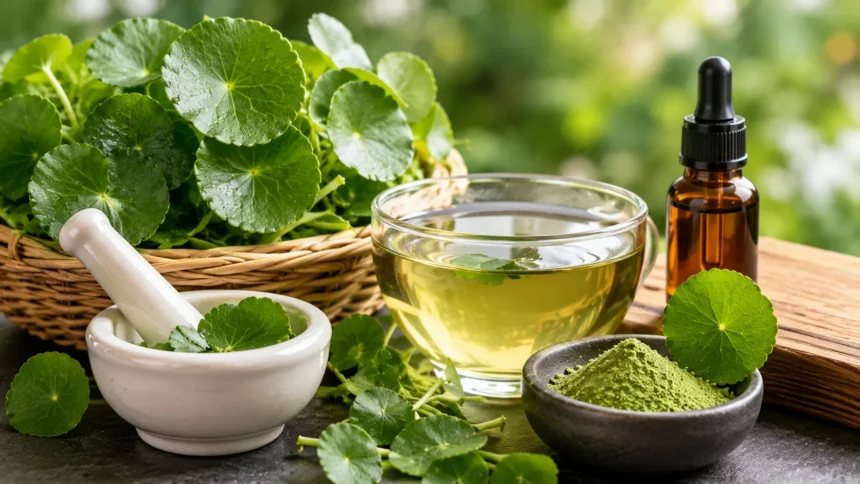
Gotu Kola Benefits, Uses and Possible Side Effects
Gotu kola is a traditional medicinal herb that has attracted growing interest for its possible effects on skin health, circulation, wound healing, memory, and emotional wellbeing. Known scientifically as Centella asiatica, the plant has been used for centuries in Ayurvedic and traditional Asian medicine. Today, it appears in capsules, teas, powders, standardized extracts, creams, serums, and other herbal or skincare products.
Many of the proposed gotu kola benefits are linked to naturally occurring plant compounds known as triterpenes, including asiaticoside, madecassoside, asiatic acid, and madecassic acid. Researchers have investigated these substances for their possible effects on collagen formation, inflammation, blood vessels, skin repair, and nervous-system function. However, the strength of evidence differs considerably depending on the health claim being discussed.
Some uses have more encouraging research than others. Gotu kola preparations have been investigated for chronic venous insufficiency and wound-related applications, while early research has also explored cognition and anxiety. Even so, many studies are relatively small, use different extracts or doses, or do not provide enough evidence to establish gotu kola as a proven medical treatment for most conditions.
Natural does not automatically mean risk-free. Gotu kola side effects, medication interactions, liver concerns, pregnancy considerations, and differences between supplements can all matter. This guide explains what gotu kola is, how it may work, its potential benefits and uses, what current evidence suggests, and what safety precautions to consider before adding it to your routine.
What Is Gotu Kola?
Gotu kola, or Centella asiatica, is a low-growing perennial plant found in tropical and subtropical regions. It belongs to the Apiaceae family and grows naturally in moist environments. The leaves have traditionally been eaten as food in certain cultures and have also been prepared as herbal remedies for a wide range of health concerns.
The plant should not be confused with kola nut, despite the similar-sounding name. Gotu kola does not naturally contain caffeine in the way kola nut does. This distinction matters because people sometimes assume gotu kola is a stimulating herb because of its name, when its traditional uses and chemical composition are quite different.
Traditional systems of medicine have used gotu kola for skin problems, wound support, cognitive health, circulation, and general wellbeing. Historical use can provide useful context, but it does not automatically establish clinical effectiveness. Modern healthcare decisions require controlled human research to determine whether a traditional remedy reliably produces meaningful benefits.
Gotu kola supplements may contain dried leaf powder, whole-plant material, concentrated extracts, or standardized amounts of certain triterpenes. Because these products are not identical, results from one extract cannot always be assumed to apply to every gotu kola tea, powder, capsule, tincture, or cosmetic product sold commercially.
How Does Gotu Kola Work?
Researchers are particularly interested in gotu kola’s triterpenoid compounds, including asiaticoside and madecassoside. Laboratory and animal studies suggest that these compounds can influence processes involved in collagen formation, tissue repair, inflammation, antioxidant activity, and blood-vessel function.
Collagen is especially relevant to many of gotu kola’s traditional uses. Collagen provides structural support within the skin and connective tissues, which helps explain why Centella asiatica has been researched in relation to wounds, scars, skin repair, and certain vascular conditions.
Gotu kola may also influence microcirculation, which refers to blood flow through the smallest blood vessels. This potential effect has contributed to research examining its use in people with chronic venous insufficiency, a condition in which veins in the legs have difficulty returning blood efficiently toward the heart.
Research has also explored possible effects on the nervous system, including memory, anxiety, and stress responses. Most findings in these areas remain preliminary, however. A plausible biological mechanism is useful for guiding research, but it should not be mistaken for proof that taking a supplement will reliably produce the same benefit in humans.
Gotu Kola Benefits for Circulation
One of the more studied traditional uses of gotu kola involves blood circulation and chronic venous insufficiency. This condition can occur when veins in the legs have difficulty moving blood back toward the heart, potentially leading to swelling, heaviness, aching, discomfort, or changes in the skin.
Clinical studies using particular Centella asiatica extracts have reported improvements in certain measures related to venous circulation. Some participants experienced reductions in symptoms such as ankle swelling, leg heaviness, or discomfort. These results have made circulation one of the more frequently discussed potential gotu kola benefits.
The evidence still requires caution. Reviews of available studies have found promising results while also noting weaknesses such as small sample sizes, inconsistent reporting, and uncertain risk of bias. This means gotu kola should not be promoted as a proven replacement for established treatments used for venous disease.
People experiencing persistent leg swelling, pain, skin discoloration, ulcers, or one-sided sudden swelling should obtain medical evaluation. These symptoms can have several causes, including potentially serious conditions. A herbal supplement should never delay assessment when symptoms suggest a circulatory problem requiring diagnosis.
Gotu Kola for Varicose Veins
Gotu kola is frequently marketed as a natural supplement for varicose veins, largely because of its potential effects on venous circulation and connective tissue. Varicose veins occur when superficial veins become enlarged and twisted because the valves responsible for controlling blood flow are not functioning effectively.
Certain gotu kola extracts may help improve symptoms associated with chronic venous insufficiency, such as swelling or sensations of heaviness. However, reducing symptoms is not the same as physically removing or permanently repairing an established varicose vein.
Visible varicose veins may require lifestyle measures, compression therapy, or medical procedures depending on severity and symptoms. Modern treatments can include minimally invasive techniques designed to close or remove problematic veins when clinically appropriate.
Someone considering gotu kola for varicose veins should therefore maintain realistic expectations. The herb may have a role as a complementary approach in certain circumstances, but it cannot be assumed to reverse significant structural vein disease or replace medical evaluation when complications develop.
Gotu Kola Benefits for Wound Healing
Gotu kola has a long traditional history as a wound-healing herb, and this area has received substantial scientific attention. Research suggests Centella asiatica compounds may influence collagen production, new blood-vessel formation, inflammation, and other processes involved in repairing damaged tissue.
Experimental studies have found that compounds such as asiaticoside may stimulate activities associated with tissue repair. Some small human studies using topical or standardized preparations have also reported improvements in certain wound-related outcomes, although study quality and formulations vary.
These findings help explain why Centella asiatica appears in modern creams, wound-care preparations, scar products, and skincare formulas. However, results from a carefully formulated topical extract should not be generalized automatically to drinking gotu kola tea or swallowing an unrelated supplement.
Serious wounds require appropriate medical care. Deep cuts, diabetic wounds, burns, infected wounds, spreading redness, pus, fever, severe pain, or wounds that fail to heal should be assessed professionally. Gotu kola should never be used as a substitute for proper wound cleaning, infection management, or medical treatment.
Gotu Kola for Scars and Skin Repair
Centella asiatica has become popular in skincare under names such as cica, tiger grass, or centella. Products containing its extracts are frequently marketed for irritated skin, damaged skin barriers, scars, redness, and post-procedure recovery.
Its popularity is partly related to research suggesting that certain Centella compounds may support collagen synthesis and tissue remodeling. These processes are relevant to scar development because healing tissue continually reorganizes collagen as a wound matures.
Some scar creams contain combinations of Centella extracts with other active ingredients, meaning any improvement cannot necessarily be attributed to gotu kola alone. Scar appearance is also influenced by wound depth, location, genetics, age, sun exposure, infection, and how the injury healed initially.
Topical Centella products may be reasonable for some people seeking gentle skin support, but they cannot guarantee that a scar will disappear. Raised, painful, contractured, or rapidly changing scars may benefit from professional treatment such as silicone therapy, injections, laser procedures, or other dermatologist-directed approaches.
Gotu Kola Benefits for Skin
Beyond wound healing, gotu kola has become widely used in skin-care products intended to support hydration, barrier repair, and irritated or sensitive skin. Centella extracts may have anti-inflammatory and antioxidant properties that could contribute to these effects.
Madecassoside and other Centella-derived compounds are increasingly common in moisturizers and serums. They are often included alongside ingredients such as hyaluronic acid, ceramides, niacinamide, or panthenol to create formulas designed for dry, stressed, or compromised skin.
The overall formula matters more than the presence of one trendy botanical ingredient. A Centella product containing irritating fragrances, strong acids, or other substances may not suit sensitive skin simply because the label prominently advertises cica or tiger grass.
Patch testing can be useful when trying a new topical product. Apply a small amount to a limited area before using it extensively, particularly if you have a history of contact dermatitis or sensitive skin. Stop using the product if persistent burning, itching, swelling, or rash develops.
Can Gotu Kola Improve Memory?
Gotu kola has traditionally been associated with memory and cognitive function, which has led to modern research examining whether it influences attention, learning, or mental performance. Some small clinical studies and preclinical experiments have produced potentially encouraging findings.
Researchers have proposed several mechanisms, including antioxidant effects, changes in neurotransmitter activity, and possible support for neuronal function. However, these mechanisms remain areas of investigation rather than established explanations for a reliable memory-enhancing effect in healthy people.
The quality of human evidence is not yet strong enough to describe gotu kola as a proven cognitive enhancer. Studies often involve small numbers of participants, specialized extracts, or particular populations, making it difficult to generalize findings to everyday supplement use.
Someone experiencing significant memory decline should not rely on herbal supplements without investigating the underlying cause. Sleep disorders, depression, anxiety, medications, nutritional deficiencies, thyroid problems, neurological conditions, and normal aging can all influence memory and require very different approaches.
Gotu Kola for Anxiety and Stress
Gotu kola is sometimes marketed as an adaptogenic or calming herb for stress and anxiety. Early research has explored whether Centella asiatica may influence anxiety-related symptoms or the body’s response to stress, but the available clinical evidence remains limited.
A few small human studies have reported potentially beneficial effects on anxiety or startle responses. However, these findings have not yet been confirmed through enough large, rigorous trials to establish gotu kola as a standard treatment for anxiety disorders.
People should therefore be cautious about supplement advertisements claiming that gotu kola can rapidly eliminate anxiety or replace therapy and medication. Generalized anxiety disorder, panic disorder, and other mental health conditions can have substantial effects on everyday functioning and deserve appropriate evaluation.
Lifestyle measures such as regular sleep, physical activity, stress management, and psychological support can be useful alongside evidence-based treatment when needed. If you choose to try gotu kola, it should be considered a complementary supplement rather than a proven replacement for established anxiety care.
Does Gotu Kola Help With Sleep?
Gotu kola is occasionally included in herbal products marketed for relaxation and sleep, partly because some people describe it as calming rather than stimulating. Interest in Centella asiatica has also extended into research examining resilience to sleep deprivation and nervous-system function.
There is currently insufficient evidence to conclude that gotu kola is a reliable treatment for insomnia. Feeling calmer after taking a supplement does not necessarily mean sleep duration, sleep quality, nighttime awakenings, or long-term insomnia will improve.
Persistent sleep problems can arise from many causes, including stress, anxiety, depression, sleep apnea, pain, medication effects, caffeine, irregular schedules, or environmental factors. Identifying the cause is usually more useful than simply adding a sedating supplement.
If gotu kola makes you unusually drowsy, avoid combining it casually with alcohol or other substances that cause sedation. People taking sleep medications, anti-anxiety drugs, or other sedating medicines should discuss supplement use with a healthcare professional before combining products.
Does Gotu Kola Support Brain Health?
Interest in gotu kola for brain health goes beyond memory. Laboratory and animal research has investigated its antioxidant, anti-inflammatory, and neuroprotective properties, raising questions about whether Centella compounds could influence processes involved in brain aging.
These findings are scientifically interesting but should be interpreted carefully. Results observed in cells or experimental animals do not prove that an ordinary oral supplement prevents dementia, protects against neurological disease, or reverses cognitive decline in humans.
There is currently no strong basis for marketing gotu kola as a treatment for Alzheimer’s disease, stroke-related cognitive impairment, Parkinson’s disease, or other serious neurological conditions. Such claims go beyond the available clinical evidence.
Supporting brain health relies on a much broader pattern that includes physical activity, blood-pressure management, sleep, social engagement, a nutritious diet, avoiding tobacco, and treating relevant medical conditions. A single herb cannot replace these established health measures.
Gotu Kola and Inflammation
Centella asiatica contains compounds that have demonstrated anti-inflammatory activity in laboratory and preclinical research. This is one reason it appears in both herbal supplements and topical skincare products designed for irritated or inflamed tissues.
Inflammation is a normal biological response involved in immunity, injury, and healing. However, different diseases involve completely different inflammatory pathways, so finding that a plant compound affects one laboratory marker does not mean it treats every condition associated with inflammation.
Claims that gotu kola can “remove inflammation from the body” are therefore overly broad. Conditions such as inflammatory bowel disease, rheumatoid arthritis, eczema, cardiovascular disease, and autoimmune disorders require individualized treatment despite all involving inflammation in some way.
Gotu kola may have interesting biological effects worth researching further, but it should not be treated as a universal anti-inflammatory medicine. People with diagnosed inflammatory diseases should continue evidence-based treatment unless their healthcare professional recommends otherwise.
Gotu Kola for Joint and Connective Tissue Health
Because Centella compounds may influence collagen and connective-tissue biology, gotu kola is sometimes promoted for joint health and connective tissue support. The scientific rationale is plausible, but clinical evidence directly demonstrating meaningful improvements in arthritis or joint pain is limited.
Joint pain can arise from osteoarthritis, inflammatory arthritis, injury, gout, tendon problems, infection, or several other conditions. These causes respond differently to treatment, which makes broad herbal claims about “supporting joints” difficult to evaluate.
A supplement that influences collagen formation in experimental tissue does not automatically rebuild cartilage inside an arthritic joint. Cartilage degeneration involves complex mechanical and biological processes that cannot currently be reversed simply by taking a collagen-supporting herb.
Persistent joint swelling, redness, warmth, severe pain, or loss of movement should be medically assessed. Lifestyle measures, physical therapy, medications, and other treatments may provide more predictable benefits depending on the underlying diagnosis.
Gotu Kola for Stretch Marks
Centella-containing creams sometimes appear in products marketed to prevent or improve stretch marks, also known as striae. Stretch marks develop when skin stretches or changes rapidly, commonly during pregnancy, growth spurts, weight changes, or changes in hormone levels.
Because Centella may influence collagen and skin remodeling, researchers have investigated whether topical formulations can reduce the development or severity of stretch marks. Some combination creams have produced encouraging findings, although it can be difficult to determine how much benefit comes from Centella specifically.
Existing mature stretch marks are generally harder to change than newly developing ones. Creams may improve hydration and texture, but they rarely erase established stretch marks completely.
Pregnant people should not assume that every herbal topical or supplement is automatically safe. Products may contain several ingredients, so checking with an obstetric healthcare professional can be sensible before using concentrated herbal preparations during pregnancy.
Gotu Kola Uses in Traditional Medicine
Gotu kola has a long history in Ayurvedic and traditional Asian medicine, where it has been used for a broad range of purposes. Traditional applications include supporting wounds, skin conditions, mental clarity, circulation, and general vitality.
Historical use is valuable because it can highlight plants worthy of scientific investigation. In fact, many modern medicines originated from compounds first identified through traditional plant use. However, tradition itself cannot establish the correct dose, safety, or effectiveness for a modern medical condition.
Traditional preparations also differ from today’s concentrated capsules and extracts. Eating fresh Centella leaves as part of food is not equivalent to consuming a highly standardized supplement containing much larger amounts of particular compounds.
This difference is important when evaluating safety. A plant that has been eaten traditionally does not automatically mean unlimited amounts of every concentrated extract are equally safe. Dose, preparation, purity, and duration of use can substantially change the risk profile.
Gotu Kola Tea
Gotu kola tea is generally made by steeping dried Centella leaves or herbal tea blends in hot water. People may drink it for relaxation, traditional wellness purposes, or because they prefer beverages to capsules.
Tea usually provides a different concentration of plant compounds than standardized extracts used in clinical studies. Therefore, research showing a potential benefit from a specific extract cannot automatically be translated into a recommendation to drink several cups of gotu kola tea.
Commercial teas can also contain multiple herbs. Ingredients such as licorice, valerian, ginseng, or other botanicals may have their own effects, contraindications, and medication interactions. Always read the complete ingredient list rather than focusing exclusively on gotu kola.
Anyone who develops nausea, dizziness, rash, unusual drowsiness, or another persistent symptom after starting gotu kola tea should stop and reassess its use. Herbal beverages can still cause side effects even when they are sold as everyday wellness products.
Gotu Kola Supplements and Extracts
Gotu kola supplements are sold as capsules, tablets, powders, tinctures, and liquid extracts. Some products contain plain powdered herb, while others are standardized to certain triterpene compounds. These differences can substantially affect potency.
There is no single dose that has been proven ideal for every proposed use of gotu kola. Clinical studies have used different preparations and dosing schedules, which means copying one number from the internet may not correspond to the product in your hand.
Supplement quality is another important consideration. Botanical products can vary in identity, concentration, contamination risk, and additional ingredients. Choosing reputable manufacturers and products that undergo independent quality testing can reduce uncertainty.
More is not necessarily better. Taking several gotu kola products simultaneously may substantially increase exposure without providing additional benefit. If you are considering regular concentrated supplementation, discussing the exact product and dose with a pharmacist or healthcare professional is sensible.
What Are the Possible Side Effects of Gotu Kola?
Possible gotu kola side effects can include digestive discomfort, nausea, headache, dizziness, skin reactions, and drowsiness. Not everyone experiences side effects, and severity can vary depending on dose, formulation, and individual sensitivity.
Topical Centella products can occasionally cause irritation or allergic contact dermatitis. Burning, persistent redness, itching, rash, or swelling after applying a new cream should be treated as a reason to stop using the product.
Oral supplements deserve more caution because concentrated plant compounds enter the body systemically. A symptom appearing soon after beginning gotu kola does not prove the herb caused it, but consistent symptoms that resolve after stopping the supplement deserve attention.
Severe allergic symptoms such as facial swelling, throat tightness, wheezing, or difficulty breathing require urgent medical care. Although serious reactions are uncommon, herbal supplements can trigger allergies just like foods, medications, and cosmetic ingredients.
Can Gotu Kola Affect the Liver?
Rare reports and case literature have raised concerns about possible liver injury associated with gotu kola products. These events appear uncommon, but they are important because herbal supplements are often assumed to be harmless to the liver.
Supplement-related liver injury can be difficult to investigate because products may contain multiple botanical ingredients, contaminants, or varying concentrations. Nevertheless, anyone using gotu kola should take unexplained liver-related symptoms seriously.
Possible warning signs include yellowing of the skin or eyes, unusually dark urine, pale stools, persistent nausea, severe fatigue, loss of appetite, or pain in the upper right abdomen. These symptoms require medical evaluation rather than simply lowering the supplement dose.
People with existing liver disease or those taking medications that can affect the liver should be particularly cautious about concentrated gotu kola supplements. A healthcare professional can consider the total combination of medications, supplements, alcohol use, and medical history.
Can Gotu Kola Interact With Medications?
Yes, gotu kola may interact with medications, although many possible interactions have not been studied thoroughly in humans. This uncertainty is itself a reason to be cautious when combining concentrated herbal supplements with prescription drugs.
Because gotu kola may cause drowsiness in some people, combining it with sedatives, sleep medications, certain anti-anxiety medicines, or alcohol could potentially increase sedation or impaired alertness.
Liver considerations may also matter when someone is taking medications that already require careful liver monitoring. Combining several substances with potential hepatic effects can complicate identifying the cause if liver tests later become abnormal.
Always tell your healthcare provider or pharmacist about herbal supplements, including teas, powders, and traditional remedies. Providing the exact product label is particularly helpful because combination formulas may contain several active ingredients with different potential interactions.
Is Gotu Kola Safe During Pregnancy?
There is not enough high-quality safety information to recommend routine oral gotu kola supplementation during pregnancy. Pregnancy changes how potential benefits and risks should be evaluated because substances consumed by the mother may affect fetal development.
Traditional use should not be treated as proof of pregnancy safety. Many herbs have long histories of use but have never undergone rigorous reproductive safety studies in humans.
Topical Centella products represent a different type of exposure from concentrated oral supplements, but the complete ingredient list still matters. A skincare formula may contain retinoids, acids, essential oils, or other ingredients that require separate consideration during pregnancy.
Anyone pregnant, trying to conceive, or undergoing fertility treatment should discuss concentrated gotu kola supplements with an appropriate healthcare professional. Avoiding unnecessary uncertainty is generally preferable when good safety data are lacking.
Is Gotu Kola Safe While Breastfeeding?
Reliable evidence regarding gotu kola while breastfeeding is also limited. It may be difficult to determine whether particular plant compounds enter breast milk in meaningful amounts or how they could affect an infant.
A food containing traditional culinary amounts of Centella is not necessarily equivalent to a concentrated medicinal extract. Supplement doses can provide much higher exposure than ordinary dietary use.
Breastfeeding parents should therefore avoid assuming that an herbal capsule is safe simply because the herb is natural. Infants can be more sensitive to biologically active compounds because their bodies process substances differently from adults.
Discussing supplements with a healthcare professional can help weigh the reason for use against the uncertainty surrounding infant exposure. If the goal is treating a health condition, there may be alternatives with much better-established safety information.
How Much Gotu Kola Should You Take?
There is no universally accepted gotu kola dosage suitable for every health goal. Clinical research has used different extracts, concentrations, and treatment durations, making it difficult to create one evidence-based dose for memory, circulation, skin, anxiety, or other uses.
Commercial supplements may also differ significantly. One capsule may contain powdered leaf, while another contains a concentrated standardized extract, so comparing milligram numbers without understanding the formulation can be misleading.
Following the product label can reduce accidental excessive intake, but it does not prove that the recommended amount will treat a particular medical condition. Avoid increasing the dose simply because you do not notice an immediate effect.
If you are using gotu kola for a health concern rather than occasional wellness use, speak with a healthcare professional or knowledgeable pharmacist. This is particularly important if you take medications, have liver problems, or plan to use the supplement for an extended period.
How Long Can You Take Gotu Kola?
Long-term safety data for concentrated gotu kola supplements are relatively limited. Many clinical studies have evaluated use over weeks or months rather than years, so there is less certainty about continuous long-term supplementation.
This matters because people sometimes begin taking herbal supplements indefinitely once they believe the product is natural. Regular exposure over months or years can create a very different safety situation from short-term use.
If you have been taking gotu kola continuously without a clear reason, periodically reconsider whether it is providing a measurable benefit. Supplements that provide no noticeable or clinically meaningful improvement may simply add cost and potential risk.
Anyone planning extended use should consider discussing it with a healthcare provider, especially when taking multiple medications or supplements. Periodic review can help identify unnecessary products and reduce avoidable interactions.
How to Choose a Gotu Kola Supplement
Begin by looking for Centella asiatica clearly listed on the label. The product should identify the amount per serving and ideally provide useful information about whether it contains leaf powder, whole-plant material, or a standardized extract.
Avoid products that promise unrealistic results such as curing dementia, reversing varicose veins permanently, eliminating anxiety instantly, detoxifying the body, or healing every skin condition. Extremely broad claims are usually a warning sign that marketing has moved beyond the evidence.
Independent testing can provide additional reassurance about identity and contamination. Botanical supplements can occasionally contain heavy metals, microbes, pesticides, or unintended plant material, making manufacturing quality especially important.
Combination products require extra attention because gotu kola may be only one of many ingredients. Evaluate the safety of the entire formula rather than assuming that every component is harmless because the product is marketed as an herbal wellness blend.
Who Should Avoid Gotu Kola?
People with known liver disease should be particularly cautious about oral gotu kola because of rare reports of possible liver injury. Anyone with abnormal liver tests should discuss herbal supplements with their clinician before continuing them.
People taking sedating medications may also need caution because gotu kola can cause drowsiness in some individuals. Combining several sedating substances can affect coordination, alertness, driving ability, and fall risk.
Pregnant and breastfeeding people should generally avoid concentrated oral supplementation unless an appropriate healthcare professional specifically recommends otherwise because good safety evidence is lacking.
Anyone preparing for surgery should tell the surgical team about all supplements being used. Herbal products may influence medications, sedation, bleeding, or other perioperative considerations, and healthcare teams may recommend stopping certain supplements before a procedure.
What Does the Research Really Say About Gotu Kola?
Research on Centella asiatica is promising in several areas, particularly wound-related applications and chronic venous insufficiency. Laboratory evidence also provides plausible biological explanations for effects involving collagen, inflammation, microcirculation, and tissue repair.
However, the overall research base has important limitations. Many human trials are small, older, use different standardized extracts, or have methodological weaknesses. This makes broad conclusions difficult and explains why gotu kola has not become a standard medical treatment for most of the conditions promoted online.
Evidence for memory, anxiety, brain health, and other neurological applications remains particularly preliminary. Some findings justify further research, but they do not establish that ordinary supplements consistently improve cognition or treat psychiatric disorders.
The most accurate description is that gotu kola is a biologically active medicinal plant with several promising areas of research, not a proven cure-all. Keeping that distinction clear allows people to explore complementary therapies without abandoning evidence-based medical care.
When Should You Talk to a Healthcare Professional?
Speak with a healthcare professional before using concentrated gotu kola if you take prescription medications, have chronic health conditions, or use several other supplements. This allows potential interactions and overlapping side effects to be considered together.
Professional advice is particularly useful when you are taking gotu kola for a diagnosed medical problem such as chronic venous insufficiency, anxiety, cognitive decline, persistent wounds, or another ongoing condition. Herbal supplementation should not replace diagnosis or established treatment without good reason.
Stop using the supplement and seek medical assessment if you develop jaundice, dark urine, significant abdominal pain, persistent vomiting, severe fatigue, or another symptom that could indicate liver problems. Serious allergic symptoms require urgent medical attention.
You should also seek evaluation when the symptom you are trying to treat keeps getting worse. A supplement that temporarily masks discomfort can sometimes delay diagnosis, so persistent or unexplained symptoms deserve proper investigation regardless of whether a natural remedy seems to help.
The Bottom Line on Gotu Kola
Gotu kola, or Centella asiatica, is a traditional medicinal plant containing biologically active triterpenes such as asiaticoside and madecassoside. Modern research has explored its effects on wound healing, skin repair, circulation, venous insufficiency, memory, anxiety, and several other areas.
The most encouraging evidence relates to tissue repair and certain circulation-related applications, although even these areas require careful interpretation because clinical studies vary in quality and formulation. Evidence for cognitive enhancement, anxiety relief, sleep, and broader wellness claims remains more limited.
Gotu kola is generally not something that should be viewed as completely harmless simply because it is herbal. Possible side effects include digestive symptoms, headache, dizziness, drowsiness, skin reactions, medication interactions, and rare concerns involving liver injury.
If you want to try gotu kola, choose a reputable product, avoid unrealistic expectations, and consider professional guidance when using it for a health condition. The best approach is to treat gotu kola as a potentially useful complementary herb with promising but incomplete evidence, rather than as a replacement for proven medical care.
Frequently Asked Questions
What is gotu kola mainly used for?
Gotu kola has traditionally been used for circulation, wound healing, skin health, memory, and general wellbeing. Research is most encouraging in certain wound and venous-circulation applications, but evidence varies by use.
Does gotu kola improve memory?
Some early studies suggest possible cognitive effects, but evidence is not strong enough to consider gotu kola a proven memory enhancer. Significant memory problems should be medically evaluated.
Is gotu kola good for skin?
Centella asiatica compounds may support collagen formation and skin repair, which is why they appear in many cica creams and serums. Results depend on the formulation and the condition being treated.
What are the side effects of gotu kola?
Possible side effects include nausea, digestive upset, headache, dizziness, drowsiness, and skin reactions. Rare concerns about liver injury have also been reported with oral products.
Can you take gotu kola every day?
Long-term safety has not been established as clearly as short-term use. If you want to take gotu kola daily for an extended period, particularly with medications, discuss it with a healthcare professional.