
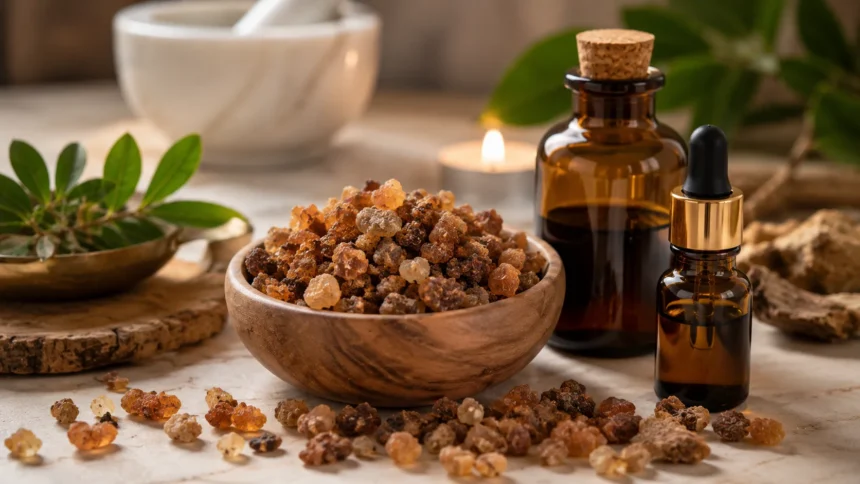
Myrrh: Benefits, Uses, Risks and What Science Says
Myrrh has been used for centuries in traditional medicine, religious ceremonies, perfumes, oral care, and skin preparations. Today, it is still found in essential oils, mouthwashes, tinctures, supplements, creams, and other wellness products. Its long history can make myrrh sound like a proven remedy for almost everything, but traditional use and strong scientific evidence are not always the same thing.
The resin comes mainly from trees in the Commiphora genus, particularly Commiphora myrrha. When the bark is cut, a sticky substance emerges and eventually hardens into reddish-brown pieces of resin. This natural material contains numerous plant compounds, including terpenoids and aromatic constituents that researchers have studied for possible antimicrobial, antioxidant, anti-inflammatory, and pain-relieving activity.
Laboratory and animal research has produced interesting findings, especially around inflammation, microorganisms, wound healing, and oxidative stress. Human evidence, however, remains much more limited. Some small clinical studies suggest possible benefits in areas such as oral health or pain, but the research is not yet strong enough to support many of the broad claims commonly attached to myrrh supplements.
That difference matters if you are considering using myrrh for a health problem. An herbal product can have biologically active ingredients without being an established treatment for a disease. Understanding what myrrh is, where the evidence looks promising, where it remains uncertain, and what safety concerns exist can help you make a more informed decision.
What Is Myrrh?
Myrrh is a natural aromatic resin obtained from several species of Commiphora trees and shrubs. These plants grow mainly in dry regions of northeastern Africa and the Arabian Peninsula. The resin forms as a protective response when the bark is damaged, eventually drying into hard pieces that have a distinctive earthy, smoky, slightly bitter aroma.
Historically, myrrh was valued for far more than its fragrance. Different cultures used it in incense, embalming practices, perfumes, wound preparations, digestive remedies, and oral-care mixtures. Its cultural importance also contributed to its continued reputation as a valuable medicinal plant long before modern laboratory techniques could examine its chemical composition.
Chemically, myrrh is complex rather than being one single active ingredient. It contains volatile oils, sesquiterpenes, terpenoids, steroids, resin acids, and other phytochemicals. Researchers believe several of these substances may contribute to the biological effects seen in laboratory experiments, although the exact activity depends on the species, extraction method, concentration, and preparation used.
Modern commercial products can therefore differ considerably. Myrrh essential oil, powdered resin, tinctures, extracts, mouthwashes, and capsules are not interchangeable simply because the label contains the word “myrrh.” Their concentration and intended route of use may be very different, which is one reason safety instructions and product directions deserve careful attention.
What Is Myrrh Traditionally Used For?
Traditional myrrh uses include caring for wounds, mouth irritation, digestive complaints, aches, respiratory symptoms, and inflammatory conditions. It has also been used as an antiseptic, astringent, fragrance, and incense. These uses developed over generations of traditional practice rather than through the type of controlled clinical trials expected for modern medicines.
Oral care is one of the areas in which traditional use has continued into modern products. Myrrh may be included in certain mouthwashes, tooth-care products, or herbal preparations intended for irritated gums and oral tissues. Its aromatic nature and laboratory evidence of antimicrobial activity help explain why manufacturers continue to use it in this category.
Myrrh has also been applied to the skin in traditional preparations. People historically used resin or extracts on minor wounds, irritated skin, or areas believed to need antimicrobial support. Contemporary essential-oil users sometimes apply diluted myrrh oil to the skin for similar reasons, although essential oils can cause irritation and should not automatically be considered safe because they are plant-derived.
Traditional use can provide useful clues for researchers, but it should not be confused with proof of effectiveness. A remedy may remain culturally important even when modern studies are inconclusive. The most useful question is therefore not whether myrrh has been used for a particular condition, but whether good human research shows that it works safely for that purpose.
Potential Anti-Inflammatory Benefits of Myrrh
Inflammation is one of the most researched potential myrrh benefits. Laboratory studies suggest that compounds within Commiphora myrrha may influence inflammatory signaling pathways. Animal experiments have also reported reductions in certain markers associated with inflammation, which has encouraged researchers to explore whether these effects could eventually have practical medical applications.
This research is scientifically interesting because chronic inflammation contributes to many diseases, from inflammatory skin conditions to arthritis and digestive disorders. However, demonstrating anti-inflammatory activity in cells or animals is only an early step. The human body processes plant compounds differently, and effective concentrations in a laboratory may not be practical or safe for people.
A few small human studies involving myrrh-containing preparations have suggested possible benefits for pain or inflammatory conditions. Some research has used myrrh together with other botanical ingredients, which makes it difficult to determine exactly how much of the result came from myrrh itself. Small study sizes also reduce confidence in making broad recommendations.
For now, myrrh should therefore be viewed as a plant with potential anti-inflammatory properties rather than a proven substitute for anti-inflammatory medication. People with conditions such as arthritis, inflammatory bowel disease, or persistent pain should not stop prescribed treatment in favor of myrrh based on laboratory findings alone.
Can Myrrh Help With Oral Health?
Oral health is one of the more promising areas of modern myrrh research. Myrrh has historically been used for gum irritation and mouth sores, and laboratory studies indicate that certain extracts can affect microorganisms found in the mouth. This has led researchers to investigate myrrh mouthwash and similar products for plaque and gingival inflammation.
Small clinical studies have reported improvements in measures such as dental plaque and gum inflammation among people using myrrh-based preparations. These findings are encouraging because gingivitis involves both bacterial plaque and the body’s inflammatory response. A product capable of influencing either factor could potentially have a supporting role in oral care.
The evidence is still not strong enough to conclude that myrrh works as well as established dental treatments. Studies are generally small, formulations vary, and researchers have called for larger and better-controlled clinical trials. Myrrh mouthwash should therefore be considered a possible complementary product rather than a replacement for brushing, flossing, professional dental cleaning, or necessary dental treatment.
If you have persistent bleeding gums, swelling, loose teeth, significant mouth pain, or sores that do not heal, relying on herbal mouthwash may delay diagnosis of periodontal disease or another oral condition. A dentist can identify the actual problem and determine whether any supplementary product fits safely into your regular oral-care routine.
Does Myrrh Have Antimicrobial Properties?
Myrrh extracts and essential oils have demonstrated antimicrobial effects against certain bacteria and fungi in laboratory experiments. Researchers believe various aromatic and resin compounds may disrupt microbial growth or affect microorganisms through multiple mechanisms. These results partly support the long-standing traditional use of myrrh in preparations for wounds and oral hygiene.
Laboratory antimicrobial activity, however, does not automatically mean myrrh can treat infections inside the human body. Many natural compounds kill microorganisms in a test tube at concentrations that cannot safely or effectively be achieved in people. Infection treatment also depends on where the infection occurs and which microorganism is responsible.
Some early research has explored myrrh against specific parasites and antibiotic-tolerant bacterial cells. These findings are still experimental and should not encourage people to replace antibiotics, antifungal medicines, or antiparasitic drugs with herbal products. Delayed treatment of an infection can allow it to worsen or spread.
Myrrh may eventually contribute to antimicrobial research or serve as an ingredient in certain topical or oral-care products, but much more clinical evidence is needed. When someone has fever, spreading redness, pus, significant pain, respiratory symptoms, or another suspected infection, appropriate medical diagnosis remains considerably more important than experimenting with myrrh.
Myrrh and Antioxidant Activity
Antioxidants are substances capable of interacting with unstable molecules known as free radicals. Excessive oxidative stress can damage cells and is involved in many biological processes associated with aging and disease. Certain plant compounds found in myrrh have demonstrated antioxidant activity in laboratory studies, making this another frequently discussed potential benefit.
Researchers have identified terpenoids and other phytochemicals in myrrh that may help neutralize reactive molecules under experimental conditions. Animal studies have also suggested antioxidant-related protective effects in some tissues. These findings help scientists understand how myrrh compounds might influence inflammation or cellular stress.
Consumers should be cautious about interpreting the word “antioxidant,” however. Almost countless fruits, vegetables, herbs, and plant extracts demonstrate antioxidant activity in laboratory experiments. That does not mean swallowing concentrated supplements will automatically prevent disease, slow aging, detoxify organs, or provide measurable benefits in everyday life.
A balanced diet rich in fruits, vegetables, legumes, whole grains, nuts, and other plant foods already provides many naturally occurring antioxidant compounds alongside fiber and essential nutrients. Myrrh should not be considered a necessary antioxidant supplement simply because laboratory research shows antioxidant activity.
Can Myrrh Relieve Pain?
Myrrh has traditionally been used for aches and discomfort, and some modern research has investigated possible analgesic effects. Certain compounds in the resin appear capable of influencing pathways involved in pain perception, while anti-inflammatory effects may also theoretically contribute to pain relief in conditions where inflammation is present.
A small human trial involving a standardized myrrh extract reported reductions in some forms of pain compared with placebo. Such findings are interesting because human trials carry more practical weight than test-tube experiments. However, a single or small number of studies cannot establish myrrh as an effective general-purpose pain medication.
Pain is also an extremely broad symptom. Headaches, arthritis, nerve pain, dental pain, menstrual pain, injuries, and abdominal pain have completely different possible causes. A supplement that affects one type of discomfort cannot automatically be expected to help every other form of pain.
Persistent or unexplained pain deserves proper evaluation, especially when it is severe, worsening, or accompanied by symptoms such as fever, weakness, numbness, bleeding, unexplained weight loss, or breathing difficulty. Myrrh may continue to be studied for pain management, but evidence does not support using it as a replacement for diagnosing the cause of significant pain.
Myrrh for Wounds and Skin Care
Traditional healers have long applied myrrh preparations to wounds and skin problems. This use is partly supported by laboratory evidence suggesting antimicrobial and anti-inflammatory activity. Animal research has also explored whether Commiphora extracts may influence different phases of wound healing, although findings from animal skin cannot automatically be transferred to human wounds.
Myrrh essential oil is sometimes included in cosmetic products, perfumes, balms, and skin preparations. When properly formulated at an appropriate concentration, it may contribute fragrance or other product characteristics. This is very different from applying undiluted essential oil directly to broken or sensitive skin, which may cause irritation or allergic reactions.
Open wounds are particularly vulnerable to contamination. Household mixtures and unsterile herbal preparations may introduce microorganisms rather than protect against them. Deep cuts, burns, animal bites, surgical wounds, and wounds that show signs of infection should receive appropriate medical care rather than being treated primarily with essential oils or resins.
People with eczema, sensitive skin, or a history of fragrance allergies should also be careful with topical myrrh. A patch test may help identify irritation from cosmetic products, but even patch testing cannot guarantee that a product is appropriate for damaged skin. Stop using a topical preparation if it causes increasing redness, itching, swelling, blistering, or burning.
Myrrh and Digestive Health
Myrrh has historically been used for digestive problems, including indigestion and other stomach complaints. Researchers have investigated its effects on inflammation, gastrointestinal tissues, and certain digestive conditions in animal models. These studies have generated interest in whether myrrh compounds could eventually have applications in gastrointestinal health.
Some human research involving herbal combinations that contain myrrh has examined inflammatory bowel conditions. The difficulty is that combination products include several active ingredients, so researchers cannot confidently attribute benefits to myrrh alone. Disease remission also involves many factors, and herbal mixtures should not be assumed to work the same way as approved medications.
People sometimes interpret traditional digestive use as evidence that myrrh can treat ulcers, inflammatory bowel disease, diarrhea, or other gastrointestinal disorders. Current evidence does not justify such broad conclusions. Severe or persistent digestive symptoms can result from infections, inflammatory disorders, medications, gallbladder disease, ulcers, and many other conditions requiring specific treatment.
If myrrh itself causes nausea, stomach upset, diarrhea, or cramping, discontinue the product and consider medical advice if symptoms persist. Supplements intended to support digestion should never make ongoing abdominal symptoms harder to interpret, particularly when there is vomiting, blood in the stool, fever, severe pain, or unexplained weight loss.
Does Myrrh Help Control Blood Sugar?
Animal studies have explored whether myrrh can influence glucose metabolism and blood sugar levels. Some herbal combinations containing myrrh have also been tested in humans with metabolic conditions. These findings have led to online claims that myrrh may be useful for diabetes or blood sugar management.
The problem is that human evidence for myrrh alone remains insufficient. Research involving multiple herbs cannot establish that myrrh was responsible for an observed change. Doses, extracts, and populations also differ between studies, making it difficult to translate findings into a reliable recommendation for everyday supplement use.
This uncertainty becomes especially important for people already taking diabetes medication. If an herbal product does lower blood glucose, combining it with prescription treatment could theoretically increase the risk of hypoglycemia. Symptoms such as sweating, shaking, confusion, dizziness, and weakness can become serious when glucose drops too far.
Anyone with diabetes or prediabetes should therefore discuss myrrh supplements with a healthcare professional before taking them. Established diabetes management—including prescribed medication, nutrition, physical activity, and glucose monitoring where recommended—should not be replaced by a plant extract whose effects remain inadequately established.
Myrrh and Cancer Research
Myrrh sometimes appears online as a supposed natural cancer treatment because laboratory studies have found that certain Commiphora extracts can affect cancer cells grown in culture. Researchers have investigated possible effects on cell growth, oxidative pathways, inflammation, and programmed cell death across several experimental cancer models.
These findings represent early-stage research, not evidence that myrrh treats cancer in humans. Many substances can damage cancer cells in laboratory dishes, yet only a small percentage eventually become safe and effective therapies. Human cancer treatment must also account for drug absorption, tumor biology, toxicity, dosage, interactions, and numerous other factors that cannot be reproduced in a simple cell experiment.
There is currently no sound basis for replacing chemotherapy, radiation therapy, surgery, targeted therapy, immunotherapy, or other evidence-based cancer care with myrrh. Doing so could allow a treatable cancer to progress while an unproven remedy is being used.
People undergoing cancer treatment should also tell their oncology team about every herbal supplement they take. Natural products may interact with medications, influence bleeding, alter metabolism, or complicate treatment. Research into myrrh’s compounds may eventually contribute useful scientific discoveries, but experimental anticancer activity should not be presented as an established treatment benefit.
Myrrh Essential Oil Uses
Myrrh essential oil is produced from the resin and is commonly sold for aromatherapy, fragrance, cosmetics, and topical use. Its warm, earthy scent makes it popular in diffusers and perfume blends, often alongside frankincense, citrus oils, or woody fragrances. Aromatherapy use is different from taking myrrh internally and generally involves inhaling a diluted aroma rather than consuming concentrated oil.
When applied to skin, essential oils should normally be diluted in an appropriate carrier product. Undiluted myrrh essential oil can irritate sensitive skin, particularly when used repeatedly or over large areas. Product-specific directions are important because essential-oil concentration can vary considerably between brands.
Essential oils should also be kept away from the eyes and other highly sensitive tissues unless a professionally formulated product is specifically designed for that area. Accidental eye exposure can cause intense burning and irritation. If this happens, appropriate first-aid guidance or medical advice may be necessary depending on severity.
Internal consumption of myrrh essential oil deserves even greater caution. Concentrated essential oils are not equivalent to culinary herbs, and swallowing them can expose the body to much larger quantities of active compounds. Do not assume an oil is safe to ingest simply because a company describes it as therapeutic grade or natural.
Can You Take Myrrh as a Supplement?
Myrrh supplements are available as capsules, extracts, tinctures, powders, and combination herbal products. Although this makes oral myrrh easy to purchase, there is no universally established medical dose that has been proven safe and effective for all of the conditions for which supplements are marketed.
Research studies have used different formulations and doses, making simple dosage comparisons difficult. One standardized extract may contain very different concentrations of active plant compounds from another capsule made from powdered resin. This variability is common with herbal products and makes it risky to assume that a dose used in one study applies to every product.
Supplement quality also matters. Herbal preparations can vary in purity, identity, contamination, and actual ingredient concentration. Choosing products that undergo reputable independent quality testing can provide additional assurance about what is inside the container, although testing does not prove that the supplement itself is medically effective.
Before taking oral myrrh, consider why you want to use it and whether a better-established treatment exists. A healthcare professional or pharmacist can help assess medication interactions, health conditions, pregnancy considerations, and whether the proposed benefit has meaningful evidence behind it.
Possible Side Effects of Myrrh
Myrrh can cause side effects even though it is a natural substance. Reported problems include digestive discomfort, diarrhea, skin irritation, and allergic reactions. Risk may increase with concentrated products or larger oral doses because biological activity generally becomes more significant as exposure rises.
Topical products may cause redness, itching, burning, or dermatitis in sensitive individuals. Fragrance components and essential oils are capable of triggering contact reactions just like synthetic cosmetic ingredients. Stop applying a product if symptoms consistently appear shortly after use.
High oral doses have raised concerns about effects on the heart and kidneys in some reports and experimental research. The exact risk in humans is difficult to quantify because robust long-term safety studies are limited. This uncertainty is another reason not to assume that increasing the amount will produce greater health benefits.
If you develop severe swelling, breathing difficulty, fainting, significant heart rhythm changes, persistent vomiting, or another serious reaction after taking a supplement, seek medical attention. Bring the supplement container or ingredient list if possible because knowing exactly what was taken can help healthcare professionals evaluate the reaction.
Is Myrrh Safe During Pregnancy?
Oral myrrh should be avoided during pregnancy. Traditional use and published safety concerns indicate that myrrh can stimulate uterine activity and bleeding, which creates concern about miscarriage or premature labor. This is one of the clearest situations in which historical medicinal activity actually creates a reason for caution rather than a reason to use the herb.
Pregnant people should therefore not take myrrh capsules, tinctures, concentrated extracts, or other oral preparations unless a qualified medical professional has specifically assessed the situation. Online claims that small amounts are harmless should not override the potential reproductive effects associated with the plant.
There is also insufficient reliable information to establish the safety of medicinal topical myrrh during pregnancy or concentrated use while breastfeeding. Cosmetic exposure at very low concentrations is different from deliberately using myrrh therapeutically, so product context matters.
Anyone who is pregnant, trying to conceive, breastfeeding, or undergoing fertility treatment should mention herbal supplements when discussing medications with a clinician. Herbal products can easily be overlooked because they are purchased without prescriptions, yet biologically active plants can still influence pregnancy and medication safety.
Can Myrrh Interact With Medications?
Herb-drug interactions are an important consideration because myrrh contains biologically active compounds. A published case has raised concern about interaction with warfarin, an anticoagulant medication that requires carefully controlled dosing. Although evidence around specific interactions remains limited, people using blood-thinning medicines should not add myrrh casually.
Potential effects on blood sugar are another concern. Someone taking insulin or glucose-lowering medications could experience unwanted changes if myrrh also influences glucose regulation. This possibility is especially relevant when supplements contain several herbs with similar blood-sugar-lowering claims.
People taking heart, kidney, liver, or other long-term medications should also discuss myrrh with a pharmacist or healthcare provider. Interaction research on herbal products is much less complete than research on prescription drugs, meaning the absence of a listed interaction does not always prove that none exists.
The safest approach is to keep an updated list of supplements, herbal teas, tinctures, vitamins, and medications and share it during medical appointments. This allows clinicians to evaluate the combined picture rather than discovering an herbal product only after an unexpected side effect or medication change occurs.
Who Should Avoid Myrrh?
Pregnant people should avoid oral medicinal myrrh because of concerns about uterine stimulation and bleeding. People who are breastfeeding should also be cautious because reliable safety information is insufficient. When evidence is limited during pregnancy or breastfeeding, avoiding unnecessary concentrated herbal exposure is generally the safer approach.
Anyone taking warfarin or another medicine with a narrow safety range should consult a clinician before using myrrh. People using diabetes medications should also seek advice because potential glucose effects could complicate blood sugar management. The same caution applies to people taking several prescription medicines simultaneously.
Those with kidney or liver disease should not experiment with high-dose myrrh supplements without medical guidance. These organs play important roles in processing and eliminating substances from the body, and herbal products can place unexpected demands on them or interact with existing treatment.
People with sensitive skin, fragrance allergies, or previous reactions to essential oils should be careful with topical myrrh as well. A product that causes obvious irritation provides no meaningful skin benefit simply because the ingredient has a traditional medicinal reputation.
Myrrh vs Frankincense: Are They the Same?
Myrrh and frankincense are often mentioned together because both are aromatic tree resins with long histories in religious ceremonies, traditional medicine, incense, and perfume. Despite their cultural association, they come from different plant genera and have different chemical compositions.
Myrrh generally comes from Commiphora species, while frankincense comes from trees in the Boswellia genus. Both contain terpenes and other aromatic plant compounds, but those shared chemical categories do not make the two resins interchangeable.
Researchers have studied both plants for possible anti-inflammatory, antimicrobial, and other biological activities. Evidence varies according to the specific extract and condition being investigated. Research supporting one Boswellia preparation should not automatically be used to claim that myrrh provides the same effect.
Combination products sometimes contain both frankincense and myrrh, particularly in essential-oil and traditional wellness markets. If such a product produces a benefit or reaction, identifying which ingredient was responsible can be difficult. Always evaluate the complete formulation rather than focusing only on the best-known ingredient printed on the front label.
How to Choose a Myrrh Product Safely
Start by matching the product to its intended use. A mouthwash, topical cosmetic, essential oil, tincture, and dietary supplement are designed differently and should not be used interchangeably. Avoid using a product internally when its label clearly states that it is intended only for external or aromatic use.
Check the ingredient list rather than relying solely on marketing language. Some myrrh products contain multiple herbs, essential oils, sweeteners, alcohol, preservatives, or other active substances. This matters if you have allergies, take medications, or are trying to determine whether a particular ingredient is causing a reaction.
For oral supplements, reputable independent quality testing can provide useful assurance that the contents more closely match the label and are screened for certain contaminants. However, quality certification should not be confused with proof that the product treats disease. A well-manufactured supplement can still lack strong evidence for its advertised health claims.
Be particularly cautious with products promising to cure cancer, eliminate infections, reverse diabetes, detoxify organs, or replace prescription medicine. Claims this strong require equally strong human evidence, which myrrh currently does not have for these purposes. Marketing language should never be allowed to outrun the science.
What Does Science Really Say About Myrrh?
Modern research supports the idea that myrrh is biologically active. Laboratory and animal studies have identified antimicrobial, anti-inflammatory, antioxidant, and other potentially useful properties. This provides a scientific basis for continued investigation and helps explain why myrrh has attracted medical interest beyond its historical and cultural significance.
The limitation is the quantity and quality of human evidence. For many proposed benefits, research consists primarily of cell studies, animal experiments, small clinical trials, or studies using multi-herb combinations. Those forms of evidence are useful for generating hypotheses but are not sufficient to make strong treatment recommendations.
Oral health is one area where early clinical evidence is particularly interesting, and pain research has produced some encouraging findings as well. Even here, larger standardized trials are needed to determine reliable doses, long-term safety, meaningful treatment effects, and how myrrh compares with established therapies.
The fairest conclusion is therefore somewhere between dismissing myrrh completely and treating it as a miracle remedy. It is an ancient medicinal resin containing compounds worthy of scientific study, but many modern health claims still extend further than the available evidence.
Practical Tips Before Using Myrrh
First, decide whether you are interested in myrrh as a fragrance, cosmetic ingredient, oral-care product, or oral supplement. Each use carries a different level of exposure and therefore a different safety profile. Smelling myrrh in a diluted diffuser blend is not equivalent to swallowing concentrated extract every day.
Second, read the product instructions and avoid assuming that a larger amount will work better. Natural substances can become irritating or toxic at inappropriate concentrations. This is particularly important with essential oils, which represent highly concentrated aromatic compounds rather than mild herbal teas.
Third, consider your health history and medication use. Pregnancy, diabetes treatment, anticoagulant medication, kidney disease, liver problems, or multiple prescriptions can change the risk-benefit balance. A brief conversation with a pharmacist or clinician can prevent an avoidable interaction.
Finally, judge the product by realistic goals. If you simply enjoy the aroma of myrrh incense or a cosmetic formulation does not irritate your skin, the evidence requirements differ from using myrrh to treat a serious medical condition. The more significant the health claim, the stronger the supporting evidence should be.
Final Thoughts on Myrrh
Myrrh has a fascinating history that spans traditional medicine, spirituality, fragrance, oral care, and modern botanical research. The resin contains a variety of active plant compounds, and scientific studies have documented potentially interesting anti-inflammatory, antimicrobial, antioxidant, and pain-related effects.
What remains uncertain is how effectively many of those laboratory findings translate into everyday human health benefits. Clinical evidence is still limited for most claimed uses, and existing studies are often small or involve products containing additional herbs. This makes it difficult to recommend myrrh confidently as a treatment for specific diseases.
Myrrh may have a reasonable role in selected cosmetic, aromatic, or oral-care products, and future studies may identify additional medical applications. However, supplements and concentrated essential oils deserve more caution because they deliver greater exposure and can produce side effects or medication interactions.
The best approach is to appreciate myrrh for what current evidence supports without turning centuries of traditional use into proof of a modern cure. Used thoughtfully and with appropriate medical guidance when needed, myrrh can remain an interesting botanical product without replacing treatments that have stronger evidence behind them.
Frequently Asked Questions
What is myrrh mainly used for?
Myrrh is traditionally used in incense, perfume, oral-care products, skin preparations, and herbal remedies. Modern research is investigating its antimicrobial, anti-inflammatory, antioxidant, and pain-related properties.
Can you take myrrh every day?
There is no universally established safe daily medicinal dose for myrrh. Long-term supplement use should be discussed with a healthcare professional, particularly if you take prescription medication or have an existing health condition.
Is myrrh good for gums and teeth?
Early research suggests myrrh mouthwash may help reduce plaque and gum inflammation, but the evidence remains limited. It should complement rather than replace brushing, flossing, and professional dental care.
Is myrrh essential oil safe on skin?
Diluted myrrh oil may be tolerated in properly formulated skin products, but it can cause irritation or allergic reactions. Avoid applying undiluted essential oil to sensitive, injured, or broken skin.
Who should not use myrrh?
Pregnant people should avoid oral myrrh, and those taking blood thinners, diabetes medication, or managing kidney or liver problems should seek medical advice before using concentrated myrrh products.