Apartment Decor Ideas for Small Stylish Spaces
Decorating a small apartment can feel challenging when every piece of furniture, wall, and corner needs to serve a purpose. Limited square footage does not mean you have to sacrifice style, comfort, or personality. In fact, small spaces often encourage more thoughtful design choices because every item has a visible impact. The right apartment decor ideas can make a compact home feel brighter, more organized, and far more inviting.
A stylish small apartment begins with understanding how the space is used on a daily basis. Some people need a work-from-home setup, while others prioritize entertaining, storage, or a calm place to relax. Instead of copying large-room design trends, it helps to choose ideas that improve function without creating visual clutter. Smart layouts, flexible furniture, and carefully selected decorative pieces can completely change how a small apartment feels.
Current apartment design trends continue to favor multifunctional furniture, warm neutrals, natural textures, curved shapes, personalized wall art, and layered lighting. These elements work especially well in small interiors because they add character without requiring major renovations. Renters can also use removable wallpaper, peel-and-stick tiles, modular storage, and lightweight decor to refresh a space without making permanent changes.
The goal of small apartment decorating is not simply to fit more things into less space. It is about creating visual balance, improving movement, and making the home feel intentional. Whether you live in a studio apartment, a one-bedroom rental, or a compact city flat, the following small apartment decor ideas can help you create a stylish home that feels comfortable rather than crowded.
Start With a Simple Small Apartment Layout
Before buying new decor, look carefully at how people naturally move through the apartment. Walkways should remain clear between the entrance, seating area, kitchen, bedroom, and other frequently used spaces. When oversized furniture interrupts these paths, even a reasonably sized apartment can feel cramped. A thoughtful layout creates breathing room and makes the entire home easier to use.
Start with the largest pieces, such as the sofa, bed, dining table, or desk, because these items determine how much usable space remains. Place them where they support daily routines instead of simply pushing everything against the walls. In some rooms, floating a sofa slightly away from the wall can actually create better visual separation and improve the overall layout.
Think about zones rather than individual rooms when decorating an open-plan apartment. A rug can define the living area, a pendant light can establish a dining zone, and a slim console can separate an entryway from the main room. These subtle boundaries organize the apartment without adding bulky partitions that reduce natural light and make the space feel smaller.
Measure the apartment before purchasing furniture or accessories, including doorways, alcoves, wall lengths, and traffic areas. A beautiful sofa that overwhelms the room will create more problems than it solves. Choosing pieces that fit the actual proportions of the space allows the apartment to feel intentional, comfortable, and visually balanced from the beginning.
Choose Multifunctional Furniture for Small Spaces
Multifunctional furniture is one of the most effective ways to make a small apartment work harder. A storage ottoman can provide seating, hide blankets, and double as a coffee table. A sleeper sofa can turn a living room into occasional guest accommodation. Furniture that performs several jobs reduces the number of separate pieces you need to fit into limited square footage.
Look for designs that include hidden storage without appearing bulky. Beds with drawers underneath, benches with lift-up seats, nesting tables, and coffee tables with shelves can provide useful storage while maintaining a clean appearance. These pieces are especially helpful in studio apartments where storage closets may be limited or completely absent.
Expandable furniture is another smart option for compact homes. A drop-leaf dining table can remain small during everyday use and expand when guests visit. Folding desks and wall-mounted tables can create temporary workspaces without permanently occupying valuable floor area. Flexibility allows the apartment to adapt as your needs change throughout the day.
Avoid buying multifunctional furniture simply because it has extra features. The best pieces should still be comfortable, durable, and attractive enough to suit the rest of your interior. A well-designed storage sofa or convertible table should feel like intentional decor rather than a compromise made only because the apartment is small.
Use Light Colors to Make Small Rooms Feel Bigger
Light colors can make compact rooms feel more open because they reflect more natural and artificial light. Soft white, cream, warm beige, pale gray, muted taupe, and gentle pastels can create an airy visual foundation. These shades are especially effective on larger surfaces such as walls, ceilings, curtains, and major pieces of furniture.
A light color palette does not need to look cold or boring. Warm undertones can make a small apartment feel cozy, while natural wood, woven fabrics, and textured accessories add depth. Layering several related neutral shades prevents the interior from appearing flat and creates a more sophisticated look without overwhelming the room.
You can still use darker or stronger colors strategically. Deep green cushions, navy artwork, terracotta ceramics, or a charcoal accent chair can create contrast and personality. Keeping bold colors concentrated in smaller areas allows them to stand out without visually shrinking the entire room. This balance works particularly well in modern apartment decor.
Consider how daylight changes throughout the day before choosing wall colors. A north-facing room may benefit from warmer shades, while bright rooms can handle cooler neutrals more comfortably. Testing paint samples on several walls helps you see how the color responds to natural and artificial lighting before making a final decision.
Decorate Vertically to Save Floor Space
When floor space is limited, walls become valuable decorating and storage areas. Tall shelving units, floating shelves, wall-mounted cabinets, hooks, and vertical artwork draw attention upward while keeping the floor more open. This approach can make a small apartment feel taller and reduce the need for wide storage furniture.
Floating shelves work particularly well above desks, sofas, kitchen counters, and entry consoles. They can display books, plants, framed photographs, ceramics, or everyday essentials without taking up additional square footage. Keeping the arrangement relatively simple prevents the shelves from becoming visually cluttered, which can make the room feel busy.
Tall bookcases can create the illusion of higher ceilings when they extend close to the top of the wall. Choose slim designs that provide storage without dominating the room. In narrow apartments, a vertical storage unit often offers more capacity than a low, wide cabinet while occupying a smaller footprint.
Even decorative elements can benefit from vertical placement. Hang curtains closer to the ceiling, position artwork slightly higher, and use tall mirrors to emphasize height. These visual tricks encourage the eye to travel upward, helping a compact apartment appear more spacious and proportioned than it actually is.
Use Mirrors to Brighten a Small Apartment
Mirrors are a classic small-space decorating tool because they reflect both light and visual depth. A large mirror positioned opposite or near a window can bounce daylight deeper into the room. This simple addition can make a dark apartment feel brighter and create the impression that the space extends beyond its physical boundaries.
Large mirrors often work better than several small ones because they produce a cleaner visual effect. A floor-length mirror leaning against a wall can create a stylish focal point while making the room appear taller. Framed mirrors above consoles, fireplaces, or dining areas can also add decorative interest without occupying floor space.
Pay attention to what the mirror reflects. Positioning it across from a window, attractive artwork, or greenery can multiply appealing features throughout the room. Placing it opposite clutter or an awkward corner may simply draw more attention to areas you would rather minimize. Thoughtful positioning makes the biggest difference.
Mirrored furniture should be used sparingly because too many reflective surfaces can make a small apartment feel overly busy. A single mirrored accent piece or decorative tray may be enough to add brightness. Combining mirrors with warm lighting, textured fabrics, and natural materials creates a softer and more comfortable overall look.
Add Smart Storage Without Creating Clutter
Storage is essential in a small apartment, but too many visible storage solutions can make the space feel crowded. Start by deciding which belongings need to remain accessible and which can be hidden. Everyday items should be easy to reach, while seasonal clothing, extra bedding, and rarely used belongings can be stored in less visible areas.
Use overlooked spaces such as under the bed, above cabinets, behind doors, and beneath benches. Slim rolling carts can fit into narrow gaps, while over-door organizers are useful for shoes, cleaning supplies, or accessories. Making use of these areas reduces pressure on wardrobes and visible shelving without requiring major changes.
Closed storage often creates a calmer appearance than completely open shelving. Cabinets, baskets, boxes, and drawers hide visual clutter and make rooms feel more organized. You can combine closed storage with a few open shelves for decorative objects, creating a balanced look that feels practical without becoming overly minimal.
Regular decluttering is also part of effective apartment storage. Even the best organizational system will eventually become crowded if unused items continue to accumulate. Review clothing, kitchenware, books, decor, and miscellaneous belongings periodically. Keeping only useful or meaningful items makes small-space organization far easier to maintain.
Create a Stylish Living Room in a Small Apartment
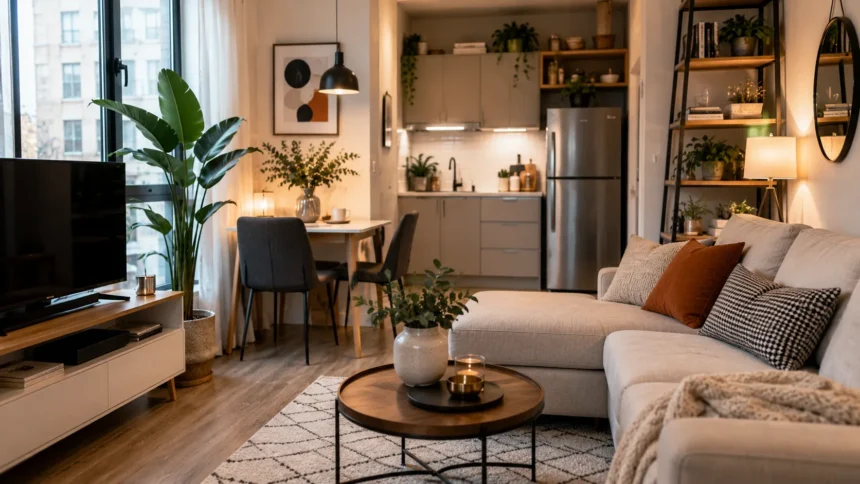
A small apartment living room should feel comfortable without being overloaded with furniture. Start with seating that fits the room’s scale rather than choosing the largest sofa possible. A compact two- or three-seat sofa paired with one lightweight accent chair may provide enough seating while preserving clear walking paths and visual openness.
Choose a coffee table carefully because it often occupies the center of the room. Round tables can improve movement in tight spaces by eliminating sharp corners, while nesting tables offer flexibility when extra surface area is needed. An ottoman with a tray can provide seating, storage, and table space in one compact piece.
Use one or two strong decorative focal points instead of filling every surface. A large artwork, textured rug, sculptural lamp, or statement chair can give the room personality. Too many small accessories can make a compact living area feel cluttered, while fewer larger elements create a more intentional and sophisticated appearance.
Layer lighting to make the living room feel warm throughout the day. Combine ceiling lights with floor lamps, table lamps, and wall-mounted fixtures where possible. Different light sources create depth and allow the atmosphere to change between working, entertaining, and relaxing without requiring additional furniture or decorative clutter.
Make a Small Bedroom Feel Calm and Spacious
A small bedroom benefits from simplicity because visual clutter can interfere with the relaxing atmosphere people expect from the space. Begin with the bed as the main focal point and keep the surrounding layout as open as possible. A streamlined bed frame or one with built-in storage can provide function without making the room feel heavy.
Choose bedside furniture according to available space. Narrow nightstands, floating shelves, or wall-mounted ledges can replace bulky tables in tight rooms. Wall sconces can also free bedside surfaces by eliminating traditional lamps. These small changes create more usable space while maintaining a polished bedroom design.
Soft bedding and layered textures can make the room feel luxurious without adding physical clutter. Use a cohesive color palette with a duvet, throw, cushions, and curtains that complement one another. Natural materials such as linen, cotton, wool, and wood create warmth while keeping the design calm and comfortable.
Avoid filling every wall with furniture or decoration. Leaving some visual breathing space allows the room to feel larger and more restful. One substantial piece of artwork or a simple gallery arrangement may be more effective than several unrelated decorations. A peaceful bedroom depends as much on restraint as it does on styling.
Use Rugs to Define Different Areas
Rugs are particularly useful in studio apartments and open-plan layouts because they can visually separate different functions without building walls. A living room rug can define the seating area, while a smaller rug beneath a dining table creates another clear zone. These boundaries make a multipurpose room feel organized rather than randomly furnished.
Choose rug dimensions carefully because undersized rugs can make an area appear smaller. In a living room, the front legs of the sofa and chairs should ideally sit on the rug when space allows. This creates a connected furniture arrangement and makes the seating area feel more substantial within the larger apartment.
Patterns and textures can add personality without requiring additional decorative objects. A subtle geometric rug can bring movement to a neutral room, while a textured wool or woven design adds warmth. In very small spaces, designs with moderate contrast often feel easier on the eye than extremely busy patterns.
Rugs also provide practical benefits, especially in rental apartments with hard flooring. They can improve comfort, reduce noise, and protect existing surfaces. Choosing durable, easy-to-clean materials is important in high-traffic areas. A well-selected rug becomes both a decorative element and a functional part of everyday apartment life.
Create a Small Dining Area That Actually Works
You do not need a separate dining room to create a comfortable place for meals. A compact table positioned near the kitchen, window, or unused corner can establish a dedicated dining zone. Round and oval tables are particularly useful in tight spaces because they allow easier movement around them than many square designs.
A pedestal table can provide additional legroom because it eliminates multiple table legs around the edges. Pair it with slim dining chairs that can slide fully underneath when not in use. Transparent or visually lightweight chairs may also make a small dining area appear less crowded while still providing comfortable seating.
If your apartment is extremely compact, consider a wall-mounted drop-leaf table or narrow breakfast bar. These options can function as dining surfaces, workstations, or food-preparation areas depending on the time of day. Folding chairs can be stored elsewhere when additional floor space is needed.
Lighting can make a small dining area feel more intentional. A pendant light positioned above the table creates a clear visual anchor even when the dining zone shares a room with the living area. Add a simple centerpiece, such as a vase or small plant, to create personality without taking away valuable table space.
Style a Small Apartment Kitchen
Small apartment kitchens benefit from organization more than excessive decoration. Keep countertops as clear as possible so the room feels functional and visually calm. Frequently used items can remain accessible, while appliances and cookware that are used less often should be stored away. Clear work surfaces make even narrow kitchens feel more spacious.
Use vertical storage where possible. Magnetic knife strips, wall rails, hooks, floating shelves, and over-cabinet storage can make use of areas that would otherwise remain empty. Attractive cookware or utensils can become part of the decor when displayed carefully, combining practical storage with personality.
Adding texture and warmth can prevent a compact kitchen from feeling purely functional. Wooden cutting boards, linen towels, ceramic containers, or small plants can soften hard surfaces. Renters can also consider removable backsplash tiles or adhesive coverings to introduce pattern and color without making permanent changes.
Lighting is especially important in small kitchens because shadows can make the space feel tighter. Under-cabinet lighting improves visibility while creating a warmer atmosphere in the evening. If natural light is limited, choose bright but comfortable bulbs that illuminate work areas without making the kitchen feel harsh or overly clinical.
Bring Nature Indoors With Apartment Plants
Indoor plants can make a small apartment feel fresher, softer, and more welcoming. Greenery introduces natural color without requiring major decorative changes. Even one or two carefully placed plants can create visual interest while making a modern or minimalist interior feel less rigid and more lived-in.
Choose plants according to the actual light conditions in your apartment rather than appearance alone. Some varieties prefer bright indirect light, while others tolerate lower-light spaces. Understanding the needs of each plant helps avoid constantly replacing greenery that struggles in unsuitable conditions. Artificial plants can also be used where natural light is extremely limited.
Vertical plant displays are useful when floor space is scarce. Hanging planters, wall-mounted pots, and plants placed on tall shelves add greenery without competing with furniture. Trailing plants can soften hard architectural lines and draw the eye upward, reinforcing the sense of height in a compact room.
Avoid filling every surface with small pots because too many individual objects can create visual clutter. A few larger plants often make a stronger design statement than many tiny ones. Grouping plants with different heights and leaf shapes can create an intentional display while maintaining a clean and cohesive look.
Use Lighting to Make the Apartment Feel Larger
Lighting can completely change how large or small an apartment feels. Relying on a single overhead fixture often creates flat illumination and harsh shadows. Instead, combine several light sources at different heights to produce depth. Floor lamps, table lamps, sconces, and pendants can create separate pools of light throughout the room.
Use warm lighting in living rooms and bedrooms to create a comfortable atmosphere. Workspaces and kitchens may benefit from slightly brighter task lighting that improves visibility. Having different lighting options allows you to adjust the apartment according to the activity rather than using the same intensity everywhere.
Wall-mounted and plug-in sconces are particularly valuable for small apartments because they provide illumination without occupying tables or floors. They can replace bedside lamps, brighten dark corners, or frame artwork. Renters can find plug-in versions that require little or no permanent electrical work, making them easier to install.
Natural light should also be treated as part of the lighting plan. Avoid placing large furniture directly in front of windows whenever possible. Lightweight curtains or blinds can provide privacy without blocking too much daylight. Keeping windows visually open makes a small apartment feel brighter, larger, and more connected to the outdoors.
Make Small Apartment Walls More Interesting
Walls provide one of the easiest opportunities to add personality without sacrificing floor space. Large artwork, framed photographs, removable wallpaper, decorative mirrors, and floating shelves can transform plain walls. Choosing a few intentional features creates more impact than spreading many small decorations randomly across every available surface.
A gallery wall can work well in a compact apartment when the frames share a visual connection. Similar colors, frame styles, or subject matter can make the collection feel cohesive. Plan the arrangement before hanging pieces so the final result looks balanced rather than crowded. Temporary picture-hanging strips can also be useful for renters.
Removable wallpaper is an effective option for introducing pattern without committing to permanent changes. Use it on one accent wall, inside an alcove, or behind a bed to create depth. Smaller applications can still have a strong impact and are often easier to install and remove than covering an entire room.
Do not assume every wall needs decoration. Negative space helps important pieces stand out and allows the eye to rest. A small apartment often looks more sophisticated when decorative elements are intentionally spaced. The goal is to create interest without making the walls compete for attention.
Try Renter-Friendly Apartment Decor Ideas
Renters often hesitate to decorate because they are concerned about damaging walls or losing a security deposit. Fortunately, many temporary decor options can make an apartment feel personalized without permanent alterations. Removable wallpaper, adhesive hooks, tension rods, peel-and-stick tiles, and freestanding furniture provide flexibility while protecting the original surfaces.
Curtains can dramatically change a rental apartment without structural modifications. Hanging them higher and wider than the window frame can make windows appear larger and ceilings feel taller. If drilling is restricted, tension or temporary mounting systems may provide alternatives depending on the window design and curtain weight.
Lighting can also be improved without replacing electrical fixtures. Plug-in wall sconces, floor lamps, rechargeable lamps, and decorative table lighting can add warmth to rooms with basic rental lighting. Even changing removable lampshades or using compatible smart bulbs can help personalize the atmosphere without altering permanent wiring.
Focus on items you can take to your next home. Rugs, artwork, mirrors, cushions, bedding, plants, and portable storage can completely change the feeling of a rental apartment while remaining useful after you move. Investing in flexible decor often makes more sense than spending heavily on improvements that must stay behind.
Add Personality Without Making the Space Busy
A stylish apartment should reflect the people who live there rather than looking like a furniture showroom. Personal items such as travel photographs, books, artwork, handmade objects, or meaningful gifts make a home feel unique. The challenge in a small space is displaying these items thoughtfully so they add character without creating clutter.
Choose a few places for intentional displays instead of scattering personal objects throughout the apartment. A bookshelf, console, coffee table, or gallery wall can become a curated area for meaningful pieces. Grouping objects together makes them feel purposeful and allows other surfaces to remain relatively clear.
Vary height, texture, and shape when styling shelves or tabletops. Combine books with ceramics, framed photographs, plants, or sculptural objects rather than lining up many similar items. Leaving empty space around decorative pieces makes each object easier to appreciate and keeps the overall arrangement visually balanced.
Your apartment does not need to follow one design trend perfectly. Combining modern furniture with vintage pieces, family items, or handmade decor can create more personality than matching everything exactly. A small home feels stylish when the choices look intentional and connected to the person living there.
Use Curtains to Make Ceilings Look Higher
Curtains can influence the perceived proportions of a small apartment more than many people realize. Hanging the curtain rod close to the ceiling rather than directly above the window draws the eye upward. Extending the rod slightly beyond each side of the frame can also make the window appear wider when the curtains are open.
Floor-length curtains usually create a cleaner and more elegant appearance than short panels. Choose fabric that reaches close to the floor without creating excessive bunching. Long vertical lines visually emphasize height, which can make a room with average ceilings feel more spacious and refined.
Lightweight fabrics are often useful in small apartments because they allow natural light to enter while softening the room. Sheer curtains can be combined with blinds or heavier panels when additional privacy is necessary. Using curtain colors close to the wall color can create a seamless appearance and reduce visual interruption.
Bold curtains can still work if you want them to become a feature. A deep color or subtle pattern can add drama to an otherwise neutral apartment. Keep surrounding decor simpler so the curtains do not compete with several other strong elements. Balance is particularly important when decorating limited square footage.
Create a Functional Small Home Office
Working from a small apartment requires a workspace that supports productivity without overwhelming the living area. Look for unused zones such as an empty corner, wall between windows, bedroom alcove, or space behind the sofa. Even a relatively narrow area can become functional when the desk dimensions are chosen carefully.
Wall-mounted desks and slim writing tables are practical solutions because they take up less visual space than heavy office furniture. Some folding desks can be closed when work is finished, helping the apartment transition back into a relaxing home environment. A comfortable chair remains important, particularly for anyone who works from home regularly.
Vertical storage can keep office supplies organized without consuming additional floor space. Floating shelves, pegboards, wall pockets, and small cabinets can hold documents and accessories. Keeping the desktop relatively clear improves both productivity and appearance, particularly when the workspace remains visible from the living room.
Lighting and background appearance also deserve attention. Position the desk near natural light when possible while avoiding screen glare. A simple artwork, plant, or neat shelving arrangement can create an attractive video-call background. Designing the workspace as part of the apartment decor helps it feel integrated rather than temporary.
Decorate a Studio Apartment Without Overcrowding It
Studio apartments require several daily activities to happen within one primary room, making visual organization especially important. Start by identifying separate zones for sleeping, relaxing, eating, and working. These areas do not need physical walls, but each should have a clear purpose. Rugs, lighting, furniture placement, and color can create subtle boundaries.
Position the bed where it feels relatively private without blocking major pathways or natural light. A low bookcase, curtain, folding screen, or open shelving unit can provide separation without fully closing the space. Choose dividers that allow light to travel through the apartment so the main room does not become dark or fragmented.
Furniture should be flexible enough to adapt throughout the day. A dining table may also function as a desk, while a sofa bed can provide sleeping space when appropriate. Nesting tables, storage ottomans, and folding chairs give the apartment additional functionality without requiring every item to remain fully expanded at all times.
Keep the overall color palette connected across different zones. Using completely different styles in each area can make a studio feel visually chaotic. Repeating similar wood tones, textiles, or accent colors creates continuity while still allowing each zone to have its own identity and purpose.
Avoid These Common Small Apartment Decorating Mistakes
One common mistake is buying furniture before measuring the available space. A sofa, dining table, or bed can look appropriately sized in a large showroom but overwhelm a compact apartment. Always compare furniture dimensions with the room, doorways, walking paths, and surrounding pieces before purchasing anything substantial.
Another mistake is using too many small pieces because they seem better suited to limited space. A room filled with tiny tables, shelves, chairs, and decorative objects can actually appear more cluttered. Fewer appropriately scaled pieces often create a cleaner and more comfortable environment while providing the same practical functionality.
Ignoring vertical space can also make storage more difficult than necessary. When all furniture remains low, valuable wall space goes unused and the apartment may feel visually compressed. Tall shelving, elevated curtains, wall-mounted lighting, and vertical artwork help make better use of the room’s full dimensions.
Finally, avoid copying trends without considering how you actually live. An ultra-minimal interior may look attractive online but become frustrating if you need substantial storage. Similarly, oversized statement furniture may not suit a narrow apartment. The best small-space design choices balance personal style with realistic everyday needs.
Budget-Friendly Apartment Decor Ideas
You do not need a large budget to make a small apartment feel stylish. Start by rearranging furniture and removing unnecessary items before buying anything new. Improving the layout can have a bigger visual impact than adding more decor. Once the room feels balanced, it becomes easier to identify which additions would genuinely improve it.
Textiles provide affordable opportunities for change. New cushion covers, curtains, throws, and bedding can introduce color and texture without replacing major furniture. Rugs can also define areas and cover unattractive flooring in rentals. Choosing a coordinated palette makes inexpensive updates feel more intentional and cohesive.
Secondhand furniture and vintage decor can add personality while reducing costs. Look for solid wood tables, mirrors, lamps, frames, or storage pieces that can be cleaned or refinished. Mixing older pieces with modern elements can create a layered look that feels more distinctive than buying an entire matching furniture collection.
Focus spending on items that affect comfort and daily use. A good mattress, comfortable sofa, supportive desk chair, or durable storage system may provide more value than purely decorative purchases. Smaller accessories can be changed gradually as the budget allows, making apartment decorating an ongoing process rather than one expensive project.
Final Thoughts on Small Apartment Decor
A small apartment can feel just as stylish and comfortable as a larger home when every design decision has a purpose. The most successful spaces balance function, visual openness, storage, comfort, and personality. Instead of trying to hide the apartment’s size, work with its proportions and choose furniture and decor that make daily life easier.
Multifunctional furniture, vertical storage, mirrors, layered lighting, and thoughtful layouts can dramatically improve compact interiors. Light colors can make rooms feel open, while textured fabrics, natural materials, plants, and personal objects prevent the design from feeling plain. The key is controlling how many visual elements compete for attention at the same time.
Renters can achieve similar results without permanent renovations. Removable wallpaper, rugs, freestanding storage, plug-in lighting, temporary hooks, and portable furnishings provide plenty of room for creativity. Choosing items that can move to a future home also makes decorating a rental feel like a worthwhile investment rather than temporary spending.
Ultimately, the best apartment decor ideas are the ones that reflect how you actually live. A well-designed small space should feel organized without being sterile and stylish without becoming impractical. With smart planning and a few intentional choices, even limited square footage can become a comfortable, personal, and beautifully designed home.
Frequently Asked Questions
How can I make a small apartment look bigger?
Use light colors, large mirrors, vertical storage, high-mounted curtains, and appropriately scaled furniture. Keeping walkways open and reducing visual clutter also makes the apartment feel more spacious.
What furniture is best for a small apartment?
Multifunctional and flexible furniture works best, including storage ottomans, nesting tables, sofa beds, expandable dining tables, and beds with built-in drawers.
How do I decorate a small apartment on a budget?
Start by rearranging existing furniture, decluttering, and adding affordable textiles, plants, mirrors, and secondhand pieces. Focus spending on practical items that improve everyday comfort.
What colors make a small apartment feel larger?
Soft whites, creams, warm neutrals, pale grays, and muted pastels can make compact spaces feel brighter and more open. Darker colors work well as controlled accents.
How can I decorate a rental apartment without damage?
Use removable wallpaper, adhesive hooks, peel-and-stick tiles, rugs, plug-in lighting, freestanding storage, and portable decor that can be removed easily when you move.