
IoT Device Security: Risks, Best Practices and Checklist
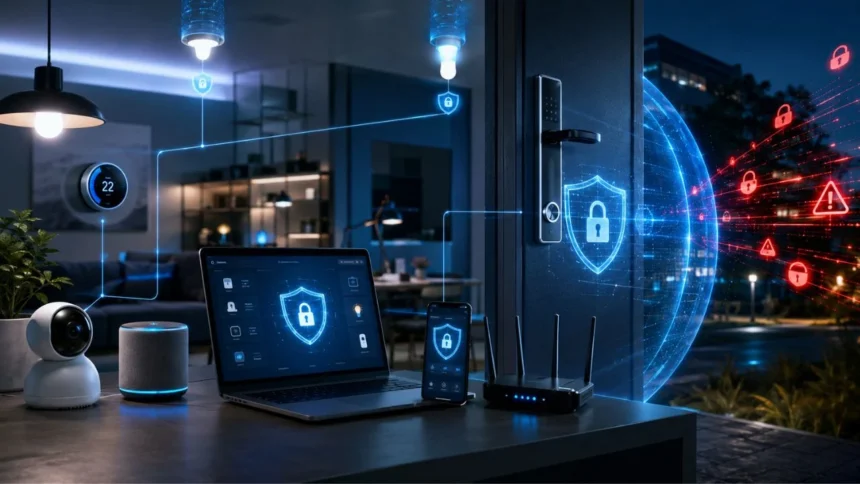
IoT device security is the practice of protecting connected devices, their data and the networks they use from unauthorised access. It applies to smart cameras, sensors, appliances, wearables, medical equipment, industrial controllers and many other products that communicate through the internet or a private network.
Connected devices can improve efficiency, visibility and convenience, but each one can also create a new entry point for attackers. A weak password, outdated firmware or exposed management page may allow a criminal to control the device, steal information or move deeper into a business network.
The challenge is that many Internet of Things devices operate quietly for years without receiving the same attention as laptops and servers. They may have limited security tools, unclear ownership and long replacement cycles. Some products continue functioning normally even after they have been compromised.
Effective IoT cybersecurity therefore requires more than installing a firewall or changing one password. Organisations need to identify connected assets, secure their configurations, control network access, monitor unusual behaviour and retire unsupported products before they become permanent security risks.
What Is IoT Device Security?
IoT device security covers the technologies, policies and processes used to protect internet-connected or network-connected equipment. It includes the physical device, embedded software, cloud platform, mobile application, communication protocols and user accounts that make the full product work.
A smart device rarely operates alone. It may send information to a cloud service, receive instructions from a phone application and connect through a local router. A weakness in any part of this ecosystem can undermine the security of the entire product.
The goal is to protect confidentiality, integrity and availability. Confidentiality prevents unauthorised people from seeing data, integrity prevents improper changes and availability keeps the device functioning when legitimate users need it. Privacy and physical safety may also become important when devices collect personal information or control real-world equipment.
IoT security should begin before a device is connected and continue until it is securely removed. Procurement, installation, configuration, monitoring, updates and disposal all influence risk. A product that is secure on its first day can become vulnerable later if its software support ends.
Why IoT Device Security Matters
IoT devices often have access to sensitive locations, business operations and personal information. A security camera can reveal activity inside a building, while a health wearable may collect intimate data. Industrial sensors and controllers can influence machinery, environmental systems and production processes.
A compromised device may become a doorway into other systems. Attackers can use stolen credentials or insecure services to enter the device and explore the connected network. Poor segmentation can then allow them to reach workstations, databases, file servers or operational technology.
Some attackers do not target the organisation’s information directly. Instead, they take control of large numbers of vulnerable devices and combine them into a botnet. The resulting network can send spam, scan the internet or overwhelm websites with distributed denial-of-service traffic.
Security failures can produce financial, operational and reputational consequences. A business may face downtime, recovery costs, privacy complaints and loss of customer confidence. When a connected product performs a safety-related function, a cyber incident may also create physical risks for employees or the public.
Common Examples of IoT Devices
Consumer IoT products include smart televisions, doorbells, speakers, thermostats, lights and home security cameras. Wearable fitness trackers, connected toys and household appliances also communicate with external applications and cloud platforms. Each product handles different information and requires security appropriate to its purpose.
Business environments use connected printers, meeting-room systems, access controls, cameras and building-management sensors. Retailers may operate connected payment equipment, digital displays and inventory trackers. These devices are sometimes overlooked because they are treated as facilities equipment rather than computers.
Healthcare IoT includes remote monitoring tools, infusion pumps, imaging systems and connected medical devices. These products may support diagnosis or treatment while handling sensitive patient information. Security measures must protect clinical availability without interfering with safe medical use.
Industrial IoT includes programmable controllers, sensors, robots and connected machinery. Such equipment can monitor temperature, pressure, movement and production quality. A compromise may affect more than data because the device can interact directly with physical processes and operational systems.
How IoT Devices Increase the Attack Surface
The attack surface includes every point where an attacker may attempt to enter, change or disrupt a system. Adding a connected device creates new accounts, software, services and communication paths. The organisation must understand and protect each of these components.
Many devices communicate with several external destinations. They may contact update servers, analytics services, cloud platforms and mobile applications. Every connection creates a dependency, and the user may have limited visibility into where data travels or how the external service is protected.
IoT products may also expose local management interfaces, wireless protocols and network ports. These features support setup and maintenance, but they can become attack vectors when they remain enabled unnecessarily. Attackers frequently search for devices that are reachable from the public internet.
The attack surface changes throughout the device lifecycle. New firmware may add features, a cloud provider may change its infrastructure and employees may create additional user accounts. Regular reviews are necessary because the risks present during installation may not remain the same.
How Attackers Compromise IoT Devices
Attackers commonly begin by scanning networks for exposed devices and services. Automated tools can identify product models, software versions and open ports. If the device uses a known vulnerability or predictable password, the criminal may gain access with little manual effort.
Phishing and stolen credentials can also lead to IoT compromise. An attacker may steal the account used to manage cameras, alarms or building systems. Once logged in, the intruder can change settings, view information or create additional accounts for continued access.
Another route involves the device’s mobile application or cloud service. Weak authentication, insecure APIs and leaked access tokens may allow an attacker to control the product without directly entering the local network. The physical device can appear secure while its supporting service remains vulnerable.
Supply chain compromise creates additional risk. Harmful code, insecure third-party components or stolen signing keys may affect many products before they reach customers. Organisations should therefore evaluate both the device manufacturer and the wider ecosystem supporting the product.
Default Passwords and Weak Authentication
Default passwords remain one of the most preventable IoT security risks. Manufacturers may ship thousands of devices with the same administrator credentials, and those credentials can become publicly known. Attackers can automatically test them against devices exposed to the internet.
Every device should require the user to create a new password during initial setup. Passwords should be unique, sufficiently long and stored in an approved password manager. Reusing the same credentials across cameras, routers and cloud accounts allows one compromise to affect several systems.
Multifactor authentication should protect cloud dashboards and remote management accounts whenever it is available. Phishing-resistant authentication provides stronger protection than passwords or easily intercepted codes. Shared administrator accounts should be avoided because they weaken accountability and make access harder to revoke.
Authentication controls should also cover devices communicating with other systems. Unique device identities, certificates and cryptographic keys help prove that a connection comes from an authorised product. One universal credential should never provide permanent access to an entire fleet of devices.
Outdated Firmware and Unsupported Devices
Firmware is the software embedded within a device that controls its core functions. Like other software, firmware can contain vulnerabilities that attackers exploit. Secure IoT devices need a reliable process for receiving fixes throughout their supported life.
Some organisations install connected products and never check for updates again. Automatic updating may be disabled, or the manufacturer may require a complicated manual process. These delays allow known security weaknesses to remain available long after a corrective update has been released.
A larger problem develops when the manufacturer stops providing security support. The device may continue performing its ordinary function, but newly discovered vulnerabilities remain unresolved. Keeping an unsupported product connected can create growing risk with no dependable technical fix.
Businesses should record firmware versions and support periods within their asset inventory. Procurement teams should ask how long updates will be available before purchasing a product. Devices approaching the end of support should have a replacement or isolation plan rather than remaining connected indefinitely.
Insecure Network Services and Internet Exposure
IoT devices may include web interfaces, file-transfer services, remote shells and discovery protocols. Some of these features are necessary during setup but provide little value during normal operation. Leaving unnecessary services enabled increases the number of routes an attacker can test.
Direct internet exposure is particularly dangerous. A management page intended for local use may be reachable from anywhere because of router configuration, port forwarding or a public cloud address. Attackers continuously scan the internet for products with exposed administrative interfaces.
Organisations should block unsolicited inbound access and place devices behind properly configured firewalls. Remote administration should occur through an approved secure access method rather than an open management port. Services and protocols that are not required should be disabled.
Network exposure should be checked regularly rather than only during installation. Configuration changes, replacement routers and cloud migrations can unintentionally publish a previously private device. External attack-surface monitoring can help discover systems that employees did not realise were publicly reachable.
Data Privacy and Encryption Risks
IoT products can collect audio, video, location, health information and behavioural data. Users may not realise how much information the device records or how frequently it sends that information elsewhere. Privacy risk increases when collection exceeds what is necessary for the product’s function.
Data should be encrypted while travelling between the device, application and cloud platform. Encryption makes intercepted traffic harder to read or alter. The system should also verify the destination so the device does not send sensitive information to an attacker impersonating a legitimate server.
Stored data requires similar protection. Encryption, access controls and retention limits can reduce the effect of a stolen device or compromised cloud account. Information that is no longer needed should be deleted rather than retained indefinitely for vague future purposes.
Businesses should understand what information each IoT device collects, where it is stored and which external organisations can access it. Privacy notices and contracts should be reviewed before deployment. A low-cost product may create significant long-term risk when its data practices are unclear.
Insecure APIs, Cloud Services and Mobile Apps
An application programming interface allows devices, mobile applications and cloud services to exchange information. APIs are essential to most IoT products, but weak authorisation may allow one user to view or control another user’s device. Predictable identifiers can make this problem easier to exploit.
Mobile applications can also expose credentials, encryption keys or sensitive data. An app may store authentication tokens insecurely or communicate with services without proper certificate validation. Attackers can analyse the application to learn how the wider IoT system works.
Cloud platforms create central points of value because they may control thousands of devices. A stolen administrative account or cloud vulnerability can affect many customers at once. Providers need strong identity controls, logging, segmentation and incident-response capabilities.
Organisations should assess the entire connected product rather than evaluating only the physical hardware. Security testing should include APIs, applications, cloud services and account-recovery processes. A strong device cannot compensate for an insecure platform controlling it remotely.
IoT Botnets and DDoS Attacks
A botnet is a network of compromised devices controlled by an attacker. IoT products are attractive botnet targets because they may remain online continuously and receive little monitoring. A user may not notice that a camera or router is sending harmful traffic in the background.
Attackers often build botnets by testing default passwords or exploiting known vulnerabilities. Automated malware can scan for additional devices and spread rapidly. Products with similar hardware and software make it possible to compromise large populations through the same method.
Botnets can launch distributed denial-of-service attacks by sending enormous amounts of traffic toward a website or network. They may also distribute malware, send spam or hide other criminal activity. The owner pays for the internet connection while the attacker uses the device as infrastructure.
Preventing botnet participation requires unique credentials, timely updates and restricted network access. Monitoring can identify unexpected outbound traffic, repeated scanning or communication with suspicious destinations. A device behaving abnormally should be isolated before it affects other systems.
Supply Chain and Third-Party Risks
IoT manufacturers often depend on external hardware, software libraries, cloud providers and development contractors. A vulnerability in any of these components can become part of the final product. The manufacturer may not control every dependency directly, but it remains responsible for managing the resulting risk.
Open-source components are widely used and can provide significant value. Problems arise when manufacturers do not track which versions are included or fail to monitor newly disclosed vulnerabilities. An accurate software bill of materials can help identify affected products more quickly.
Third-party cloud services and analytics platforms may receive device data or administrative access. A security incident involving one provider can therefore expose information from several manufacturers and customers. Contracts should define security responsibilities, notification expectations and data-handling requirements.
Buyers should ask manufacturers how they evaluate suppliers and manage vulnerable components. Low-cost products with unclear origins may provide little transparency about firmware, libraries or cloud dependencies. Supply chain visibility is especially important for devices placed in sensitive business environments.
Business and Industrial IoT Security Risks
Business IoT devices often connect to the same networks used by employees and servers. A compromised printer, camera or building sensor may provide an attacker with an unnoticed foothold. The device does not need to store valuable information if it can reach systems that do.
Industrial IoT risk can involve physical operations as well as digital information. A malicious change to a sensor reading or control instruction may affect equipment behaviour. Safety, availability and process integrity may therefore take priority over ordinary confidentiality concerns.
Older industrial devices may not support modern authentication, encryption or logging. Replacing them may require downtime and substantial investment. Organisations can reduce risk through segmentation, access restrictions, monitoring and carefully controlled gateways when direct upgrades are not possible.
IT and operational teams should share responsibility for connected equipment. Security changes must consider production and safety requirements, while operational decisions must account for cyber risk. Clear ownership prevents devices from remaining unmanaged between departments.
Build a Complete IoT Asset Inventory
An organisation cannot secure devices it does not know it owns. The asset inventory should record product name, model, serial number, network address and physical location. It should also identify the business owner and technical team responsible for each device.
The inventory should include firmware versions, cloud services and support-expiration dates. Recording these details helps teams identify devices affected by a newly announced vulnerability. It also reveals products that are approaching the end of their supported life.
Network discovery tools can identify connected equipment that was installed without formal approval. However, automated results need human review because devices may be misidentified or temporarily offline. Procurement, facilities and IT records should be compared to create a more complete picture.
The inventory must be updated when equipment is added, moved or retired. A spreadsheet created once and forgotten will quickly become inaccurate. Asset management should be part of the deployment and removal process rather than a separate annual exercise.
Classify Devices According to Risk
Not every IoT product requires the same level of protection. A connected light in a meeting room presents different consequences from a medical device or industrial controller. Risk classification helps organisations apply stronger controls where a compromise could cause the greatest harm.
Consider what the device can see, collect and control. Cameras and microphones handle sensitive information, while door systems affect physical access. Sensors controlling temperature or machinery may influence safety and business continuity even when they store little data.
Network position is another important factor. A simple device becomes more dangerous when it can communicate with critical servers or administrative systems. Internet exposure, remote access and dependency on external cloud services should also influence the risk rating.
Classification should guide purchasing, segmentation, monitoring and replacement priorities. High-risk devices may require dedicated network zones, stronger authentication and detailed logs. Lower-risk products still need basic controls but may not justify the same operational investment.
Use Network Segmentation to Contain Compromise
Network segmentation separates devices into controlled zones rather than placing everything on one flat network. IoT equipment can be isolated from employee computers, servers, payment systems and administrative tools. Firewalls then permit only the communications required for legitimate operation.
A camera may need to reach a recording server but have no reason to contact financial systems. A smart display may require limited internet access while needing no connection to internal databases. Restricting these pathways reduces what an attacker can reach after compromising the device.
Guest Wi-Fi is not always an appropriate permanent IoT network because its policies may not support business management and monitoring. Organisations should create dedicated segments based on device function and risk. Highly sensitive operational equipment may need additional isolation from ordinary business networks.
Segmentation must be maintained as systems change. Temporary firewall exceptions can gradually create broad, undocumented access. Regular reviews should confirm that each allowed connection remains necessary and that blocked traffic does not reveal an attempted compromise.
Secure Configuration and Least Privilege
Secure configuration begins by changing default credentials and disabling unnecessary accounts. Services, protocols and remote-management features should remain off unless they are required. Default settings are designed for easy installation and may not provide the protection needed in a real environment.
Least privilege means giving each user, device and service only the access required for its task. An ordinary employee should not automatically receive administrator control over every connected product. Service accounts should be restricted to specific devices and functions.
Configuration baselines help teams deploy similar products consistently. The baseline may define password requirements, logging, time settings, update behaviour and permitted network destinations. Deviations should be documented and reviewed instead of becoming invisible exceptions.
Manufacturers should make secure settings easy to use. Customers should not need specialist knowledge or additional purchases to activate essential protection. Products that arrive secure by default reduce the chance that time pressure or misunderstanding will leave dangerous features enabled.
Create a Reliable Firmware Update Process
Businesses should identify how each device receives security updates before deployment. Some products update automatically, while others require administrators to download and install firmware. The method must be documented so responsibility does not become unclear during an urgent vulnerability.
Updates should come from an authenticated source and use cryptographic verification. Secure signing helps prevent an attacker from installing modified firmware. The device should reject corrupted, unauthorised or outdated software when accepting it would create a downgrade risk.
High-risk environments may need to test updates before broad deployment. Testing can identify compatibility or operational problems without leaving every device unpatched indefinitely. Emergency processes should allow critical fixes to move more quickly when active exploitation is likely.
After installation, teams should confirm that the update succeeded and the device remains secure. Failed updates can leave equipment unavailable or running an unexpected version. Centralised management becomes especially valuable when an organisation operates hundreds or thousands of similar devices.
Monitor IoT Devices and Network Behaviour
Many IoT devices cannot run traditional endpoint security software, making network monitoring especially important. Security teams can establish a baseline of normal destinations, protocols and traffic volumes. Significant deviations may reveal compromise, malfunction or an unauthorised configuration change.
Useful logs include successful and failed logins, firmware changes, new accounts and administrative actions. Devices should record events with accurate timestamps and send important logs to a protected central platform. Logs stored only on the device may disappear when it is reset or damaged.
Monitoring should focus on behaviour relevant to the product. A temperature sensor suddenly scanning internal addresses is suspicious, while a camera sending unusually large amounts of data may require investigation. Alerts become more useful when analysts understand the device’s expected function.
Limited visibility should be treated as a purchasing concern. A high-risk product that cannot generate logs or integrate with monitoring tools may be difficult to operate safely. Organisations need enough information to recognise and investigate unusual activity throughout the device’s life.
Protect Remote Access to IoT Devices
Remote management allows technicians to maintain equipment without visiting its physical location. The same convenience can benefit attackers when access is weakly protected. Administrative interfaces should not be openly reachable from the public internet.
Remote users should connect through an approved secure gateway with strong authentication. Access should be limited by role, device and time when possible. Administrative activity should be logged so the organisation can identify who made a change and when it happened.
Vendor support access needs particular attention. Permanent shared accounts provide unnecessary opportunity and make accountability difficult. Temporary access should be approved, monitored and removed as soon as the maintenance task is complete.
Emergency access should remain possible without weakening everyday security. Organisations can create controlled recovery procedures and securely stored credentials. Bypassing normal protections through undocumented accounts creates a hidden weakness that may remain long after the original emergency.
Apply Zero-Trust Principles to IoT
Zero trust avoids assuming that a device is safe simply because it is inside the organisation’s network. Every connection should be evaluated according to identity, destination and business need. A compromised internal device should not automatically gain broad access.
Strong device identity is central to this approach. Certificates or protected cryptographic credentials can help distinguish authorised products from unknown systems. Identity should be tied to the specific device rather than a password shared across an entire product line.
Policies can restrict communication to approved services and block everything else by default. A sensor may be allowed to contact one collection platform, while all direct communication with employee devices remains denied. This reduces opportunities for lateral movement and data exfiltration.
Zero trust does not require replacing every device immediately. Organisations can introduce segmentation, secure gateways and identity controls around older products. The objective is to make access deliberate and verifiable rather than relying on physical location as proof of trust.
Manage the Full IoT Device Lifecycle
Lifecycle security begins during product selection rather than installation. Buyers should evaluate security features, support commitments and data practices before approving a device. A cheap product can create higher long-term costs when it requires manual work or early replacement.
Installation should follow a repeatable process that records the asset, changes credentials and applies the latest firmware. The device should enter the correct network segment from its first connection. Temporary setup accounts and services should be removed after deployment.
During operation, teams need to monitor support notices, vulnerabilities and configuration changes. Ownership should remain clear when employees or service providers change. Regular reviews can identify products that no longer serve a business need but continue creating risk.
Retirement must remove data, certificates, accounts and cloud registrations. A factory reset may not erase every external record or management token. Devices should be physically disposed of according to their sensitivity, while firewall rules and inventory entries are updated.
Secure by Design for IoT Manufacturers
Secure by design means building protection into the product from the beginning rather than adding it after vulnerabilities appear. Manufacturers should identify likely threats, define security requirements and test those controls throughout development. Security should influence hardware, firmware, applications and cloud architecture.
Products should use unique credentials, protected interfaces and secure update mechanisms. Sensitive data should be limited, encrypted and retained only as necessary. Features that create unnecessary risk should remain disabled unless the customer deliberately enables them.
Manufacturers also need a vulnerability-disclosure process. Researchers and customers should have a clear way to report security problems, and the company should investigate those reports responsibly. Silence or unclear contact information allows known weaknesses to remain unresolved.
Support information should explain how long security updates will be available. Customers need enough notice to plan replacement before support ends. Secure products combine technical controls with documentation, update delivery, customer communication and transparent lifecycle management.
IoT Security Standards and Product Requirements
Security standards provide a consistent starting point for manufacturers and buyers. Common themes include device identification, secure configuration, data protection, interface control, reliable updates and awareness of the device’s cybersecurity state. These capabilities help customers manage products within a larger security program.
Consumer IoT guidance increasingly discourages universal default passwords and expects manufacturers to provide vulnerability-reporting channels. Buyers are also receiving clearer information about software-support periods. These measures address weaknesses that individual users cannot reasonably solve after purchase.
Product-security rules are moving toward lifecycle responsibility. Manufacturers may need to consider vulnerabilities during development, release updates and communicate actively exploited weaknesses. This approach recognises that connected products remain exposed to changing threats after they are sold.
Compliance should be treated as a minimum rather than a guarantee of safety. A product can satisfy a baseline while remaining unsuitable for a sensitive hospital or factory. Organisations must combine external standards with their own risk assessment, environment and operational needs.
How to Choose a More Secure IoT Device
Before buying, check whether the manufacturer has a clear security and privacy policy. Look for information about update delivery, vulnerability reporting and the expected support period. Avoid products whose security lifecycle ends without explanation.
The product should require unique credentials or force a password change during setup. Strong multifactor authentication is valuable for cloud accounts and remote control. Buyers should also check whether administrative access can be limited to authorised users.
Review what information the device collects and whether essential features depend entirely on a cloud subscription. Understand what happens when the provider stops operating the service. A device that becomes unusable or insecure after cloud shutdown may have a shorter practical life than expected.
Independent testing, recognised labels and detailed technical documentation can support the decision. Price and convenience remain important, but they should not outweigh security for devices placed in sensitive areas. Procurement teams should compare the full lifecycle cost rather than only the purchase price.
Responding to a Compromised IoT Device
Possible warning signs include unusual traffic, changed settings and unexpected administrator accounts. A device may restart repeatedly, become slow or connect to unfamiliar destinations. Some compromises create no visible symptoms and are detected only through network monitoring.
The affected device should be isolated from the network without unnecessarily destroying evidence. Disconnecting it may stop harmful activity, but teams should record its network address, logs and observed behaviour first when safe. Critical operational devices require coordination to prevent unsafe shutdowns.
Administrators should change related credentials, revoke tokens and check other devices using similar software. A compromise may affect the cloud account, mobile application or entire product family rather than one physical unit. Relevant firewall and authentication logs can reveal additional access.
Recovery may require a verified firmware reinstall, factory reset or full replacement. The original weakness must be corrected before reconnecting the product. A post-incident review should improve inventory, monitoring and procurement controls so the same route does not remain open.
IoT Device Security Checklist for Businesses
Begin with a complete inventory and assign an owner to each connected product. Record its location, firmware version, network segment and support period. Unknown or unsupported devices should receive immediate attention because their risk cannot be managed reliably.
Change default credentials, require strong authentication and remove unnecessary accounts. Block direct internet exposure and disable unused services. Devices should receive only the network access required for their normal function.
Keep firmware updated and monitor manufacturer security notices. Centralise useful logs and watch for unusual communication. Maintain configuration backups and document how each product can be isolated or recovered during an incident.
Finally, include IoT equipment in vulnerability management, incident response and business-continuity planning. Review suppliers and cloud dependencies before deployment. A small number of well-managed devices is safer than a large connected environment with no clear ownership.
The Future of IoT Device Security
Connected devices will continue expanding across homes, businesses, cities, healthcare and industry. Faster wireless networks and edge computing will allow devices to process and exchange more information. Greater capability will also increase the potential impact of poor security.
Artificial intelligence may help detect unusual device behaviour and automate configuration reviews. Manufacturers may also add AI functions directly to cameras, sensors and appliances. These features introduce new data, model and software dependencies that need protection.
Security labels and product requirements will give buyers more information about connected products. Clear support periods and stronger update commitments can help shift the market away from disposable, poorly maintained devices. Effective enforcement and understandable consumer information will remain important.
The strongest long-term improvement will come from secure-by-design manufacturing combined with responsible deployment. Customers cannot repair every weakness built into a product, and manufacturers cannot control every network where it operates. Both sides must manage their part of the device lifecycle.
Final Thoughts on IoT Device Security
IoT device security protects connected products, the information they collect and the networks they use. The most common risks include default passwords, outdated firmware, exposed services and insecure cloud platforms. Any one of these weaknesses may provide an attacker with an entry point.
Organisations should begin by identifying every connected asset and understanding its purpose. Strong credentials, updates, encryption and network segmentation form a practical security foundation. Monitoring helps detect problems that preventive controls fail to stop.
Security must continue throughout the device’s supported life. Procurement decisions, vendor support and secure disposal are as important as installation. Unsupported products should not remain permanently connected simply because they continue performing their basic function.
A secure IoT environment is not created by one product or checklist. It results from clear ownership, risk-based controls and manufacturers that accept responsibility for secure design. Consistent lifecycle management allows organisations to gain the benefits of connected technology without ignoring its risks.
Frequently Asked Questions
What is IoT device security?
IoT device security protects connected devices, data, applications and networks from unauthorised access or disruption. It covers the full lifecycle from product selection and installation to monitoring and disposal.
What is the biggest IoT security risk?
Default credentials and unpatched vulnerabilities are among the most common risks. Internet exposure, poor segmentation and unsupported firmware can make these weaknesses much easier for attackers to exploit.
How can I secure IoT devices on my network?
Change default passwords, install firmware updates and place devices on a separate network segment. Disable unnecessary services, restrict remote access and monitor connections for unusual activity.
Why should IoT devices use network segmentation?
Segmentation prevents a compromised IoT device from communicating freely with sensitive computers and servers. It contains the incident and gives defenders more opportunities to block suspicious movement.
How do I know whether an IoT product is secure?
Review its authentication features, update policy, support period and vulnerability-reporting process. Products with recognised security testing, transparent documentation and secure default settings are generally stronger choices.