
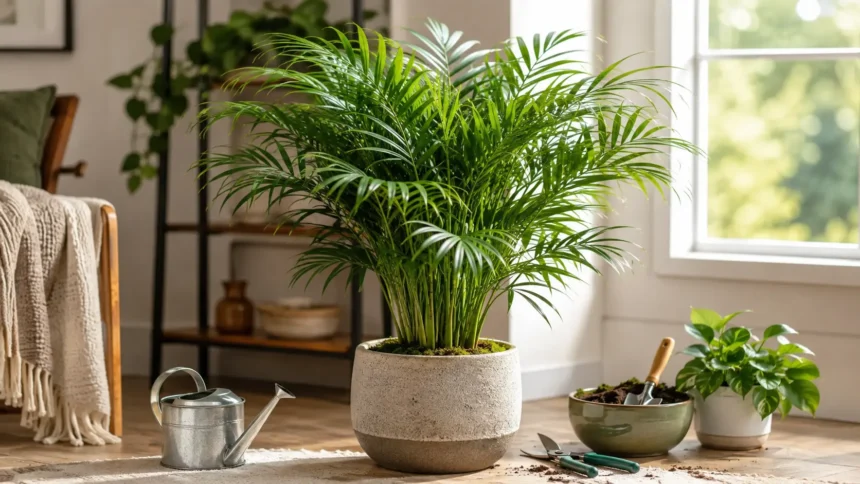
Parlor Palm: Easy Care Tips for Healthy, Lush Growth
The Parlor Palm is one of the easiest indoor palms to grow, making it a popular choice for beginners, apartment dwellers, and anyone who wants tropical greenery without complicated maintenance. Its graceful green fronds, compact growth habit, and ability to tolerate typical household conditions have kept this classic houseplant popular for generations.
Botanically known as Chamaedorea elegans, the Parlor Palm develops slender stems topped with soft, feathery foliage. Unlike many tropical palms that demand intense sunlight and high humidity, it adapts surprisingly well to moderate indoor light and normal household temperatures, which explains why it performs reliably in living rooms, bedrooms, and offices.
That does not mean the plant can thrive anywhere without attention. Too much water, intense direct sunlight, extremely dry air, poor drainage, or heavy fertilization can gradually damage the foliage. Brown tips and yellow leaves are often the plant’s way of showing that something in its growing environment needs adjustment.
The good news is that Parlor Palm care is straightforward once you understand the basics. With gentle light, careful watering, suitable soil, moderate humidity, and occasional feeding, this slow-growing palm can remain attractive for many years while adding a calm, tropical feel to your indoor space.
What Is a Parlor Palm?
The Parlor Palm is a small tropical palm native to the rainforests of Central America. It belongs to the palm family and naturally grows beneath taller forest vegetation, where it receives filtered sunlight rather than harsh direct exposure. This understory habit helps explain its impressive tolerance of indoor environments.
Its botanical name, Chamaedorea elegans, reflects the elegant appearance that makes the plant easy to recognize. Multiple thin green stems emerge from the soil, carrying arching pinnate leaves composed of narrow leaflets. Together, these fronds create a delicate appearance that looks softer than many larger indoor palms.
Most plants sold in nurseries contain several seedlings growing together in one pot, which creates the dense and bushy appearance people associate with a mature indoor Parlor Palm. Individual plants are naturally more slender, so growers often cluster them to produce a fuller presentation.
Another reason for its popularity is manageable growth. Parlor Palms develop slowly and usually remain much smaller indoors than palms grown in tropical landscapes. Their relatively compact size makes them suitable for shelves when young and floor planters as they gradually mature.
Why Is the Parlor Palm So Popular Indoors?
Few tropical plants tolerate average household conditions as well as the Parlor Palm. It can handle lower light than many decorative palms, which makes it useful in homes where large sunny windows are limited. This adaptability does not mean darkness is ideal, but it gives growers much more flexibility.
Its slow growth is another practical advantage. Fast-growing houseplants can quickly outgrow furniture, window spaces, or containers, while the Chamaedorea elegans plant develops at a much calmer pace. This makes it easier to maintain in apartments and smaller rooms.
The plant also has an understated appearance that works with many interior styles. Its narrow green fronds complement modern, traditional, minimalist, tropical, and natural décor without becoming visually overwhelming. Even a relatively small specimen can soften hard furniture lines and brighten an empty corner.
Most importantly, it is forgiving. Missing one watering or providing slightly imperfect humidity is less likely to cause immediate collapse than it would with some demanding tropical species. Consistency still produces the best results, but beginners have room to learn without constantly worrying about the plant.
How Much Light Does a Parlor Palm Need?
A Parlor Palm indoors generally performs best in bright to moderate indirect light. Because it naturally grows under a forest canopy, its leaves are adapted to filtered illumination rather than prolonged exposure to intense midday sunlight.
A position near an east-facing window often works beautifully because the plant can receive gentle morning brightness without experiencing the harshest afternoon rays. North-facing rooms can also work when they remain reasonably bright throughout the day.
Although Parlor Palms tolerate low-light conditions better than many palms, extremely dark locations can gradually slow growth. New fronds may become smaller, stems may weaken, and the plant can lose some of its dense appearance if it receives inadequate light for long periods.
Direct sunlight should be introduced carefully. Strong afternoon sun passing through glass can scorch the foliage and create pale or brown patches. If you want to place the palm closer to a sunny window, use a sheer curtain or move it gradually so the foliage can adjust.
Where Should You Place a Parlor Palm?
Choosing the right location can make Parlor Palm care indoors considerably easier. Select a spot with soft natural light, stable temperatures, and enough room for the fronds to spread without constantly brushing against walls or furniture.
Living rooms are particularly suitable because they often provide moderate light and relatively stable temperatures. Bedrooms, home offices, and dining areas can also work well as long as the plant is not placed in a permanently dark corner.
Keep the palm away from heating vents, radiators, strong air-conditioning, and cold drafts. Constant blasts of dry or cold air can cause leaf-tip browning and moisture stress even when your watering routine appears correct.
Avoid moving the plant repeatedly between very different environments. Parlor Palms appreciate consistency, and sudden changes in light, temperature, or humidity can temporarily slow growth or encourage leaf discoloration. A stable position usually produces the healthiest appearance.
How Often Should You Water a Parlor Palm?
Proper Parlor Palm watering is one of the most important parts of successful care. The soil should be allowed to dry slightly between waterings rather than remaining constantly wet. Check the upper layer of soil before reaching for your watering can.
When the top inch or two feels dry, water the pot thoroughly until excess moisture begins leaving through the drainage holes. This approach hydrates the entire root ball more effectively than giving small surface splashes every few days.
Do not leave the container sitting in standing water. Parlor Palm roots need oxygen as well as moisture, and persistently saturated soil can eventually lead to yellowing leaves and root deterioration. Empty saucers or decorative outer pots after watering.
Your watering frequency will naturally change with the seasons. Plants use moisture faster during warmer, brighter months and more slowly during cool winter conditions. Checking the soil rather than following a fixed weekly schedule is the safest approach.
How to Tell When Your Parlor Palm Needs Water
The soil provides the most reliable indication of when your plant needs water. Insert a finger into the upper portion of the growing medium and check whether it feels dry, slightly damp, or wet before deciding whether irrigation is necessary.
A thirsty Parlor Palm plant may develop slightly drooping foliage or dry leaf edges when the root ball becomes excessively dry. However, waiting for dramatic wilting every time can repeatedly stress the plant and damage older fronds.
Pot weight can also become a useful indicator once you become familiar with your plant. A freshly watered container feels noticeably heavier than one containing mostly dry potting mix, making it possible to estimate moisture without constantly disturbing the soil.
Avoid judging watering needs solely by the appearance of the soil surface. The top may appear completely dry even while deeper portions remain wet. This is particularly common in large pots, dense mixes, and cooler indoor environments.
What Is the Best Soil for a Parlor Palm?
The best soil for Parlor Palm should retain moderate moisture while allowing excess water to drain freely. A high-quality indoor houseplant potting mix provides a good starting point because it offers both moisture retention and aeration.
If the soil feels heavy or remains wet for too long, adding perlite, fine bark, or another porous component can improve drainage. The goal is to create a loose root environment rather than a compact mass that becomes waterlogged after every watering.
Avoid using ordinary garden soil in indoor containers. Garden soil can become dense, compacted, and poorly aerated inside a pot, increasing the risk of root problems. It may also introduce insects or pathogens that are undesirable indoors.
Whatever mixture you choose, pair it with a container that includes drainage holes. Even excellent soil cannot protect roots from prolonged saturation if excess water has nowhere to escape from the bottom of the pot.
Choosing the Right Pot for a Parlor Palm
A good container should provide enough room for the roots without being dramatically larger than the existing root ball. Oversized pots hold more unused soil, and that extra soil can remain wet much longer after watering.
Drainage is more important than decorative appearance. If you love a ceramic or woven outer container without drainage holes, keep the Parlor Palm houseplant in a separate nursery pot and place that inside the decorative cover.
Terracotta pots can dry more quickly because moisture evaporates through their porous walls, while glazed ceramic and plastic containers generally retain moisture longer. Neither option is automatically better; your watering habits and indoor climate should guide the choice.
Stability matters as the palm becomes larger. Mature fronds can create a wider canopy, so a lightweight container may become easier to tip. A sturdy pot with an appropriate base helps keep taller specimens securely upright.
Humidity Requirements for Parlor Palm
Parlor Palms appreciate moderate humidity because they originate from tropical environments, but they are more adaptable than many humidity-loving houseplants. Normal household conditions are often sufficient when the plant receives consistent watering and is kept away from drying vents.
Dry air can contribute to brown Parlor Palm tips, particularly during winter when indoor heating lowers humidity. If several tropical plants develop crispy edges simultaneously, the room’s air may simply be too dry.
A humidifier provides the most consistent way to raise humidity around the plant. Grouping several houseplants together can also create a slightly more humid local environment as moisture evaporates from their soil and leaves.
Misting has only a temporary effect on humidity and is not essential. If you mist the foliage occasionally, provide reasonable airflow and avoid keeping leaves constantly wet, particularly in cool environments where moisture evaporates slowly.
Ideal Temperature for Parlor Palm Growth
Parlor Palms prefer the comfortable temperatures normally maintained inside homes. Moderate warmth encourages steady root activity and healthy foliage without exposing the plant to the extreme heat sometimes experienced by outdoor tropical palms.
Cold drafts can be particularly stressful. Avoid placing the plant directly beside frequently opened winter doors, cold windows, or air-conditioning outlets where temperatures fluctuate sharply throughout the day.
Excessively hot and dry locations can also create problems. A Parlor Palm near a heater may lose moisture through its leaves more quickly than the roots can replace it, leading to dry edges and premature browning.
The easiest rule is to maintain a stable environment. If your room remains comfortably warm for people and does not experience extreme temperature changes, the Parlor Palm will usually find the conditions acceptable as well.
How to Fertilize a Parlor Palm
Parlor Palms are slow growers and therefore do not require heavy fertilization. A balanced liquid houseplant fertilizer applied during active growth can provide additional nutrients without pushing the plant beyond its natural growth rate.
Spring and summer are generally the most useful feeding periods because stronger light and warmer conditions encourage new fronds. Always follow the fertilizer manufacturer’s directions and consider using a diluted application rather than exceeding the recommended strength.
Too much fertilizer can cause mineral salts to accumulate in the potting soil. This may damage sensitive roots and contribute to brown leaf tips, which can easily be mistaken for a watering or humidity problem.
Reduce or pause feeding during winter when Parlor Palm growth naturally slows. Fertilizer cannot compensate for weak seasonal light, and supplying excess nutrients when the plant is barely growing can create more problems than benefits.
How Fast Does a Parlor Palm Grow?
The Parlor Palm is naturally slow-growing, especially indoors. New fronds emerge gradually rather than appearing every few days, so patience is an important part of caring for this species successfully.
A healthy plant receiving suitable light, water, warmth, and nutrition may produce several new fronds during its active growing period. However, environmental conditions and the age of the plant strongly influence the actual growth rate.
Low light can slow growth even further. If your Chamaedorea elegans has not produced new foliage for a long time, check whether it receives enough usable natural light before automatically applying additional fertilizer.
Slow growth is not necessarily a sign of poor health. If the existing foliage remains green, the stems are firm, and there are no signs of root problems or pests, your palm may simply be following its natural pace.
How to Make a Parlor Palm Look Fuller
Most nursery-grown Parlor Palms look full because several individual seedlings are planted together. The species does not respond to trimming like a branching shrub, so cutting healthy palm stems will not make individual stems grow bushier.
The best way to maintain a lush Parlor Palm is to protect the existing green foliage. Adequate indirect light, consistent watering, moderate humidity, and proper nutrition allow each plant in the cluster to continue producing healthy new fronds.
Rotate the pot every few weeks if light comes mainly from one direction. This encourages a more balanced appearance and prevents the entire group from leaning heavily toward a nearby window.
Do not remove older green fronds simply because you want more new growth. Healthy leaves continue producing energy for the plant, and unnecessary pruning can actually make the palm look thinner rather than fuller.
Why Are My Parlor Palm Leaves Turning Brown?
Brown tips are a common issue and can result from several environmental factors. Dry air, inconsistent watering, fertilizer salt buildup, poor water quality, or root stress can all affect the tips before the rest of the leaf.
Start by evaluating moisture. If the soil regularly becomes bone dry, the palm may need more consistent watering. If the soil remains wet for extended periods, root stress caused by excessive moisture could instead be contributing to the problem.
Indoor humidity should also be considered. A Parlor Palm with brown leaves sitting beside a heater or air-conditioning vent may be losing moisture rapidly through its foliage even when the soil is adequately watered.
Brown tissue will not turn green again. You can trim damaged tips carefully for appearance, but correcting the underlying environmental issue is more important because it helps future fronds emerge in better condition.
Why Are My Parlor Palm Leaves Turning Yellow?
Occasional yellowing of an older lower frond can be completely normal. Plants gradually replace aging foliage, so one yellow leaf does not necessarily indicate disease or a serious care problem.
Widespread yellowing deserves closer attention. Overwatering is a frequent cause because continuously wet soil can reduce oxygen around the roots, eventually affecting their ability to absorb water and nutrients efficiently.
Poor drainage, low light, severe dryness, or nutritional imbalance can also cause yellow Parlor Palm leaves. Examine the entire growing environment rather than assuming every yellow leaf has the same explanation.
Avoid automatically giving a yellowing plant more fertilizer. If damaged roots or saturated soil are responsible, extra nutrients will not solve the problem and may increase stress further.
How to Prune a Parlor Palm Properly
Pruning should be minimal because palms depend on their green fronds for photosynthesis. Remove leaves only when they are fully brown, badly damaged, diseased, or clearly no longer contributing to the plant.
Use clean, sharp scissors or pruning shears and cut the unwanted frond near its base without damaging nearby stems. Clean tools reduce the possibility of transferring pathogens between plants.
Never cut the top of a healthy palm stem to reduce its height. Palms do not branch from a cut growing point like many ordinary houseplants, and removing the crown can permanently kill that individual stem.
If only the tips are brown, carefully trim the damaged portions while leaving healthy green tissue intact. Conservative Parlor Palm pruning preserves the plant’s natural shape and prevents unnecessary loss of productive foliage.
When Should You Repot a Parlor Palm?
Because Parlor Palms grow slowly, they do not require frequent repotting. Leaving the plant slightly root-bound is usually less harmful than repeatedly moving it into increasingly large containers.
Repot when roots become significantly crowded, drainage becomes poor, the soil has broken down, or the container can no longer support the plant comfortably. Spring is usually a convenient time because active growth can help the palm recover.
Choose a pot only slightly larger than the existing container. An oversized pot holds more moisture around the root system and can increase the likelihood of accidental overwatering.
Handle the roots carefully during Parlor Palm repotting because palms can respond poorly to excessive root disturbance. Transfer the root ball gently, fill around it with fresh soil, and keep the plant at approximately its previous depth.
How to Propagate a Parlor Palm
Parlor Palms are usually grown from seed commercially, but seed propagation is slow and requires patience. Germination can take considerable time, making it less convenient than propagating many common houseplants.
People sometimes assume that a dense pot can simply be divided into several new plants. Because nursery pots often contain multiple seedlings, separation is technically possible, but intertwined roots make the process stressful and potentially damaging.
If you decide to separate seedlings, wait until the plant is healthy and actively growing. Gently tease apart a section with sufficient roots attached rather than pulling stems away forcefully.
Propagation is not usually necessary for routine Chamaedorea elegans care. Because the plant grows slowly and is widely available, many indoor gardeners prefer maintaining one established specimen rather than risking substantial root damage through division.
Common Parlor Palm Pests
Spider mites are among the most common pests affecting indoor Parlor Palms. They thrive in warm, dry household environments and can cause pale speckling, dull leaves, and fine webbing around leaflets or stems.
Mealybugs and scale insects may also appear. Mealybugs resemble small cottony patches, while scale insects often look like tiny fixed bumps attached to stems and leaves where they feed on plant sap.
Regularly inspect both sides of the foliage, particularly if the plant suddenly begins looking faded or unhealthy. Early detection makes Parlor Palm pest control much easier than dealing with a large infestation.
Isolate affected plants when practical and use an appropriate houseplant pest treatment according to label instructions. Improving airflow and avoiding excessively dry conditions can also make the environment less favorable for some common pests.
How to Prevent Spider Mites on a Parlor Palm
Spider mites frequently become problematic when indoor air is warm and very dry. Maintaining moderate humidity can therefore reduce the conditions they prefer, although humidity alone cannot guarantee that mites will never appear.
Inspect the undersides of leaves regularly because early infestations can be difficult to notice from above. Fine webbing, tiny moving dots, or pale stippling across the leaflets can indicate that mites are feeding.
Cleaning the foliage gently helps remove dust and makes pests easier to identify. A dusty palm can hide early signs of an infestation and may also appear dull even when it is otherwise healthy.
If mites appear, act promptly. Separating the infected indoor palm plant from neighboring plants and using a suitable treatment repeatedly according to instructions can prevent the population from spreading throughout your collection.
Signs of an Overwatered Parlor Palm
Overwatering can cause yellow leaves, persistently wet soil, weakening stems, and gradual decline. Severe cases may produce dark or soft roots as healthy root tissue begins to rot.
Check the soil before every watering. If it still feels noticeably damp below the surface, wait longer rather than adding more water simply because your normal watering day has arrived.
Poor drainage can create the same symptoms even when you do not water very frequently. A compacted soil mixture or blocked drainage hole may keep the Parlor Palm roots wet much longer than expected.
If the plant is severely affected, inspect the root system and replace waterlogged soil with a more suitable mix if necessary. Prevention remains easier than recovery, so learning to check moisture consistently is extremely valuable.
Signs of an Underwatered Parlor Palm
An underwatered Parlor Palm can develop dry, crispy tips, drooping foliage, and increasingly brown leaflets. The potting mix may also pull away from the sides of the container when it becomes extremely dry.
When this happens, water thoroughly rather than giving the plant only a small splash. The entire root ball needs moisture, and severely dry potting soil may require slow watering to absorb it evenly.
Repeated cycles of extreme dryness can permanently damage older leaves. Maintaining more consistent moisture helps preserve the palm’s soft green appearance and reduces stress on its root system.
Do not compensate by suddenly keeping the soil constantly soaked. Healthy Parlor Palm watering habits involve allowing partial drying between thorough waterings rather than moving between two extremes.
Parlor Palm Care During Winter
Winter usually brings slower growth because days are shorter and indoor light levels decline. Your palm therefore needs less water than it does during brighter summer conditions, even if room temperature remains relatively comfortable.
Check soil moisture carefully because pots may stay damp much longer in winter. Continuing a summer watering schedule can easily lead to overwatering when the plant is using moisture more slowly.
Heating systems can also make indoor air extremely dry. Keep the palm away from radiators and heating vents, and consider increasing humidity if the leaf tips repeatedly become brown and crispy.
Fertilization can generally be reduced or paused until active growth resumes. The goal of winter Parlor Palm care is to maintain stable conditions rather than forcing rapid growth during a naturally slower season.
Can a Parlor Palm Grow Outdoors?
A Parlor Palm can grow outdoors in warm, humid, frost-free conditions, particularly in shaded tropical or subtropical gardens. It naturally prefers protection from intense sunlight rather than an exposed position in full afternoon sun.
Indoor plants can also spend warm months outside when temperatures are suitable. Introduce them gradually to outdoor conditions and choose a sheltered position with bright shade or gentle filtered sunlight.
Avoid placing an indoor-grown palm directly into intense outdoor sun. Leaves that developed in soft household light can scorch quickly when suddenly exposed to much stronger solar radiation.
Before bringing a summered Parlor Palm outdoors back inside, inspect it carefully for pests. Spider mites, scale, and other insects can hitchhike indoors and spread to the rest of your houseplant collection.
Is Parlor Palm Safe Around Pets?
Parlor Palm is widely appreciated by households with pets because it is generally considered a pet-friendly ornamental palm. This makes it different from some plants commonly referred to as palms that may contain irritating or toxic compounds.
Even with a non-toxic houseplant, allowing pets to chew large amounts of foliage is not ideal. Plant material can still cause mild digestive upset simply because animals are not accustomed to consuming it.
Repeated chewing can also severely damage the palm because new fronds develop slowly. Position the plant somewhere that curious cats or dogs cannot constantly bite or pull at the delicate leaves.
If a pet becomes unwell after eating any plant, identifying exactly what was consumed remains important. Common names can be confusing, so verify that your plant truly is Chamaedorea elegans rather than relying only on the word “palm” on a store label.
Common Parlor Palm Care Mistakes to Avoid
One common mistake is assuming that because the Parlor Palm tolerates low light, it should be kept in complete shade. Low-light tolerance is different from preferring darkness, and brighter indirect light usually supports stronger, healthier growth.
Another mistake is watering on a rigid schedule. Soil can dry at completely different rates depending on season, pot size, temperature, humidity, and light, making fixed weekly watering less reliable than checking moisture directly.
Heavy fertilization is also unnecessary. The plant’s naturally slow growth cannot be transformed into rapid growth simply by adding more nutrients, and excessive fertilizer may instead produce salt buildup and damaged leaf tips.
Finally, avoid constantly relocating or repotting your Parlor Palm plant whenever a single leaf changes color. Observe the full plant, diagnose the likely cause, and make targeted changes instead of repeatedly disturbing an otherwise healthy specimen.
Easy Parlor Palm Care Routine for Beginners
Place your palm somewhere with moderate to bright indirect light and keep it away from extreme heat, cold drafts, and intense direct afternoon sunlight. A stable environment makes almost every other part of care easier.
Check the potting mix regularly and water once the upper layer has partially dried. Water thoroughly, let the excess escape from the drainage holes, and never allow the container to sit permanently in standing water.
Feed lightly during spring and summer, maintain comfortable indoor humidity, and occasionally clean the foliage while inspecting for pests. Remove fully dead leaves but preserve healthy green fronds whenever possible.
During winter, reduce watering and fertilizer according to slower growth. Following this simple Parlor Palm care routine consistently is far more effective than using complicated products or frequently changing the plant’s environment.
Final Thoughts
The Parlor Palm has remained a beloved houseplant because it combines tropical beauty with remarkable indoor adaptability. Its soft, feathery leaves and compact growth make it suitable for everything from small apartments to larger living spaces.
Healthy growth depends on a few simple fundamentals: indirect light, controlled watering, good drainage, moderate humidity, comfortable temperatures, and restrained fertilization. Getting these basics right prevents most common problems before they develop.
When brown tips or yellow leaves appear, treat them as clues rather than emergencies. Check the soil, light, humidity, drainage, and recent care routine before making dramatic changes that might create additional stress.
With steady care and a little patience, Chamaedorea elegans can remain attractive for many years. Its slow-growing nature is part of its charm, rewarding consistent care with graceful green foliage and an easygoing tropical presence.
Frequently Asked Questions
How often should I water a Parlor Palm?
Water when the upper inch or two of soil begins to dry. Give the plant a thorough drink, allow excess water to drain, and avoid keeping the root zone permanently wet.
Can a Parlor Palm survive in low light?
Yes, Parlor Palms tolerate lower light better than many indoor palms. However, moderate to bright indirect light usually produces stronger growth and healthier-looking foliage.
Why are my Parlor Palm leaves turning brown?
Brown leaves or tips may result from dry air, inconsistent watering, mineral buildup, excessive fertilizer, or root stress. Evaluate moisture and humidity before changing several care factors at once.
Should I mist my Parlor Palm?
Misting is optional and provides only a short-lived humidity boost. A humidifier or naturally moderate room humidity is more effective when dry indoor air is causing crispy leaf tips.
Is a Parlor Palm safe for cats and dogs?
Parlor Palm, or Chamaedorea elegans, is generally considered pet-friendly. Even so, discourage pets from chewing the foliage because eating plant material may still cause digestive discomfort.