
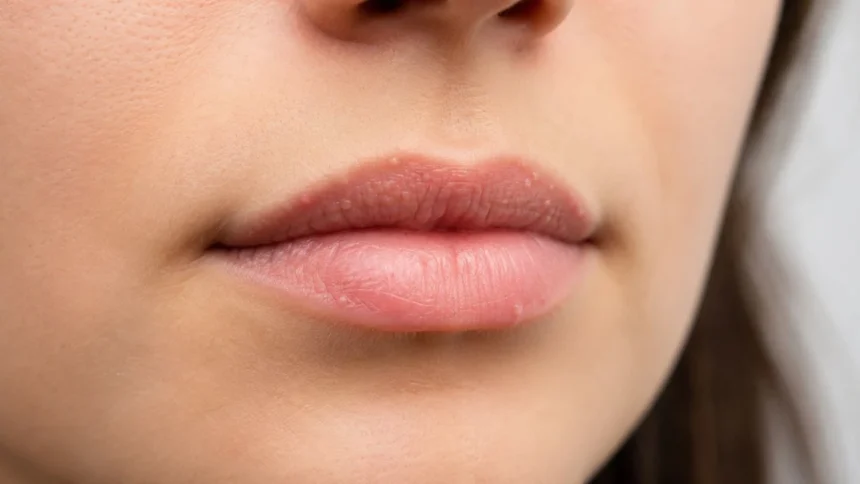
Small Bumps on Lips: Identify the Cause and Choose Safe Care
Small bumps on lips can appear for many reasons, ranging from harmless oil glands and blocked pores to irritation, cysts, or viral infections. Their colour, location, texture, discomfort, and development over time can provide useful clues, but appearance alone is not always enough to identify the cause accurately.
Some lip bumps are normal features that require no treatment. Fordyce spots, for example, are visible oil glands that often appear as tiny white or yellow bumps along the lip border. They are common, harmless, noninfectious, and not a sexually transmitted infection.
Other bumps may need temporary precautions or medical care. Cold sores are contagious fluid-filled blisters caused by herpes simplex virus, while a painless bump inside the lower lip may be an oral mucocele caused by minor injury or lip biting.
This guide explains the most common causes of small bumps on lips, including Fordyce spots, pimples, cold sores, allergic reactions, mouth ulcers, mucoceles, and perioral dermatitis. It also covers safe home care, symptoms that require professional assessment, and warning signs that need urgent medical attention.
Quick Ways to Compare Lip Bumps
Begin by checking exactly where the bumps are located. Bumps on the red lip surface may have different causes from spots on the surrounding skin, along the lip line, or inside the mouth. Fordyce spots commonly appear on the vermilion border, while mucoceles usually develop inside the lower lip.
Next, consider how the bumps feel. Tingling, burning, pain, and grouped blisters can suggest a cold sore, especially when the area later leaks fluid and forms a crust. A soft, painless, clear or bluish inner-lip bump is more consistent with a mucocele.
Colour and texture also provide clues. Tiny, stable white or yellow bumps may be Fordyce spots, while red acne-like bumps surrounding the mouth can occur with perioral dermatitis. Dryness, scaling, cracking, itching, or burning may point toward irritant or allergic contact cheilitis.
Finally, note how long the change has been present. Cold sores usually progress through recognisable stages and heal within one to two weeks. A mouth ulcer, lump, red patch, or white patch lasting more than three weeks should be examined by a doctor or dentist.
Small White Bumps on Lips
Small white bumps on lips are frequently Fordyce spots. These slightly raised white, cream, or yellow papules are sebaceous glands located where they are more visible than usual. They may occur individually or in groups and often become easier to see when the skin is stretched.
Fordyce spots are regarded as a normal variation rather than a disease. DermNet reports that they are present in a large proportion of adults and usually become more visible after puberty. They are not caused by poor hygiene, an infection, or sexual contact.
These spots usually remain small and painless. They do not typically fill with fluid, create crusts, or cause the tingling sensation associated with cold sores. Their stable appearance over months or years is another clue, although a clinician should assess them when the diagnosis remains uncertain.
Treatment is unnecessary because Fordyce spots are harmless. Do not squeeze, puncture, scrape, or burn them at home, as doing so can cause irritation, infection, or scarring. Cosmetic procedures are available, but they should only be discussed with a qualified dermatologist.
Fordyce Spots vs Cold Sores
Fordyce spots and cold sores can both affect the lip border, but they behave differently. Fordyce spots are usually numerous, tiny, pale, and painless. Cold sores commonly begin with itching, tingling, burning, pain, or numbness before several bumps become fluid-filled blisters.
Cold sores change over a short period. The blisters may rupture, release clear or yellowish fluid, form a crust, and then heal. Fordyce spots generally remain unchanged and do not follow a blistering, leaking, and scabbing cycle.
Another important difference is contagiousness. Fordyce spots are not infectious and cannot spread through kissing or shared objects. Cold sores contain herpes simplex virus and can spread through direct contact, saliva, kissing, or objects that have recently touched the mouth.
Avoid kissing, oral sexual contact, and sharing cups, utensils, towels, or lip products when a cold sore is developing or present. The virus can spread from the first warning sensations until the skin has healed completely, even when the sore is less noticeable.
Cold Sores on the Lips
Cold sores are painful or uncomfortable blisters caused by oral herpes. HSV-1 causes most oral herpes infections, although HSV-2 can also affect the mouth. Many people carry oral herpes without noticeable symptoms, while others experience repeated outbreaks.
An outbreak often starts with tingling, itching, burning, or numbness at a specific location. Small bumps may then develop along the outer lip edge and become fluid filled. The blisters eventually break, crust, and normally heal within approximately one to two weeks.
Stress, illness, sunlight, hormonal changes, or injury around the mouth may trigger another outbreak in someone who already carries the virus. These factors do not create the original infection; they may reactivate virus that remains inactive in nerve cells between episodes.
Antiviral treatment works best when started early, often during the tingling stage or soon after the blister appears. Consult a pharmacist or healthcare professional about appropriate treatment, especially for a first outbreak, frequent sores, severe pain, weakened immunity, or symptoms that do not improve.
Pimples on the Lip Line
A pimple can form on the skin beside the lips when a pore becomes blocked or inflamed. These bumps may have a white centre, feel tender, or appear as a single red spot. They are more likely to develop on the surrounding skin than on the moist inner surface of the lip.
Irritating foods, sweat, skin oils, dirt, stress, makeup, lipstick, gloss, and lip balm can contribute to breakouts around the mouth. Products that are thick, oily, fragranced, or unsuitable for acne-prone skin may block pores or irritate nearby skin.
A pimple is not contagious and normally does not begin with a cluster of tingling blisters. It may contain thicker white material rather than clear fluid. However, squeezing a bump to inspect its contents can worsen inflammation and introduce bacteria into the damaged skin.
Keep the area clean and temporarily stop any new lip or facial products that may have triggered the breakout. Avoid placing strong acne treatments directly on the red lip tissue, as ingredients designed for facial skin may cause significant dryness, burning, or cracking.
Bumps Inside the Lips
A smooth bump inside the lower lip may be an oral mucocele, also called a mucous cyst. Mucoceles develop when minor injury damages or blocks a small salivary gland, allowing saliva to collect beneath the mouth’s surface. Lip biting is a common trigger.
An oral mucocele is usually soft, dome shaped, painless, and clear or bluish. Sizes vary from a tiny bump to a more noticeable swelling. Although the lower lip is the most common location, mucoceles may also develop on the inner cheek, tongue, gums, or floor of the mouth.
Many mucoceles rupture and disappear without treatment. Avoid biting, squeezing, cutting, or attempting to drain the cyst yourself. Home removal can damage delicate tissue, introduce infection, or cause the lesion to return.
A dentist, oral surgeon, or doctor should assess a bump that repeatedly returns, becomes large, remains unexplained, or interferes with speaking, chewing, or swallowing. Professional treatments for persistent mucoceles may include freezing, laser treatment, or surgical removal.
Mouth Ulcers on the Inner Lip
A mouth ulcer can begin as a tender bump or irritated spot inside the lip before developing into a shallow sore. It commonly has a pale, white, yellow, or grey centre with a red border. Unlike cold sores, ordinary mouth ulcers are not contagious.
Common triggers include accidentally biting the lip, sharp teeth, braces, rough fillings, hot food, hard food, stress, irritating toothpaste, or nutritional deficiencies. Some people develop ulcers repeatedly without one obvious cause.
Most uncomplicated mouth ulcers heal within one or two weeks. During healing, choose softer foods and avoid very spicy, salty, acidic, rough, or extremely hot items. A pharmacist can recommend suitable pain-relieving or protective oral products.
Arrange a dental or medical examination when an ulcer lasts longer than three weeks, looks different from previous ulcers, becomes increasingly painful, bleeds, or appears with other unexplained symptoms. Persistent oral changes should not be repeatedly treated at home without diagnosis.
Allergic or Irritated Lips
Small bumps may appear with contact cheilitis, an inflammatory reaction involving the lips. The condition can cause redness, dryness, scaling, cracking, itching, pain, or burning. Some reactions affect the entire lip, while others remain limited to the area touched by a particular product.
Possible triggers include lipstick, lip balm, sunscreen, toothpaste, mouthwash, dental materials, flavourings, fragrances, preservatives, foods, medicines, and metals. Even a product used for months can occasionally become a problem after sensitivity develops.
Stop recently introduced products and switch temporarily to simple, fragrance-free care. Avoid repeatedly testing several new balms, oils, scrubs, or home remedies, because additional ingredients can make the reaction worse and make the original trigger harder to identify.
Persistent or recurring cheilitis may require assessment and patch testing by a dermatologist or allergy specialist. Patch testing can identify delayed contact allergies, especially when symptoms continue despite removing the most obvious cosmetic or oral-care products.
Perioral Dermatitis Bumps
Perioral dermatitis causes groups of small acne-like bumps around the mouth. On lighter skin they may appear red or pink, while on darker skin the bumps may look skin coloured or have less visible redness. Itching, tenderness, dryness, or burning may also occur.
The rash often approaches the lips but leaves a narrow area immediately beside the lip border unaffected. It can also develop around the nose or eyes. This distribution helps distinguish perioral dermatitis from problems located directly on the red lip surface.
Facial steroid creams may trigger or worsen perioral dermatitis, and abruptly stopping a potent steroid can sometimes produce a temporary flare. Do not begin, continue, or suddenly discontinue a prescribed facial steroid without discussing the situation with the clinician who recommended it.
A dermatologist can distinguish perioral dermatitis from acne, rosacea, contact dermatitis, and infection. Treatment may involve simplifying skin care and using prescribed topical or oral medication. Improvement can take time, so repeatedly changing products may delay recovery.
Milia Near the Lips
Milia are tiny cysts containing keratin, a protein naturally found in skin. They usually appear as firm, pearly-white bumps just beneath the surface. Milia are harmless and can occur at any age, although they are more commonly seen on areas such as the cheeks, nose, and eyelids.
When milia develop near the mouth, they may be mistaken for whiteheads or Fordyce spots. Milia generally feel firm and occur on regular facial skin, while Fordyce spots often appear as multiple pale glands along the lip border or inside the mouth.
These bumps may disappear without treatment, but some persist for months. Avoid pressing them with fingernails or using an unsterilised needle. Unlike an ordinary pimple, a milium is enclosed beneath the skin and may not respond to squeezing.
A dermatologist can confirm the diagnosis and remove troublesome milia safely when appropriate. Professional options can include opening the surface with sterile equipment, freezing, heat treatment, or other procedures selected according to the number and location of the cysts.
Small Bumps on Children’s Lips
Children can develop many of the same lip problems as adults, including irritation, cold sores, mouth ulcers, and mucoceles. Younger children may be unable to explain tingling, burning, pain, or difficulty swallowing, so behaviour and additional symptoms become especially important.
Hand, foot, and mouth disease can cause fever, painful mouth sores, and a rash on the hands and feet. The mouth changes may begin as small red spots that blister, and discomfort can cause a child to eat less, drool, or prefer cold drinks.
Most cases improve within seven to ten days, but maintaining hydration is important. Contact a healthcare professional when a child cannot drink properly, shows signs of dehydration, has severe symptoms, has a weakened immune system, or does not improve as expected.
Newborns require special caution around cold sores. Oral herpes exposure can cause serious illness in a newborn, so a baby exposed through kissing or close contact with an active sore needs prompt medical advice, particularly if blisters or illness develop.
Are Lip Bumps Contagious?
Many common causes of lip bumps are not contagious. Fordyce spots, acne, milia, allergic cheilitis, ordinary mouth ulcers, and mucoceles cannot be passed to another person through kissing, shared cups, or close contact. Their causes involve glands, pores, irritation, injury, or inflammation.
Cold sores are contagious because they are caused by herpes simplex virus. Viral material can spread through contact with the sore, surrounding skin, saliva, shared mouth items, kissing, or oral sexual contact.
Hand, foot, and mouth disease is also contagious and can spread through droplets, saliva, blister fluid, contaminated objects, and stool. Frequent handwashing, surface cleaning, and avoiding close contact during illness can reduce transmission.
When the cause of a new blistering rash is unclear, avoid kissing and sharing lip balm, drinks, utensils, towels, or razors until it has been identified. This temporary caution protects others without assuming that every bump is an infection.
Safe Home Care for Lip Bumps
Start by leaving the bumps alone. Picking, squeezing, biting, scraping, or puncturing can increase swelling, delay healing, introduce bacteria, and create scarring. This advice is especially important for possible Fordyce spots, mucoceles, milia, pimples, and cold sores.
Wash your hands before touching the mouth and use gentle, fragrance-free products. When the lips are dry or irritated, a plain protective balm containing petroleum jelly may reduce moisture loss. Stop using any recently introduced cosmetic, toothpaste, mouthwash, or flavoured product that seems connected with symptoms.
Avoid licking, biting, and peeling dry skin. Protect the lips from harsh wind and sunlight, and consider a suitable fragrance-free lip product with sun protection when outdoors. Do not share lip products because shared containers can transfer germs.
For painful inner-mouth sores, choose soft foods and cooler drinks while avoiding acidic, salty, spicy, or rough foods. Seek advice from a pharmacist before using medicated gels, antiseptics, or pain treatments, particularly for children, pregnancy, allergies, or existing health conditions.
Treatments to Avoid
Do not pop a lip bump to discover what it contains. Clear liquid does not automatically confirm a cold sore, while white material does not always mean acne. Damaging the lesion can alter its appearance and make professional diagnosis more difficult.
Avoid applying toothpaste, alcohol, lemon juice, essential oils, undiluted vinegar, or household disinfectants. These substances may burn or irritate delicate lip tissue and can worsen cracking, swelling, and inflammation without treating the underlying cause.
Do not use a leftover antibiotic, antifungal cream, or steroid without medical advice. Lip problems that look similar can require completely different treatments, and steroid creams may worsen certain infections or contribute to perioral dermatitis.
Avoid attempting cosmetic removal of Fordyce spots or milia with needles, blades, or heated tools. When treatment is genuinely needed, a dermatologist can use sterile equipment and select a procedure that reduces unnecessary injury and scarring.
When to See a Doctor or Dentist
Arrange an appointment when the cause is unclear, the bumps repeatedly return, or they fail to improve after reasonable home care. A doctor, dermatologist, dentist, or oral-health professional can examine the lips, surrounding skin, and inside of the mouth.
Seek assessment for a lump on the lip, a red or white mouth patch, unexplained bleeding, persistent pain, or an ulcer lasting longer than three weeks. These symptoms are often caused by noncancerous conditions, but they should be checked because persistent changes can occasionally require further investigation.
You should also seek care when a bump becomes hot, increasingly swollen, very painful, or filled with pus, as these features may indicate infection. Difficulty speaking, chewing, swallowing, or opening the mouth also deserves prompt evaluation.
Other reasons for assessment include fever, swollen neck glands, unexplained weight loss, a hoarse voice that persists, weakened immunity, or a sore that looks different from previous outbreaks. Early evaluation is safer than repeatedly treating an unexplained lesion at home.
Emergency Warning Signs
Call your local emergency service when the lips, tongue, mouth, or throat suddenly swell and breathing becomes difficult. Rapid swelling can be part of anaphylaxis or severe angioedema and may obstruct the airway.
Other emergency signs include wheezing, choking, gasping, throat tightness, difficulty swallowing, faintness, severe dizziness, confusion, or lips turning blue, grey, or unusually pale. Do not wait for bumps or swelling to settle when breathing or circulation may be affected.
Urgent medical attention is also needed when a person develops rapidly worsening swelling after food, medicine, an insect sting, or another possible allergen. Use a prescribed adrenaline auto-injector according to the person’s emergency plan while someone contacts emergency services.
For children, urgent evaluation is important when mouth pain prevents drinking, urination decreases, the child becomes unusually sleepy, or other signs of dehydration appear. Newborn exposure to an active cold sore also requires immediate professional advice.
How Lip Bumps Are Diagnosed
A clinician will usually begin by asking when the bumps appeared, whether they hurt or itch, and whether they have changed. Questions may cover recent lip products, toothpaste, food, medicines, sun exposure, illness, sexual contact, lip biting, and previous outbreaks.
The location and appearance often provide useful information. A clinician may check whether the lesions are grouped or separate, fluid filled or solid, smooth or rough, stable or changing, and located on the lip surface, surrounding skin, or inner mouth.
Many causes can be diagnosed through examination alone. Additional tests may include a viral swab for suspected herpes, patch testing for possible contact allergy, or a biopsy when a persistent or unusual lesion needs closer examination.
Treatment then depends on the diagnosis. Options may include observation, avoiding a trigger, antiviral medication, prescribed treatment for dermatitis, professional cyst removal, or further oral examination. There is no single cream that safely treats every type of lip bump.
Preventing Future Lip Bumps
You cannot prevent every lip bump, particularly normal Fordyce spots or naturally occurring milia. However, gentle skin care and avoiding unnecessary irritation can reduce some breakouts, reactions, and injuries around the mouth.
Use clean, nonirritating lip products and replace items that have become old or contaminated. Remove makeup gently, wash your hands before applying balm, and stop products that repeatedly cause burning, itching, dryness, or bumps.
Avoid habitual lip biting, cheek sucking, and peeling loose skin. These actions can damage salivary ducts, contribute to mucoceles, and keep irritated tissue from healing. Regular dental care can also identify sharp teeth, rough fillings, or appliances that repeatedly injure the mouth.
People who experience recurring cold sores can track triggers such as illness, stress, or sun exposure and discuss preventive treatment with a healthcare professional. Avoiding direct contact during outbreaks reduces the chance of passing HSV to another person.
Conclusion: Check the Location and Symptoms
Small bumps on lips are often harmless, but their possible causes are varied. Fordyce spots are stable pale oil glands, pimples develop on nearby skin, mucoceles form inside the mouth, and contact reactions often produce dryness, redness, or burning.
Painful grouped blisters that tingle and crust may be cold sores, while acne-like bumps surrounding rather than covering the lips may indicate perioral dermatitis. Location, sensation, progression, and additional symptoms can help narrow the possibilities without replacing a professional diagnosis.
Safe care begins with avoiding squeezing, cutting, or irritating the bumps. Keep the lips protected, pause suspicious products, avoid sharing mouth items when infection is possible, and use pharmacist- or clinician-recommended treatments rather than harsh home remedies.
See a doctor or dentist for persistent, recurring, painful, bleeding, or unexplained changes. Seek emergency help immediately for sudden lip or throat swelling, breathing difficulty, faintness, or trouble swallowing, because these symptoms may indicate a serious allergic reaction.
Frequently Asked Questions
Why do I have tiny white bumps on my lips?
They may be Fordyce spots, which are harmless visible oil glands. Stable, painless white or yellow bumps usually need no treatment, but a clinician can confirm the cause when they change or remain uncertain.
Are small bumps on lips always herpes?
No. Other causes include Fordyce spots, pimples, mucoceles, mouth ulcers, allergic reactions, milia, and perioral dermatitis. Cold sores usually tingle, become fluid-filled, rupture, and form a crust.
Can I pop small bumps on my lips?
No. Popping or puncturing a lip bump can cause irritation, infection, bleeding, and scarring. It can also change the appearance and make the underlying condition harder to identify.
Why are there bumps inside my lower lip?
A painless clear or bluish bump may be a mucocele caused by lip biting or a blocked salivary duct. Most resolve naturally, but persistent, recurrent, or large bumps should be checked.
When should I worry about a lip bump?
Arrange an examination when it lasts longer than three weeks, grows, bleeds, becomes hard, causes persistent pain, or appears with swallowing problems, a neck lump, or an unexplained red or white patch.