
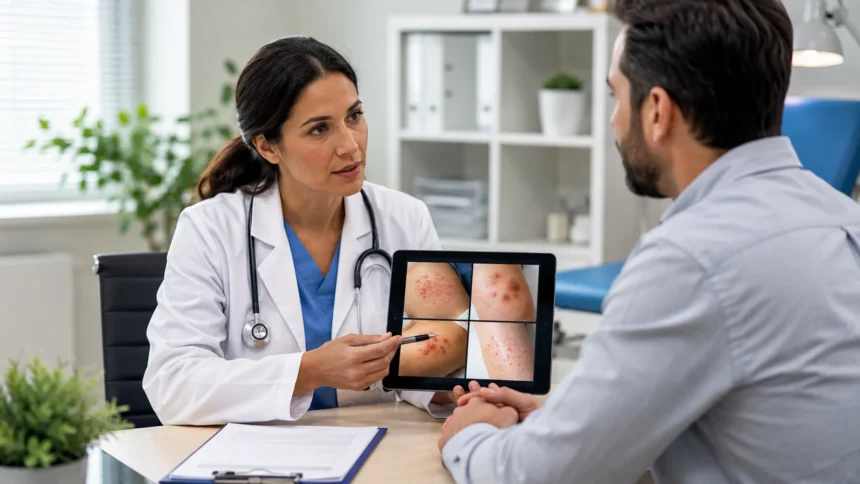
STD Pictures: What Common Signs and Symptoms Can Tell You
Searching for STD pictures is often one of the first things people do after noticing an unfamiliar bump, sore, rash, or discharge. It is understandable to want a quick visual comparison, especially when the change appears around the genitals, mouth, anus, or nearby skin. The problem is that sexually transmitted infections do not always have a distinctive appearance. Many completely unrelated skin conditions can also resemble common STI symptoms. Pictures can provide general awareness, but they should never be treated as a diagnosis.
The terms STD and STI are often used interchangeably, although sexually transmitted infection is now commonly preferred because a person can carry an infection without developing disease or noticeable symptoms. Chlamydia, gonorrhea, herpes, human papillomavirus, syphilis, trichomoniasis, HIV, and hepatitis are among infections that may spread through sexual contact. Some produce visible changes, while others may cause only internal symptoms or no symptoms at all. That makes laboratory testing much more reliable than appearance alone.
Visible signs that sometimes lead people to search for sexually transmitted disease pictures include genital sores, blisters, ulcers, warts, unusual discharge, redness, swelling, and unexplained rashes. Burning during urination, pelvic discomfort, testicular pain, itching, bleeding between periods, or pain during sex may also occur depending on the infection. However, these symptoms overlap with yeast infections, urinary tract infections, ingrown hairs, dermatitis, folliculitis, and other conditions. A photo cannot reliably separate all of these possibilities.
Another important point is that a person may look completely healthy while having an STI. Chlamydia and gonorrhea, for example, frequently produce few or no noticeable symptoms. HPV can remain unnoticed, and herpes can be transmitted even when obvious sores are absent. Someone therefore cannot determine their STI status simply by examining their own body or a partner’s body. Testing after a possible exposure remains important even when nothing unusual is visible.
This guide explains what some common STI signs may look and feel like, how symptoms differ between infections, and which changes should prompt medical evaluation. It does not replace an examination, STI test, or advice from a healthcare professional. If you have had a possible exposure or developed new genital symptoms, testing is usually more useful than repeatedly comparing your body with images online. Knowing what to watch for is valuable, but knowing the limits of visual diagnosis is even more important.
Can STD Pictures Accurately Tell You What Infection You Have?
STD pictures can help you understand general patterns, such as the difference between clustered blisters and wart-like growths. They may also encourage someone to notice a symptom they would otherwise ignore. However, photographs usually show particularly clear or advanced examples of a condition. Real infections can look much milder, appear in unusual locations, or change as they heal. Lighting, skin tone, camera quality, and the stage of infection can also make the same condition look dramatically different from one image to another.
Many genital skin conditions look similar during their early stages. A small herpes lesion can initially resemble an irritated hair follicle, while an ingrown hair can sometimes look like a sexually transmitted sore. Genital warts may resemble normal skin tags, and molluscum contagiosum can create small bumps that people mistake for HPV. Irritant dermatitis can produce redness and itching similar to certain infections. Without an examination and appropriate testing, appearance alone often leaves several reasonable possibilities.
Different people can also react differently to the same infection. Herpes may cause multiple painful blisters in one person and only a tiny crack or mild irritation in another. Syphilis may produce a classic painless ulcer, but the lesion can be overlooked when it occurs inside the vagina, rectum, or mouth. HPV warts may be prominent, nearly flat, or absent despite infection. Searching for a perfect visual match can therefore create false reassurance when your symptoms do not resemble the most familiar examples.
Another risk of relying on photos is unnecessary anxiety. Normal anatomical structures such as Fordyce spots, penile papules, sebaceous glands, vaginal tissue, or harmless skin variations are sometimes mistaken for STDs after people compare themselves with alarming images online. Repeated checking can make normal differences seem increasingly suspicious. If a spot is new, changing, painful, bleeding, or associated with possible STI exposure, an examination is more informative than hours of online image comparison.
The safest approach is to treat pictures as educational rather than diagnostic. They can teach you that herpes may blister, syphilis may ulcerate, or HPV may form warts, but they cannot confirm which infection you have. A clinician can consider appearance together with sexual history, timing, symptoms, examination findings, and laboratory testing. That combination provides far more reliable information and can lead to treatment when an infection is actually present.
Common STD Signs and Symptoms to Recognize
Genital sores are among the most concerning visible signs because several sexually transmitted infections can cause them. The appearance may include blisters, shallow ulcers, open sores, crusted areas, or a single round lesion. Herpes and syphilis are two well-known causes, but traumatic irritation, shaving injuries, fungal infections, inflammatory skin conditions, and other problems can also create sores. Pain level alone does not reliably identify the cause, although certain patterns can provide clues during a medical evaluation.
Unusual genital discharge is another symptom worth noticing. Discharge from the penis, vagina, or rectum may occur with gonorrhea, chlamydia, or trichomoniasis, although these infections can also be completely asymptomatic. The discharge may look clear, white, yellow, greenish, or cloudy depending on the cause. Color alone is not diagnostic because bacterial vaginosis, yeast infections, and normal hormonal changes can also alter vaginal discharge. Changes accompanied by burning, odor, pelvic pain, or exposure risk deserve testing.
Burning or discomfort during urination is commonly associated with urethral infections. Gonorrhea and chlamydia can cause this symptom, particularly in people with a penis, but urinary tract infections can produce almost identical discomfort. Some people also notice urethral irritation without obvious discharge. When painful urination follows a new sexual exposure, STI testing may be appropriate even if no genital lesion is present. Waiting for a visible rash before getting checked can miss infections that primarily affect internal tissues.
Genital itching, irritation, or swelling may also occur. Trichomoniasis can cause genital irritation, while herpes may produce tingling, burning, or itching before sores become obvious. Pubic lice and scabies can cause intense itching around areas involved in sexual contact, although they are infestations rather than the same type of infection as chlamydia or gonorrhea. Yeast infections and contact dermatitis remain common non-STI causes. The surrounding symptoms and exposure history help narrow the possibilities.
Systemic symptoms can occur with certain infections as well. Fever, swollen lymph nodes, fatigue, sore throat, muscle aches, or a widespread rash may accompany early HIV infection, secondary syphilis, or a first herpes episode. These symptoms are highly nonspecific and occur with many ordinary viral illnesses. You cannot diagnose an STI based on flu-like symptoms alone. If systemic symptoms follow a potential sexual exposure, mention both the exposure and timing when speaking with a healthcare professional.
What Genital Herpes Can Look Like
Genital herpes is caused primarily by herpes simplex virus type 1 or type 2. A classic outbreak may begin with itching, burning, tingling, or tenderness before visible lesions appear. Small fluid-filled blisters can then develop on or around the genitals, anus, buttocks, thighs, or nearby skin. The blisters may occur in clusters and can break open to form shallow, painful ulcers. Eventually, the lesions crust or heal, although the exact appearance differs considerably between individuals.
A first herpes outbreak can sometimes be more noticeable than later recurrences. Some people develop numerous painful sores along with swollen lymph nodes, fever, headache, or general body aches. Others have only mild irritation and never recognize the episode as herpes. Lesions can also occur internally, such as inside the vagina, cervix, urethra, or rectum, where they are not easy to see. This variation is one reason online herpes pictures cannot reliably rule infection in or out.
Recurrent outbreaks are often shorter and milder than the first recognized episode. Someone may experience only one or two small sores, a patch of irritation, or a crack that could easily be mistaken for friction or shaving damage. Tingling or sensitivity may appear before the lesion itself. The location can recur in a similar region because the virus remains in nearby nerve tissue after the initial infection. Frequency varies widely, with some people experiencing repeated episodes and others having few or none.
Not every genital blister or ulcer is herpes. Friction from sex, shaving injuries, folliculitis, allergic reactions, and several inflammatory conditions can create painful lesions. Syphilis can also cause genital ulcers, although the classic primary syphilis sore is often painless. If a suspicious lesion is present, testing directly from a fresh sore may sometimes provide useful diagnostic information. The timing of testing matters, which is another reason to seek evaluation while lesions are still visible.
Herpes can also be transmitted when no obvious sores are present because the virus may occasionally shed from apparently normal skin. Looking at a partner’s genitals therefore cannot prove that transmission risk is absent. People concerned about herpes should discuss appropriate testing and prevention with a healthcare professional rather than relying only on visual inspection. Recognizing possible symptoms can prompt evaluation, but diagnosis depends on clinical assessment and appropriate laboratory methods.
What Syphilis Symptoms Can Look Like
Syphilis can produce very different symptoms depending on the stage of infection. During primary syphilis, the most recognizable sign is often a sore called a chancre at the location where the bacteria entered the body. The classic chancre is round, firm, and usually painless, although real lesions do not always follow that description perfectly. It may appear on the penis, vulva, vagina, anus, rectum, lips, or inside the mouth. Internal sores can go completely unnoticed.
Because a chancre often does not hurt, someone may ignore it or never realize it was present. The sore can heal without treatment, but healing does not mean the infection has disappeared. Syphilis can progress to another stage if appropriate antibiotic treatment is not received. This is an important difference from ordinary cuts or irritation that resolve completely. A disappearing lesion should not provide reassurance when there has been a realistic exposure to syphilis.
Secondary syphilis can produce a widespread rash several weeks after the primary stage. One particularly well-known pattern involves spots on the palms of the hands or soles of the feet, although the rash can occur elsewhere and may look very different from person to person. It is often not very itchy. Other symptoms may include swollen lymph nodes, fatigue, fever, sore throat, patchy hair loss, or lesions around moist body areas. None of these findings alone confirms syphilis.
Syphilis is sometimes called a “great imitator” because its symptoms can resemble many other medical conditions. A rash may look like a viral illness, allergic reaction, eczema, or another skin problem. Genital lesions can also resemble herpes, trauma, or other ulcers. Blood testing is therefore central to diagnosis, and clinicians may use more than one test when evaluating possible infection. Visual comparison is particularly unreliable when symptoms are mild or atypical.
Untreated syphilis can eventually affect important organs and the nervous system, making early diagnosis and treatment important. Pregnant people should receive recommended syphilis screening because infection can seriously affect pregnancy and a developing baby. If you have a painless genital sore, unexplained rash, or known exposure to someone diagnosed with syphilis, seek testing rather than waiting for symptoms to disappear. Effective treatment is available, but it requires identifying the infection correctly.
What Genital Warts From HPV Can Look Like
Human papillomavirus, or HPV, includes many different viral types. Some types can cause genital warts, while others are associated with certain cancers and may never produce visible warts at all. Genital warts commonly appear as small flesh-colored, pinkish, grayish, or slightly darker bumps around the genitals or anus. They may be flat, raised, smooth, or clustered together. Some clusters develop a rough appearance often compared with cauliflower, although many real warts are far less dramatic.
Warts can occur on the penis, scrotum, vulva, vaginal opening, cervix, anus, or surrounding skin. They may also occur inside the anal canal or other areas where they are difficult to see. Some people develop only one tiny lesion, while others develop several. Genital warts are frequently painless but can occasionally itch, become irritated, or bleed when rubbed. Their appearance alone may still be difficult to distinguish from harmless skin tags and other benign bumps.
Having genital warts does not automatically mean someone has a cancer-causing type of HPV. The HPV types that most commonly produce genital warts are generally different from the high-risk types associated with cervical and several other cancers. At the same time, a person can carry multiple HPV types. This is why recommended cervical screening and HPV testing remain important even when no visible warts are present. Normal-looking genital skin does not prove the absence of HPV.
Several conditions can resemble genital warts. Skin tags, molluscum contagiosum, sebaceous glands, normal anatomical variations, and certain other growths can be mistaken for HPV when viewed without medical training. Trying to remove an unidentified lesion at home using ordinary wart treatments can damage sensitive genital skin. Products intended for warts on the hands or feet should not automatically be used on genital tissue. A healthcare professional can determine whether treatment is appropriate.
Many HPV infections are controlled by the immune system over time, while genital warts may disappear, persist, or recur after treatment. Treatment removes visible warts but does not necessarily eliminate HPV immediately from nearby tissue. HPV vaccination can prevent infection with several important HPV types and is most effective when given according to recommended age and dosing schedules. Pictures may help people recognize possible warts, but prevention and appropriate screening are much more important for long-term health.
Gonorrhea and Chlamydia: Why There May Be Nothing to See
Gonorrhea and chlamydia are important examples of why STD pictures have serious limitations. Both infections can exist without producing visible genital changes. Many people have no symptoms at all, which allows infection to spread without anyone realizing it is present. When symptoms do occur, they often involve discharge, urinary discomfort, pelvic pain, or testicular symptoms rather than a distinctive rash. A normal visual examination therefore cannot rule out either infection.
Gonorrhea can cause increased vaginal discharge, bleeding between periods, painful urination, or pelvic discomfort. People with a penis may notice white, yellow, or greenish discharge from the urethra along with burning during urination. Testicular discomfort or swelling can occur less commonly. Rectal infection may cause discharge, itching, soreness, bleeding, or painful bowel movements, but it can also remain silent. Throat gonorrhea frequently causes few or no symptoms.
Chlamydia can produce a similar pattern. Possible symptoms include abnormal genital discharge, burning during urination, pelvic pain, pain during sex, bleeding between periods, or discomfort involving the testicles. Rectal chlamydia may cause pain, discharge, or bleeding, while throat infection often remains unnoticed. Because the symptoms overlap strongly with gonorrhea and several non-STI conditions, appearance cannot determine which organism is responsible. Laboratory testing is required.
Untreated infection can lead to complications in some people. Chlamydia and gonorrhea can contribute to pelvic inflammatory disease, which may affect fertility and cause chronic pelvic pain. Infection involving the testicles or surrounding structures can also cause complications. Symptoms may be mild before these problems develop, which is why testing recommendations are based partly on age, sexual practices, pregnancy, exposure history, and individual risk rather than symptoms alone.
If a recent partner tells you they tested positive for gonorrhea or chlamydia, do not wait for discharge or pain before seeking evaluation. Testing can detect infection in people who feel completely well. Depending on sexual practices, testing may involve urine, genital swabs, throat swabs, or rectal swabs because infection can occur at more than one anatomical site. Accurate testing is far more useful than looking for a photograph that resembles your body.
Trichomoniasis and Other STI Symptoms That May Not Be Obvious
Trichomoniasis is caused by a microscopic parasite and is another sexually transmitted infection that often produces no noticeable symptoms. When symptoms occur in people with a vagina, they may include genital itching, irritation, discomfort during urination, or changes in vaginal discharge. The discharge may sometimes become more noticeable or have a different color or odor. These features are not specific enough to distinguish trichomoniasis from bacterial vaginosis, yeast infections, or other causes of vaginal symptoms.
People with a penis often have no obvious signs of trichomoniasis. When symptoms develop, there may be irritation inside the penis, burning after urination or ejaculation, or a small amount of discharge. No distinctive rash or sore usually identifies the infection visually. This means someone can carry and transmit trichomoniasis while assuming they are infection-free. Testing is necessary when the infection is suspected.
HIV provides another important example of an infection that cannot be recognized through pictures. Some people develop flu-like symptoms during the early stage of HIV infection, including fever, sore throat, swollen lymph nodes, fatigue, or a generalized rash. These symptoms resemble countless other viral illnesses and cannot confirm HIV. Others experience no noticeable illness at all. HIV status is determined through appropriate testing rather than symptoms or physical appearance.
Hepatitis B can also spread through sexual contact, although many infected people initially have no symptoms. When illness occurs, symptoms may include fatigue, nausea, abdominal discomfort, dark urine, or yellowing of the skin and eyes. These signs are related to liver inflammation rather than a characteristic genital rash. Vaccination provides strong protection against hepatitis B and is an important part of sexual health prevention for eligible people.
The absence of visible STI signs is therefore extremely common across multiple infections. This is why sexual health screening focuses on risk and exposure rather than waiting for a rash or discharge to appear. If you have new or multiple partners, a known exposure, inconsistent barrier use, or another reason for concern, a healthcare professional can recommend appropriate tests. Visible symptoms are only one part of sexual health assessment.
Skin Conditions That Can Look Like an STD
Ingrown hairs are one of the most common causes of bumps that are mistaken for sexually transmitted infections. They often appear after shaving, waxing, or other forms of hair removal and may look like red, tender pimples around hair follicles. Sometimes a trapped hair can be seen beneath the skin. Unlike herpes, ingrown hairs do not typically develop into clusters of clear blisters, although irritated follicles can become painful or infected. Repeated squeezing can make their appearance more confusing.
Folliculitis can also produce multiple small red or pus-filled bumps around the genitals, thighs, buttocks, or pubic region. It occurs when hair follicles become inflamed, sometimes because of friction, bacteria, sweat, or shaving. The distribution around individual hairs can offer a clue, but folliculitis can still resemble other conditions in photographs. If bumps become widespread, painful, or recurrent, a medical examination can help determine whether infection or another skin disorder is present.
Yeast infections can create intense itching, redness, swelling, and irritation around genital tissue. Vaginal yeast infections may also produce thick discharge, while irritation involving the penis can cause redness or discomfort around the glans. These symptoms can overlap with several sexually transmitted infections even though a typical yeast infection is not classified as an STI. Sexual activity may sometimes trigger symptoms by changing the local environment without being the actual source of infection.
Contact dermatitis is another frequent mimic. Fragranced soaps, lubricants, condoms, detergents, wipes, shaving products, or tight clothing can irritate sensitive genital skin. The result may include redness, itching, burning, bumps, or dry patches. Symptoms often appear after exposure to a new product, but identifying the trigger can still be difficult. Continuing to apply multiple creams while trying to self-diagnose may make the irritation worse.
Normal anatomical variations are also regularly mistaken for disease. Fordyce spots, pearly penile papules, vestibular papillomatosis, visible glands, and ordinary skin folds can look unusual when someone inspects the area closely for the first time. These harmless features may have been present for years without being noticed. A clinician familiar with genital dermatology can often distinguish normal anatomy from infection much more accurately than an online image search.
When Should You Get Tested for an STD?
Testing is a good idea whenever you have symptoms that could reflect a sexually transmitted infection, particularly after a new sexual exposure. New genital sores, discharge, urinary burning, unexplained bleeding, pelvic pain, testicular discomfort, genital warts, or persistent itching all deserve attention. You do not need to know which infection you suspect before seeking testing. A healthcare professional can select tests based on your symptoms, sexual practices, and possible exposure sites.
Known exposure is another strong reason to get tested even when you feel completely well. If a current or recent sexual partner has been diagnosed with an STI, contact a healthcare provider or sexual health service promptly. Some infections can be treated based on exposure circumstances, while others require testing at specific intervals. Avoid assuming that a lack of symptoms means you were not infected. Asymptomatic transmission is common with several STIs.
Routine screening may also be recommended for people in certain age groups or risk categories. Recommendations vary according to sex, anatomy, pregnancy status, sexual practices, HIV status, number of partners, and local public health guidance. People who have oral or anal sex may need throat or rectal testing in addition to genital or urine testing. A standard urine test does not automatically detect an infection at every possible body site.
Testing too soon after exposure can occasionally miss an infection because different tests have different window periods. The ideal timing depends on which infection is being considered and what type of test is used. If an early test is negative but the exposure was significant, a clinician may recommend repeat testing later. This is especially important for blood tests used for infections such as HIV or syphilis, where markers may take time to become detectable.
Getting tested should not be treated as an admission of wrongdoing or irresponsibility. STI screening is a routine part of healthcare for sexually active people. Early diagnosis can reduce complications, allow effective treatment when available, and help prevent transmission to partners. It also provides far more certainty than trying to interpret symptoms alone. If anxiety about testing is keeping you from seeking care, remember that sexual health professionals deal with these concerns every day.
When STD Symptoms Need Prompt Medical Attention
Severe pelvic or lower abdominal pain deserves prompt evaluation, particularly when accompanied by fever, unusual discharge, vomiting, or bleeding. These symptoms can occur with pelvic inflammatory disease, which sometimes develops after untreated gonorrhea or chlamydia. Other non-STI conditions, including appendicitis or gynecological emergencies, can cause similar pain. Severe symptoms should therefore not be managed simply by waiting for an STI test result at home.
Sudden or significant testicular pain and swelling also require timely medical assessment. Some sexually transmitted infections can contribute to inflammation involving structures around the testicle, but testicular torsion is another possibility and is a medical emergency. The appearance of the scrotum alone cannot reliably distinguish these causes. Any sudden severe testicular pain should receive urgent evaluation rather than being attributed automatically to an STI.
Neurological or eye symptoms associated with possible syphilis exposure also require professional assessment. Vision changes, hearing changes, severe headache, weakness, confusion, or other neurological symptoms should not be ignored. Syphilis can affect the nervous system and eyes at different stages. These symptoms have many other possible causes as well, which makes medical evaluation even more important.
Pregnancy changes the urgency of some STI concerns because infections such as syphilis, HIV, hepatitis B, gonorrhea, and chlamydia can affect pregnancy or a newborn. Pregnant people should follow recommended prenatal STI screening and report possible exposures promptly. Treatment choices may differ during pregnancy, making professional guidance preferable to self-treatment. Never delay testing because symptoms seem mild.
Finally, seek care whenever genital sores, rashes, or discharge are worsening rapidly, becoming extremely painful, or accompanied by significant fever or illness. A spreading skin infection or another medical problem may be present. Sexual health concerns rarely become easier to interpret simply by waiting and taking more photographs. Prompt evaluation can reduce uncertainty and help ensure that appropriate treatment begins when needed.
How to Reduce Your Risk of Sexually Transmitted Infections
Barrier methods such as external condoms, internal condoms, and dental dams can reduce the risk of many infections when used correctly and consistently. They are particularly useful for reducing exposure to bodily fluids associated with infections such as gonorrhea, chlamydia, and HIV. They do not provide complete protection against infections that can spread through skin-to-skin contact outside the covered area, including herpes and HPV. Even so, consistent barrier use remains an important prevention tool.
Regular STI testing is another practical part of prevention. Testing helps identify infections that would otherwise remain unnoticed and makes earlier treatment possible. People with new or multiple sexual partners can discuss an appropriate screening schedule with a healthcare professional. Sharing test results and talking about recent exposures before sex can also support informed decisions. These conversations may feel uncomfortable initially but often become easier with practice.
Vaccination can prevent some sexually transmitted infections. HPV vaccination protects against important HPV types associated with genital warts and several cancers, while hepatitis B vaccination protects against a virus that can spread sexually and damage the liver. Eligibility and recommended dosing depend on age, vaccination history, and individual circumstances. Checking your vaccination status is an easy prevention step that is sometimes overlooked during discussions focused only on condoms.
HIV prevention may include additional options for people at increased risk. Pre-exposure prophylaxis, commonly called PrEP, can greatly reduce the risk of acquiring HIV when taken as prescribed. Post-exposure prophylaxis, or PEP, may be used after a possible HIV exposure but must be started quickly. A healthcare professional or sexual health service can determine whether either approach is appropriate. These medications specifically address HIV and do not prevent other sexually transmitted infections.
Open communication remains one of the most useful prevention habits. Talk with partners about testing, condom use, symptoms, vaccination, and sexual health expectations before exposure occurs whenever possible. Avoid sex when unexplained genital sores or other concerning symptoms are present until the cause has been evaluated. Prevention works best when it combines communication, testing, vaccination, barrier methods, and appropriate medical care rather than relying on any single strategy.
Conclusion: Use STD Pictures for Awareness, Not Diagnosis
STD pictures can be useful for understanding the broad appearance of certain conditions, but they have significant limitations. Herpes may produce blisters or ulcers, syphilis may cause a painless sore or later rash, and HPV can create genital warts. Other infections such as chlamydia, gonorrhea, trichomoniasis, HIV, and hepatitis may produce few or no visible signs. A picture can therefore never provide a complete view of someone’s sexual health.
Many symptoms also overlap with conditions that are not sexually transmitted. Ingrown hairs, folliculitis, skin tags, yeast infections, dermatitis, and normal anatomical variations can all create changes that look alarming when compared with photographs online. This overlap is one reason self-diagnosis is unreliable. Even clinicians often use laboratory testing when the visual appearance alone does not provide enough certainty.
The most important warning sign is not one particular type of bump or rash but a meaningful change in your body combined with possible exposure. New sores, unusual discharge, painful urination, unexplained genital irritation, pelvic pain, testicular discomfort, or persistent rash are all reasons to consider medical evaluation. Testing is also appropriate after certain exposures even when symptoms are completely absent. Waiting for something visible to appear can delay diagnosis.
If you do notice a suspicious lesion, avoid picking, squeezing, burning, or treating it with harsh chemicals while trying to identify it. These actions can cause additional irritation and make examination more difficult. Consider avoiding sexual contact until the cause is clarified, particularly when sores or discharge are present. A sexual health clinic, primary care professional, or other qualified clinician can help determine which tests are appropriate.
Ultimately, photographs are best used to improve awareness rather than provide certainty. Sexually transmitted infections are common healthcare issues, and many can be treated, managed, or prevented effectively when identified appropriately. Testing gives you information that a mirror or online gallery cannot provide. If something looks unfamiliar or you have had a possible exposure, getting checked is usually the clearest way to move from uncertainty to an informed next step.
Frequently Asked Questions
Can you tell if someone has an STD by looking at them?
No. Many sexually transmitted infections cause no visible symptoms, so someone can look completely healthy while carrying an infection. Testing is the only reliable way to determine many STI statuses.
What do STD bumps usually look like?
There is no single appearance. Herpes may cause blisters or ulcers, while HPV can produce wart-like growths, but ingrown hairs and other harmless conditions can look similar.
What STD causes a rash on the body?
Secondary syphilis can cause a widespread rash, sometimes involving the palms and soles. Early HIV may also be associated with a nonspecific rash, but neither infection can be diagnosed by rash appearance alone.
Can you have an STD with no symptoms?
Yes. Chlamydia, gonorrhea, HPV, trichomoniasis, HIV, and other infections may produce no noticeable symptoms for some people. This is why screening after relevant exposure is important.
Should I get tested if my STD pictures do not match online images?
Yes, if you have concerning symptoms or a possible exposure. Real infections vary widely in appearance, and a lack of resemblance to online photos does not rule out an STI.