
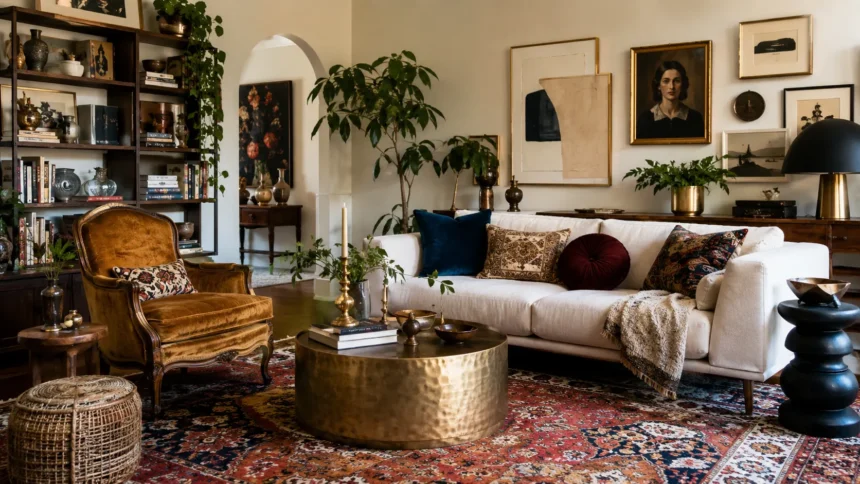
What Is Eclectic Interior Design?
Eclectic interior design is a decorating approach that combines elements from different styles, periods, colors, materials, and cultures to create a space that feels personal rather than perfectly matched. A modern sofa might sit beside an antique table, while contemporary artwork hangs above a vintage rug. The result can feel collected over time instead of purchased as one coordinated furniture set.
At first glance, an eclectic interior can appear spontaneous, but successful rooms are rarely random. Designers usually create relationships between contrasting pieces through repeated colors, complementary proportions, similar materials, or a consistent mood. These subtle connections help individual objects feel as though they belong together even when they come from completely different design traditions.
The appeal of eclectic decorating is its flexibility. You do not have to choose between modern, traditional, mid-century, rustic, industrial, coastal, or global influences simply because you appreciate elements from several styles. Instead, eclectic design allows you to select what genuinely appeals to you and combine those choices into one coherent home.
However, eclectic does not mean placing everything you love into one room without editing. Too many unrelated colors, patterns, furniture shapes, and decorative objects can create visual clutter rather than personality. The difference between a stylish eclectic room and a chaotic one usually comes down to balance, repetition, proportion, and restraint.
What Does Eclectic Mean in Interior Design?
In interior design, eclectic style means thoughtfully combining influences that traditionally belong to different decorating categories. Rather than following one strict rulebook, an eclectic room borrows selected features from multiple styles and brings them together through a recognizable visual connection.
For example, a living room might contain a clean-lined contemporary sofa, a traditional Persian-style rug, a mid-century wooden sideboard, sculptural modern lighting, and handmade ceramics. None of these pieces needs to come from the same collection, decade, or design movement for the room to feel harmonious.
The key word is thoughtfully. Successful eclectic spaces normally contain an underlying structure that prevents the variety from becoming confusing. A repeated accent color, consistent wood tone, similar furniture scale, or recurring curved shape can quietly connect objects that otherwise appear completely different.
This makes eclectic design especially suitable for people whose homes develop gradually. Furniture inherited from family, pieces discovered while traveling, newer purchases, artwork, antiques, and sentimental objects can coexist rather than being replaced simply because they belong to different styles.
What Are the Main Characteristics of Eclectic Interior Design?
One of the clearest characteristics of eclectic home decor is the mixture of old and new. Vintage furniture may appear beside contemporary pieces, while traditional architectural details can be paired with modern lighting or abstract art. The contrast adds depth and prevents the room from feeling tied to one particular period.
Layered textures are another major feature. Smooth metal, worn wood, linen, velvet, woven fibers, glass, stone, leather, and ceramics may all appear within the same room. Texture gives an eclectic interior richness even when the overall color palette remains relatively simple.
Pattern and color also play important roles, although they are usually controlled by some kind of visual hierarchy. One pattern might dominate while smaller patterns support it, or several bold colors might repeat throughout cushions, artwork, rugs, and accessories so the room feels connected.
Finally, eclectic interiors usually reveal something about the person who lives there. Books, artwork, travel pieces, photographs, handmade objects, collections, and inherited furniture create personality. Instead of looking like a showroom, the best eclectic rooms feel individual, evolving, and genuinely lived in.
Is Eclectic Interior Design Just Mixing Different Styles?
Mixing different styles is central to eclectic interior design, but mixing alone does not create a successful room. If every piece competes for attention and nothing connects visually, the result can feel confusing. Eclecticism depends on creating relationships between differences rather than simply collecting differences.
Imagine pairing an ornate antique dresser with a minimalist modern lamp. The pieces clearly come from different design languages, but they might work beautifully if their proportions feel balanced or if the lamp’s finish connects with hardware elsewhere in the room. Contrast becomes intentional rather than accidental.
The same principle applies when combining design eras. A mid-century chair, contemporary sofa, and traditional rug can coexist if the room includes repeated colors, compatible dimensions, and enough visual breathing space around each item.
Therefore, mixing interior design styles successfully requires editing. You need to know not only what to add but what to leave out. Giving strong pieces enough space to stand out often makes an eclectic room feel more sophisticated than filling every available surface.
Where Did Eclectic Interior Design Come From?
Eclecticism has appeared in architecture and decorative arts for centuries whenever designers combined influences from different historical traditions. Rather than strictly following one established style, architects and decorators sometimes borrowed features from multiple movements to create new combinations.
During periods when international travel, trade, archaeology, and cultural exchange expanded, homes increasingly contained furniture, textiles, artwork, and decorative objects from different regions. These combinations helped establish the idea that a room could contain multiple visual influences without belonging completely to one historical category.
Modern eclectic design has evolved into something more personal and flexible. Instead of attempting to recreate a formal historical composition, homeowners often mix pieces according to individual taste, lifestyle, sentimental value, and the architectural character of the property.
Today, the concept works particularly well in homes that have accumulated belongings over time. Rather than replacing older items whenever trends change, eclectic decorating can incorporate meaningful objects into an evolving interior that feels distinctive and less dependent on temporary fashions.
Eclectic vs Maximalist Interior Design: What’s the Difference?
Eclectic and maximalist interiors can overlap because both may include multiple colors, patterns, artworks, and decorative influences. However, the two terms describe different ideas. Eclectic design primarily refers to combining different styles, while maximalism is more closely associated with abundance, layering, and a deliberately rich visual experience.
An eclectic room can actually be quite restrained. You might combine a Scandinavian sofa, vintage French chair, handmade rug, and contemporary artwork against simple neutral walls. The room mixes styles but still contains substantial empty space and relatively few objects.
A maximalist room usually embraces more. Gallery walls, layered textiles, saturated colors, large collections, decorative surfaces, numerous patterns, and abundant accessories may all contribute to the atmosphere. The aim is often richness rather than visual simplicity.
This means a home can be both eclectic and maximalist, but it does not have to be. Someone who enjoys mixing styles while preferring calm, uncluttered rooms can create a minimalist-leaning eclectic interior with carefully selected statement pieces.
Eclectic vs Bohemian Interior Design: What’s the Difference?
Bohemian and eclectic interiors also share similarities. Both can feature vintage furniture, global influences, natural materials, layered textiles, plants, artwork, and personal collections. This overlap sometimes causes the two styles to be treated as though they mean exactly the same thing.
Bohemian interior design, however, usually has a more recognizable aesthetic. Woven materials, relaxed furniture, abundant textiles, handcrafted objects, earthy colors, plants, and globally inspired decorative elements commonly contribute to the boho look.
Eclectic design is broader. It could combine Art Deco with contemporary furniture, industrial lighting with antique pieces, or traditional architecture with futuristic artwork. There is no requirement for the room to have the relaxed, earthy character commonly associated with bohemian interiors.
Think of eclecticism as a method of combining styles rather than one specific visual appearance. Bohemian design can become one of the influences inside an eclectic room, but eclectic interiors can also look luxurious, minimalist, colorful, traditional, contemporary, or dramatically artistic.
How Does Color Work in Eclectic Interior Design?
Color is one of the easiest ways to create unity among unrelated objects. When several pieces share similar tones, your eye naturally connects them even if their shapes, materials, and historical styles are completely different. This makes a thoughtful eclectic color palette extremely useful.
You do not necessarily need neutral walls. Eclectic rooms can use deep green, terracotta, navy, burgundy, mustard, pink, or almost any other color successfully. What matters is creating enough repetition that important colors do not appear completely isolated.
A practical method is to establish a base color, one or two supporting shades, and several accents. For example, warm cream walls and medium-toned wood could create the foundation while rust, olive, and dark blue appear repeatedly in artwork, rugs, cushions, and accessories.
If you enjoy many colors, allow some to dominate and others to play smaller roles. When every color receives equal attention, the room can lose hierarchy. Repeating selected shades throughout the space creates rhythm and helps a bold palette still feel intentional.
Can Neutral Colors Work in Eclectic Interiors?
Eclectic rooms do not need to be extremely colorful. A neutral palette can actually make mixing different furniture styles easier because cream, beige, taupe, gray, brown, black, and natural wood tones create a quieter background for contrasting shapes and periods.
Texture becomes particularly important in a neutral eclectic interior. Linen curtains, wool rugs, weathered timber, smooth stone, aged leather, woven baskets, boucle upholstery, metal lighting, and handcrafted ceramics can create depth without requiring intense color.
Neutral backgrounds also allow important furniture and artwork to become focal points. A sculptural chair or antique cabinet often receives more attention against a quiet wall than it would in a room where every surface competes visually.
You can still introduce color selectively. A deep red cushion, green ceramic lamp, blue artwork, or patterned rug can provide enough contrast to keep neutral eclectic rooms from feeling flat while preserving an overall sense of calm.
How to Mix Furniture Styles Without Making a Room Look Messy
Avoid purchasing every piece from the same furniture collection if you want an eclectic result. Instead, think about creating contrast between two or three main design influences. A contemporary sofa could be paired with vintage chairs and a traditional wooden coffee table rather than five completely unrelated statement pieces.
Scale is more important than matching style. A tiny delicate chair can look visually lost beside an enormous sectional regardless of how attractive both pieces are individually. Furniture should feel appropriately proportioned to the room and reasonably balanced with surrounding objects.
Repeated materials can also connect furniture from different periods. A contemporary table with dark wood legs might relate visually to an antique cabinet on the opposite wall. Brass hardware on a traditional dresser could connect with the finish of a modern floor lamp.
Finally, leave some negative space in eclectic interiors. Furniture needs enough room around it to be seen clearly. When every corner contains another chair, table, stool, lamp, or decorative object, even beautiful pieces can disappear into visual noise.
How to Mix Old and New Furniture
Combining vintage and contemporary pieces is one of the easiest ways to create an eclectic home. Older furniture brings character, craftsmanship, patina, and history, while newer pieces can provide cleaner shapes, modern comfort, and functionality suited to current lifestyles.
Choose one or two larger anchor pieces first. A modern sofa, for example, can establish comfort and scale while vintage side tables, an antique chest, or an older rug introduce character around it. The contrast usually looks more deliberate when one category provides the foundation.
Condition matters too. Vintage does not have to mean damaged. Repair loose joints, replace unsafe electrical wiring in older lamps, clean fabrics appropriately, and restore pieces when needed while preserving the qualities that make them interesting.
Mixing old and new also reduces pressure to replace an entire room whenever your taste evolves. A strong eclectic furniture scheme can absorb new discoveries over time, allowing the home to grow gradually instead of being redesigned from scratch every few years.
Why Texture Matters So Much in Eclectic Design
Texture gives a room visual and tactile depth. Without it, even a colorful space can feel surprisingly flat. Eclectic interiors are particularly suited to texture because different materials naturally reinforce the idea that the room has been assembled from varied sources.
Try combining opposites. Smooth marble can sit beside rough timber, polished metal beside woven fabric, sleek glass beside aged leather, or velvet beside linen. These contrasts make individual materials easier to notice and give the room a richer sensory quality.
Soft furnishings provide an easy starting point. Rugs, curtains, throws, cushions, and upholstery can introduce texture without major renovations. Harder materials such as stone, ceramic, metal, timber, and glass can then provide additional contrast.
The goal is not to include every texture available. Select materials that support the atmosphere you want and repeat some of them throughout the room. Layering texture in interior design works best when variety is balanced by enough repetition to create continuity.
How to Mix Patterns in an Eclectic Room
Patterns can give eclectic interiors enormous personality, but they need hierarchy. If a floral sofa, striped rug, geometric curtains, animal-print cushions, and patterned wallpaper all demand equal attention, the room can quickly become exhausting.
Begin with one dominant pattern. This could be a rug, wallpaper, curtain fabric, or large upholstered piece. Use its colors as a guide when selecting smaller patterns so different designs feel connected rather than accidental.
Varying the scale also helps. Pair a large botanical print with a smaller geometric pattern or subtle stripe rather than using several prints of exactly the same visual size. The eye can distinguish each layer more comfortably when patterns have different scales.
Solid areas are equally important because they provide visual rest. Plain walls, simple upholstery, natural wood, or solid cushions can separate stronger patterns. Successful pattern mixing in eclectic interiors is as much about quiet surfaces as it is about decorative prints.
How Can Rugs Pull an Eclectic Room Together?
A rug can function as the visual foundation of an eclectic room. Because it covers a large horizontal area and sits beneath multiple furniture pieces, its colors and pattern can create a shared context for objects that might otherwise appear unrelated.
Vintage-style rugs are particularly popular in mixed interiors because their traditional patterns contrast beautifully with contemporary furniture. A modern sofa and simple coffee table can immediately feel warmer and more layered when placed over a rug with historical character.
Contemporary rugs work too. A bold abstract rug beneath antique furniture creates the opposite contrast, allowing older pieces to feel fresh rather than formal. There is no rule requiring the rug to match the historical period of the furniture.
Choose the size carefully. An undersized rug can make furniture appear disconnected, while an appropriately scaled area rug visually groups the seating arrangement. Scale often contributes more to a polished result than whether the pattern follows a particular style.
How Should You Use Art in Eclectic Interior Design?
Artwork is one of the easiest ways to express personality in an eclectic home. Contemporary paintings, vintage prints, photography, illustrations, textiles, sculptures, and family pieces can all appear together when the arrangement has some visual structure.
A gallery wall can work particularly well because different frame styles and artworks naturally reinforce eclectic character. However, create at least one unifying element, such as repeated frame colors, consistent spacing, similar subject matter, or a shared color running through several pieces.
Large artwork can provide a stronger focal point in rooms that already contain many decorative objects. Instead of filling a wall with multiple small items, one oversized piece can give the eye somewhere to rest and prevent the environment from becoming visually fragmented.
Choose art because it means something to you rather than because it perfectly matches the sofa. In eclectic interior styling, emotional and visual interest can matter more than conventional matching. The room should feel personal rather than coordinated like a retail display.
What Role Do Accessories Play in Eclectic Decor?
Accessories help tell the story of an eclectic home. Books, ceramics, candlesticks, photographs, sculptures, baskets, bowls, travel souvenirs, and inherited objects can reveal interests and experiences that furniture alone cannot communicate.
The challenge is editing. A collection becomes easier to appreciate when objects are grouped intentionally instead of spread randomly across every surface. Similar objects, repeated colors, or pieces of different heights can create visually satisfying arrangements.
Leave some surfaces relatively clear. Empty space makes the objects you choose to display feel more important. If every table, shelf, mantel, and windowsill is completely filled, the eye no longer knows what deserves attention.
Rotate accessories occasionally rather than displaying everything at once. This approach keeps the room fresh and allows cherished pieces to receive greater visibility. Curated eclectic decor feels collected and personal without turning every possession into permanent decoration.
How Do You Create Balance in an Eclectic Room?
Balance does not require symmetry, although symmetrical arrangements can certainly work. In eclectic interiors, balance often means distributing visual weight so one side of the room does not feel dramatically heavier than another without a deliberate reason.
A large dark cabinet, for example, carries considerable visual weight. You might balance it with a substantial sofa, large artwork, or grouping of smaller objects elsewhere in the room rather than placing another identical cabinet opposite it.
Color contributes to balance too. If a strong red appears only once, it may feel disconnected. Repeating smaller touches of the same red across artwork, cushions, or accessories distributes the color and makes the original piece feel more integrated.
Think about the room as a whole rather than judging each item independently. Balance in interior design comes from relationships between scale, color, texture, height, shape, and empty space. Eclectic rooms feel successful when these relationships remain understandable despite the variety.
Why Is Scale Important in Eclectic Interior Design?
Scale refers to how large an object feels in relation to the room and surrounding objects. Because eclectic design mixes furniture from multiple eras and sources, scale mistakes can become particularly noticeable when pieces were never originally designed to sit together.
Older chairs and side tables, for instance, may have very different proportions from oversized contemporary sofas. The contrast can work, but the pieces still need enough visual presence to relate comfortably to one another.
Lighting provides another example. A tiny pendant over a large dining table may look insignificant, while an oversized sculptural fixture can create a strong focal point. Neither choice is automatically correct; proportion should respond to the dimensions and visual weight of the room.
Before purchasing furniture, measure both the room and existing pieces. Furniture scale and proportion are less exciting than choosing colors or artwork, but they often determine whether a mixed interior feels sophisticated or awkward.
How to Create an Eclectic Living Room
Begin an eclectic living room with one dependable anchor, usually the sofa or rug. This gives you a visual starting point from which other furniture and colors can develop. The anchor does not need to be neutral, but it should be something you genuinely want to build around.
Next, introduce contrast. Pair a streamlined sofa with vintage tables, a traditional rug with contemporary lighting, or antique wooden furniture with modern abstract artwork. Two or three distinct influences are often easier to control than attempting to represent every style you like.
Create repetition through color or materials. If your coffee table contains dark wood, repeat a similar tone in a frame, chair leg, or decorative object. Small visual echoes can connect furniture without making the room feel overly coordinated.
Finish by editing the accessories. Living rooms naturally accumulate books, remotes, cushions, throws, lamps, and personal belongings. Useful storage and intentional display areas help the room remain comfortable and functional while preserving the layered personality eclectic design is known for.
How to Create an Eclectic Bedroom
The bed usually provides the strongest visual anchor in an eclectic bedroom, so begin with bedding, the headboard, or the wall behind it. From there, introduce contrasting bedside tables, lamps, artwork, rugs, and textiles rather than purchasing a completely matched bedroom suite.
Mismatched bedside tables can work particularly well when they share a visual connection. They might be different shapes but similar heights, or different materials but connected through matching lamps. This creates individuality while maintaining practical balance around the bed.
Textiles can carry much of the eclectic character. Layer cotton or linen bedding with a patterned quilt, textured throw, decorative cushions, and a vintage-style rug. Keep enough plain fabric between patterns to avoid making the sleeping area feel overly busy.
Remember that a bedroom needs to support rest as well as style. If you enjoy strong colors and collections, concentrate them in selected areas while allowing the bed and immediate surroundings to retain some visual calm.
How to Create an Eclectic Dining Room
A dining room offers an ideal opportunity to experiment with furniture combinations. A traditional wooden dining table can be surrounded by contemporary chairs, while an industrial table might sit beneath an ornate chandelier or beside an antique cabinet.
Dining chairs do not always need to match either. You can combine different chair designs if their proportions, seat heights, colors, or materials provide enough continuity. Another approach is using matching side chairs with contrasting chairs at the ends of the table.
Lighting can become the main focal point. A dramatic pendant or chandelier creates a visual center above the dining table and can deliberately contrast with the furniture below it. That contrast often gives an eclectic dining room much of its personality.
Keep circulation practical. Decorative variety should never make it difficult to pull out chairs or walk around the table. Eclectic dining room design succeeds when visual interest and everyday usability receive equal consideration.
Can a Kitchen Have an Eclectic Style?
Yes. An eclectic kitchen can combine traditional cabinetry with modern lighting, industrial stools with classic tiles, contemporary appliances with vintage accessories, or rustic timber with polished stone.
Because kitchens contain many permanent surfaces, establishing a clear foundation is especially useful. Cabinets, countertops, and flooring can remain relatively consistent while lighting, stools, hardware, rugs, artwork, and open shelving introduce contrasting influences.
Open shelves provide an easy place to add character through ceramics, glassware, cookbooks, plants, and useful kitchen objects. Avoid overfilling them, particularly near cooking areas where visual clutter can quickly combine with practical mess.
Function still comes first. Work surfaces, lighting, storage, ventilation, and circulation should remain practical regardless of style. Eclectic design should enhance the kitchen’s personality without making everyday cooking and cleaning more complicated.
Can Small Spaces Use Eclectic Interior Design?
Eclectic style can work beautifully in a small room, but editing becomes more important because every object has greater visual impact. A limited floor area cannot comfortably hold the same number of statement pieces as a large open-plan room.
Choose furniture that serves the space first. A vintage side table that doubles as storage or a contemporary sofa with clean proportions can provide both character and practicality. Avoid forcing oversized pieces into the room simply because you love them individually.
Vertical areas can help express personality without consuming valuable floor space. Artwork, shelving, wall-mounted lighting, decorative mirrors, and carefully arranged collections allow you to create an eclectic atmosphere while keeping circulation clear.
A controlled color palette can also make a small eclectic interior easier to read. You can still mix patterns, periods, and materials, but repeating several core colors prevents the room from feeling visually fragmented.
How to Create Eclectic Style on a Budget
Eclectic design is well suited to decorating on a budget because furniture does not need to come from one expensive collection. Secondhand stores, flea markets, online marketplaces, family furniture, vintage dealers, and existing possessions can all become part of the final room.
Look for quality shapes and materials rather than perfect finishes. A solid wooden table with superficial wear may need only cleaning or refinishing, while a structurally sound chair can sometimes be transformed with new upholstery.
Use affordable accessories for experimentation. Cushions, artwork, lampshades, paint, small rugs, ceramics, and secondhand frames can introduce color or pattern without requiring major spending. If your taste changes, these smaller pieces are easier to replace.
Most importantly, decorate gradually. Budget eclectic decor often looks more authentic when collected over time because you have opportunities to discover objects that genuinely fit your home rather than buying everything during one shopping trip.
Common Eclectic Interior Design Mistakes to Avoid
The first mistake is confusing eclectic with random. If every piece follows a different style, color palette, scale, and material without any visual connection, the room may appear unfinished rather than intentionally mixed.
Another mistake is including too many focal points. A statement sofa, dramatic wallpaper, oversized artwork, bold rug, sculptural chandelier, and large antique cabinet may each be beautiful, but when they all demand attention simultaneously, none receives enough space to stand out.
Ignoring scale can also weaken the design. Furniture collected from different sources must still relate physically to one another. Measure carefully and consider seat heights, table dimensions, rug size, lighting scale, and available walking space.
Finally, know when to stop. Editing is one of the most important eclectic decorating rules. Removing one unnecessary chair, accessory, pattern, or color can sometimes make every remaining object look more intentional.
How to Make Eclectic Decor Look Cohesive
Start with a limited foundation. Choose several colors, materials, or shapes that will repeat throughout the room. These recurring elements become the visual thread connecting pieces from different styles and periods.
Use repetition subtly rather than matching everything exactly. A curved contemporary chair could echo the rounded shape of a vintage mirror, while brass hardware might relate to a modern lamp across the room. These connections do not need to be immediately obvious.
Create visual hierarchy by deciding what should attract attention first. Perhaps the rug provides the dominant pattern, the artwork supplies the strongest color, and furniture remains comparatively restrained. Giving different elements different roles prevents constant visual competition.
Then edit. Step away from the room, return later, and notice what feels disconnected or excessive. Cohesive eclectic interiors usually contain plenty of variety, but every strong piece either contributes to the overall composition or receives enough space to exist confidently on its own.
How to Start Decorating in Eclectic Style
Begin by identifying what you already love rather than immediately shopping. Look at existing furniture, artwork, rugs, heirlooms, books, and decorative objects. Several pieces may already reveal the colors, materials, or design influences that should guide the room.
Choose one main anchor next. This could be a favorite rug, sofa, artwork, antique cabinet, or even the architectural style of your home. Use that piece as the starting point rather than trying to design every part of the room simultaneously.
Add contrast gradually. Introduce a piece from another era, a different material, or an unexpected shape and see how it changes the composition. Repeating one color or texture elsewhere can help integrate the new addition.
Finally, give the room time. Eclectic spaces often become more convincing as they evolve. Instead of trying to complete everything immediately, allow future discoveries, travel finds, artwork, inherited objects, and changing tastes to contribute naturally.
Is Eclectic Interior Design Right for You?
Eclectic style can be a great choice if you dislike being restricted to one decorating category. It gives you freedom to combine contemporary furniture with antiques, colorful art with neutral walls, luxury materials with inexpensive finds, or family heirlooms with newly purchased pieces.
It also works well if sentimental belongings matter to you. Rather than eliminating objects because they do not perfectly match a trend, eclectic design provides a framework for integrating meaningful furniture, artwork, and collections into the home.
However, the style may require more decision-making than following one clearly defined aesthetic. Because fewer strict rules exist, you need to pay closer attention to scale, balance, color, visual hierarchy, and editing.
If you enjoy collecting, experimenting, and creating rooms that reflect your personality, eclectic interior design offers tremendous flexibility. The strongest result is not a home filled with every style you like, but one where carefully selected differences come together naturally.
The Bottom Line: What Is Eclectic Interior Design?
So, what is eclectic interior design? It is a design approach that deliberately combines furniture, colors, textures, artwork, materials, and influences from different styles or periods while maintaining enough visual connection to make the room feel cohesive.
Its greatest strength is personality. An eclectic home does not need to look like someone else’s interpretation of modern, traditional, rustic, or minimalist style. Instead, it can incorporate parts of several aesthetics according to what genuinely works for the people living there.
Successful eclectic interiors rely on balance rather than matching. A cohesive color palette, repeated materials, appropriate scale, layered texture, thoughtful patterns, focal points, and enough negative space allow contrasting pieces to coexist without creating unnecessary clutter.
The simplest rule is to mix intentionally and edit carefully. Choose pieces you genuinely value, connect them through subtle visual relationships, and resist the temptation to fill every empty space. When done well, eclectic design feels collected, comfortable, personal, and almost impossible to duplicate.
Frequently Asked Questions About Eclectic Interior Design
What is eclectic interior design in simple terms?
Eclectic interior design combines elements from different styles, eras, colors, and materials in one room. The pieces do not need to match, but they should share enough visual connections to feel intentional.
What colors are used in eclectic interior design?
Almost any color can work. Many eclectic rooms use a consistent base palette with repeated accent colors so furniture, patterns, artwork, and accessories from different styles still feel connected.
Is eclectic style the same as maximalism?
No. Eclectic style means mixing different design influences, while maximalism emphasizes abundance and layering. An eclectic room can be colorful and maximalist or calm, neutral, and relatively minimal.
How do you make an eclectic room look cohesive?
Repeat key colors, materials, shapes, or finishes throughout the space. Keep furniture proportions balanced, establish clear focal points, and leave enough empty space so individual pieces can be appreciated.
Can you mix modern and traditional furniture?
Yes. Mixing modern and traditional furniture is one of the easiest ways to create eclectic style. Use color, scale, materials, rugs, lighting, or artwork to create visual connections between contrasting pieces.