
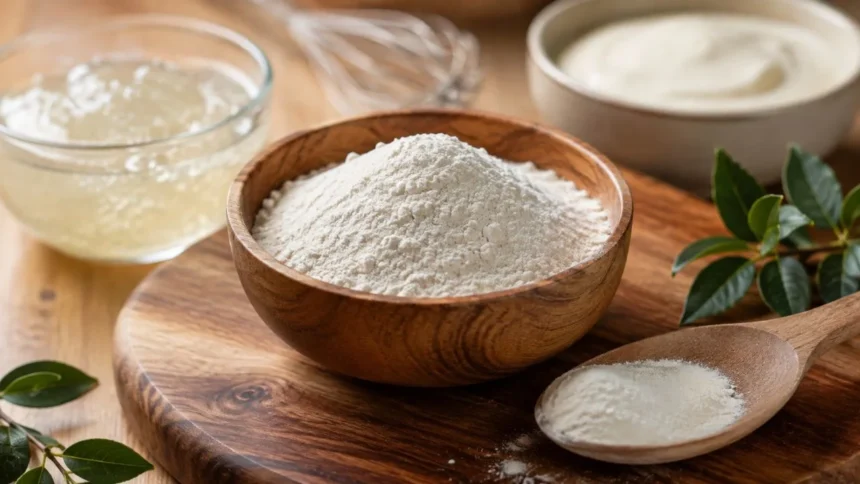
What Is Xanthan Gum? Learn How to Use It Correctly
What is xanthan gum, and why does it appear in products ranging from salad dressing to gluten-free bread? Xanthan gum is a high-molecular-weight carbohydrate produced through bacterial fermentation. Food manufacturers and home cooks use the resulting powder to thicken liquids, stabilise mixtures, improve texture, and prevent ingredients from separating.
Only a small amount is normally required to change the consistency of a recipe. Once xanthan gum is mixed with water, its long carbohydrate molecules create a thick solution. This effect allows sauces to cling to food, helps suspended ingredients remain evenly distributed, and gives gluten-free batters more structure.
The ingredient is particularly useful because it works in hot and cold liquids and remains effective across many food-processing conditions. It is found in sauces, dressings, desserts, drinks, dairy products, bakery fillings, and gluten-free foods. The FDA describes it as a direct food additive used to add texture to products.
This guide explains what xanthan gum is made from, how it works, whether it is safe, and how to use it in cooking. It also explores xanthan gum side effects, gluten-free suitability, substitutes, storage, and the differences between xanthan gum and guar gum.
The Simple Answer
Xanthan gum is a polysaccharide, which means it is made from long chains of sugar molecules. It is created when the bacterium Xanthomonas campestris ferments a carbohydrate source. The material produced during fermentation is purified, dried, and milled into a fine cream-coloured powder.
In food, xanthan gum functions mainly as a thickener, stabiliser, emulsifier, and texturiser. A thickener increases viscosity, while a stabiliser helps a mixture maintain its desired consistency. An emulsifier helps ingredients such as oil and water remain distributed rather than separating quickly.
Unlike wheat flour or cornstarch, xanthan gum does not need prolonged heating to begin thickening a liquid. It hydrates when dispersed in water, although incorrect mixing can produce stubborn lumps. Its strength means recipes generally require teaspoons or fractions of a teaspoon rather than large quantities.
The name “gum” describes its thickening and binding behaviour rather than chewing gum. Xanthan gum is not tree sap, gelatin, or a synthetic plastic. It is a fermentation-derived food ingredient with the international food additive number INS 415 and the European label number E415.
What Is Xanthan Gum Made From?
Manufacturers begin with a carbohydrate that provides food for a controlled culture of Xanthomonas campestris. The carbohydrate may come from sources such as glucose, sucrose, or other fermentable sugars. The bacteria convert this material into the large polysaccharide known as xanthan gum.
After fermentation, the xanthan material is separated and purified, commonly through recovery with ethanol or isopropanol. It is then dried and ground into a powder suitable for food manufacturing. International specifications identify glucose and mannose as dominant sugar units, alongside glucuronic acid and pyruvic acid.
The finished product is substantially different from the sugar source used during fermentation. The National Celiac Association notes that extensive processing removes residue and proteins from the original growing medium, although people with severe food allergies may still prefer to ask the manufacturer which source was used.
Xanthan gum is produced by a microorganism, but the finished ingredient does not contain an active bacterial culture. It should not be confused with probiotic foods containing live microorganisms. Its purpose in a recipe is physical—changing texture and stability—rather than introducing beneficial bacteria.
How Xanthan Gum Works
Xanthan gum absorbs water and forms a viscous solution. Its long molecular chains spread through the liquid and restrict how easily it flows. This is why a small amount can transform a watery sauce or dressing into a thicker mixture that coats food more evenly.
Xanthan solutions are shear-thinning, meaning they become less viscous when stirred, shaken, poured, or squeezed. When the movement stops, they thicken again. This behaviour helps salad dressing pour from a bottle while still clinging to vegetables instead of immediately collecting at the bottom.
The ingredient also helps stabilise particles, droplets, and air bubbles. In a beverage, it can slow the settling of cocoa or spices. In a dressing, it can reduce oil separation. In frozen desserts, it supports a smoother and more consistent texture by controlling movement within the mixture.
Xanthan gum does not always create a firm gel by itself. Instead, it commonly produces a thick, pourable, or slightly elastic texture. It can interact with other hydrocolloids, including locust bean gum, to form stronger structures than either ingredient would create alone.
Common Xanthan Gum Uses
Commercial food manufacturers use xanthan gum in salad dressings, chocolate milk, puddings, bakery fillings, and many other products. It improves mouthfeel, controls thickness, and helps a product remain consistent during transportation, storage, and serving.
Sauces and condiments often contain xanthan gum because it creates thickness without requiring large amounts of starch. It can help keep herbs and seasonings suspended in marinades, prevent watery separation in dips, and produce a smoother texture in gravies or blended sauces.
The ingredient is also used in ice cream, yoghurt, dairy alternatives, beverages, and dessert fillings. In these products, it may reduce separation, hold moisture, and create a more uniform texture. Its stability under different temperatures makes it useful in both refrigerated and shelf-stable formulations.
Outside food, xanthan gum may appear in toothpaste, cosmetics, personal-care products, and industrial formulations. In those products, it performs similar functions by controlling flow and keeping ingredients evenly distributed. Consumers should still use food-grade xanthan gum when preparing anything intended for eating.
Xanthan Gum in Gluten-Free Baking
Gluten gives traditional wheat dough elasticity, strength, and the ability to trap gas. Gluten-free flours do not naturally create the same connected protein network. As a result, gluten-free bread, cake, and pastry may crumble, spread, or fail to hold enough air without an added binder.
Xanthan gum helps replace some of gluten’s structural functions. It adds stickiness and elasticity to gluten-free doughs and batters while helping them retain moisture. This support allows baked products to hold their shape and develop a softer, less crumbly texture.
The amount needed depends on the recipe. Bread and pizza dough usually require more structure than cookies or shortbread. King Arthur Baking suggests beginning with approximately one-quarter teaspoon for every cup of gluten-free flour, then adjusting according to the product and recipe.
Always check the ingredient list on a gluten-free flour blend before adding more. Many ready-made blends already contain xanthan gum or another binder. Adding the full recipe amount to a blend that is already stabilised can make the final product sticky, gummy, heavy, or difficult to bake through.
How to Use Xanthan Gum
Measure xanthan gum carefully because a small difference can noticeably change a recipe. Begin with the amount provided by a tested recipe rather than estimating. When developing your own sauce or drink, add a very small quantity first and increase it gradually after checking the texture.
To prevent lumps, disperse the powder before it fully contacts water. You can blend it with other dry ingredients, mix it into sugar, or combine it with a small amount of oil before adding liquid. A blender or immersion blender can distribute the powder quickly in sauces and drinks.
Allow the mixture a little time to reach its final consistency before adding more. Xanthan gum may hydrate rapidly, but the texture can continue developing after mixing. Adding several extra spoonfuls too quickly can produce an unpleasantly slimy or elastic result that is difficult to correct.
For gluten-free baking, mix xanthan gum evenly through the flour before adding wet ingredients. King Arthur Baking advises that most home recipes should require far less than one tablespoon, and excessive amounts can make baked goods overly sticky or gummy.
Is Xanthan Gum Safe?
Xanthan gum is authorised for food use under established regulatory conditions. The FDA lists it as a regulated food substance and explains that direct additives must meet a safety standard based on their intended uses and expected levels of consumption.
The Joint FAO/WHO Expert Committee on Food Additives established an acceptable daily intake of “not specified” for xanthan gum. This terminology is used when the available safety information and expected food use do not indicate a need for a numerical daily limit.
The European Food Safety Authority concluded that xanthan gum is unlikely to be absorbed intact and is expected to be fermented by intestinal microorganisms. Its assessment found no safety concern for the general population at reported food-additive exposure levels.
These conclusions apply to normal food use, not unlimited consumption of concentrated powders or supplements. A regulated ingredient can still cause discomfort when consumed in unusually large quantities. People with specific medical conditions or unexplained reactions should seek personalised guidance from a qualified healthcare professional.
Possible Side Effects
Most people consume only small amounts of xanthan gum through prepared foods. At these typical levels, it is generally well tolerated. However, because it behaves as a non-digestible carbohydrate and can be fermented in the digestive system, larger amounts may affect bowel activity.
Possible xanthan gum side effects can include bloating, gas, softer stools, or increased bowel movements. A small human study using substantially higher amounts than are normally present in an individual food found increased stool output and frequency, demonstrating a laxative effect at high intake.
People have different tolerances to fermentable fibres and food gums. Someone with a sensitive digestive system may notice symptoms after eating several processed or gluten-free foods containing xanthan gum, while another person may consume the same products without discomfort.
Stop using a concentrated product and seek medical advice if symptoms are severe, persistent, or associated with signs of an allergic reaction. Do not add xanthan gum to an infant’s bottle or modify infant feeding without professional guidance, particularly for premature infants or children with medical swallowing needs.
Is Xanthan Gum Gluten Free?
Pure xanthan gum does not contain gluten as part of its chemical structure. It is widely used in gluten-free baking precisely because it can provide binding and elasticity when wheat, barley, and rye proteins are absent from the recipe.
The sugar used during fermentation may sometimes originate from wheat or another allergen-related crop. However, extensive purification removes the original proteins and residue, according to guidance from the National Celiac Association.
People with coeliac disease should choose a product clearly labelled or certified gluten free when cross-contact is a concern. Certification provides more useful assurance than trying to determine the agricultural origin of the carbohydrate used at the beginning of fermentation.
A wheat allergy differs from coeliac disease, and individual reactions can vary. Someone with a severe allergy may wish to contact the manufacturer about the fermentation medium and processing controls. For most gluten-free bakers, a certified product from a reputable supplier is the simplest choice.
Xanthan Gum vs Guar Gum
Xanthan gum and guar gum are both hydrocolloids used to thicken and stabilise food. Xanthan gum is produced through bacterial fermentation, while guar gum comes from the seeds of the guar plant. Both are sold as powders and work effectively in relatively small quantities.
Xanthan gum generally performs well in acidic mixtures, sauces, dressings, and gluten-free baking. Guar gum also thickens cold foods and may be used in ice cream, drinks, and baked products. The texture and strength of each gum can vary according to the recipe and other ingredients.
In gluten-free recipes, guar gum can sometimes replace xanthan gum at a one-to-one ratio. King Arthur Baking identifies this as a practical starting substitution, although the finished texture may not be identical. Bread, pastry, and high-moisture recipes may respond differently to the change.
Neither ingredient is automatically superior. Choose xanthan gum when a recipe specifically depends on its elasticity or stability, and consider guar gum when it is easier to obtain or better tolerated. For important baking projects, use a tested recipe rather than changing gums without adjusting the liquid.
Xanthan Gum Substitutes
Psyllium husk is a popular xanthan gum substitute for gluten-free bread. It absorbs water and creates a flexible structure that can make dough easier to shape. Psyllium is particularly useful in yeast breads, although it usually requires a different quantity and hydration level than xanthan gum.
Guar gum is one of the simplest alternatives for sauces and baked foods. Ground flaxseed or chia seed mixed with water may also add moisture and binding, especially in muffins, pancakes, and quick breads. These substitutes can change the colour, flavour, and appearance of the finished product.
Cornstarch, arrowroot, tapioca starch, and potato starch can thicken soups, gravies, and sauces, but they do not reproduce every property of xanthan gum. Many starches require heat and may lose thickness under freezing, prolonged cooking, or acidic conditions.
Choose a replacement according to xanthan gum’s purpose in the recipe. A starch may be suitable when you only need thicker gravy, while psyllium may be better when bread needs flexibility. No universal substitution ratio works for every recipe, so begin with a tested formula whenever possible.
Read Ingredient Labels
On packaged food labels, xanthan gum normally appears by its common name. In some regions, it may also be identified as E415 or INS 415. Its position in the ingredient list reflects its weight relative to other ingredients, although only a small quantity may be needed to affect texture.
Finding xanthan gum on a label does not automatically mean a food is highly processed or unhealthy. It describes one functional ingredient, not the complete nutritional value of the product. Evaluate the entire label, including serving size, protein, fibre, added sugar, sodium, and other ingredients.
People tracking digestive symptoms may find it useful to record the complete foods they consume rather than blaming one additive immediately. Several gums, sweeteners, fibres, dairy ingredients, or portion sizes may be present in the same product and contribute to discomfort.
When avoiding xanthan gum, check gluten-free bread, sauces, salad dressings, dairy alternatives, desserts, seasoning mixtures, and ready-made beverages. Recipes and product formulations can change, so read the current package even when you have purchased the same brand previously.
Buying and Storage Tips
People wondering where to buy xanthan gum can usually find it in the baking, gluten-free, or speciality-flour section of a supermarket. It is also sold by baking suppliers and online retailers. Select a clearly labelled food-grade product rather than an industrial powder.
Buy a small package unless you bake frequently. Because recipes use very little, even a modest bag can last for many batches. Check whether the package is certified gluten free when preparing food for someone with coeliac disease or strict cross-contact requirements.
Keep the powder tightly sealed in a cool, dry cupboard. Moisture can cause clumping and make accurate measuring difficult. Use a clean, dry spoon and avoid holding an open package over steaming food, where condensation may enter the container.
Label a transferred product clearly because xanthan gum resembles several other white powders. Include the purchase date and any allergen or certification information from the original package. Following the manufacturer’s storage instructions will help preserve quality throughout the stated shelf life.
Conclusion: Use Small Amounts Well
What is xanthan gum? It is a fermentation-produced polysaccharide that changes how liquids flow and how mixtures hold together. Food manufacturers use it as a thickener, stabiliser, emulsifier, and texturiser in products such as dressings, drinks, desserts, and bakery fillings.
Its most familiar home use is gluten-free baking, where it adds structure and helps replace some of gluten’s binding qualities. It can also improve homemade sauces, gravies, blended drinks, and dressings when used carefully and dispersed properly.
Food-safety authorities consider xanthan gum acceptable under authorised conditions of use. Normal food quantities are generally well tolerated, although concentrated or unusually high amounts may cause gas, bloating, softer stools, or increased bowel movements in some people.
The key is to use the smallest amount required for the desired result. Measure precisely, check whether flour blends already contain a binder, and choose a suitable substitute when necessary. Used correctly, xanthan gum is a practical tool for creating stable, smooth, and better-structured food.
Frequently Asked Questions
What is xanthan gum used for?
Xanthan gum thickens liquids, prevents separation, stabilises suspended ingredients, and improves texture. It is commonly used in dressings, sauces, drinks, desserts, and gluten-free baking.
Is xanthan gum natural or artificial?
It is produced through bacterial fermentation of carbohydrates and then purified, dried, and milled. Although it undergoes commercial processing, its main polymer is created biologically by microorganisms.
Is xanthan gum safe to eat every day?
Regulatory assessments support its safety at normal food-use levels. Large concentrated amounts may cause digestive effects, so it should be consumed as a food ingredient rather than taken excessively.
Can I leave xanthan gum out of a recipe?
You can sometimes omit it from cookies or naturally dense foods, but gluten-free bread and cake may become crumbly or collapse. Use a tested substitute when the ingredient provides essential structure.
Can I use cornstarch instead of xanthan gum?
Cornstarch can replace xanthan gum when the only goal is thickening a cooked sauce or gravy. It does not provide the same elasticity, cold stability, or gluten-replacing structure in baked products.