
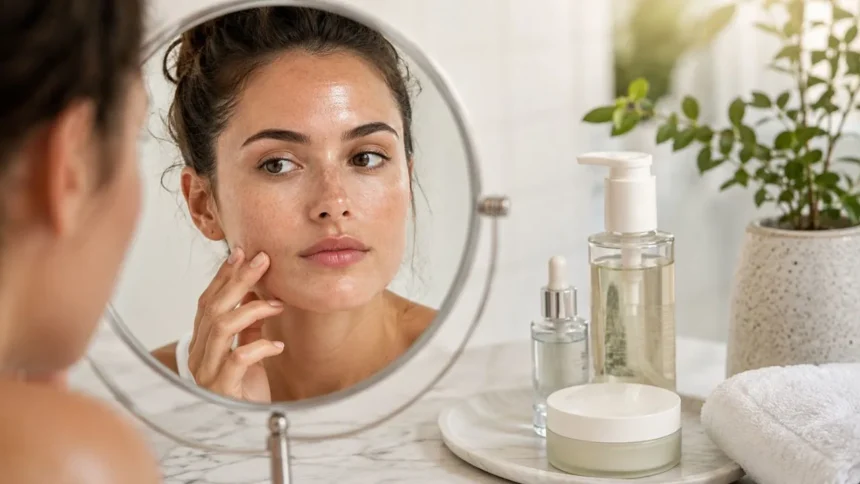
What Kind of Skin Do I Have Quiz? Take This Simple Skin Type
Knowing your skin type can make choosing skincare products much easier. Instead of buying whatever is trending, you can select a cleanser, moisturiser and sunscreen that match how your skin naturally behaves. This may reduce unnecessary dryness, excess shine, clogged pores and irritation caused by unsuitable products.
However, identifying your skin type is not always as simple as looking in the mirror. Your forehead may become oily while your cheeks feel tight, or your skin may look shiny because it is irritated and dehydrated. Weather, hormones, stress, medication and your current skincare routine can also temporarily change its appearance.
This skin type quiz examines oil production, dryness, pore visibility, sensitivity and how your face feels after cleansing. It can help you decide whether your skin is primarily dry, oily, combination or normal. A separate sensitivity check will show whether your skin also reacts easily to products or environmental changes.
The results provide a practical starting point rather than a medical diagnosis. Acne, eczema, rosacea, contact dermatitis and persistent rashes are skin conditions that may require professional treatment. Use the quiz to understand your everyday skincare needs, but consult a dermatologist when symptoms are severe, painful or difficult to control.
What Are the Five Main Skin Types?
Dry skin produces less natural oil, known as sebum, than it needs to maintain a comfortable surface. It may feel tight after cleansing and can look rough, flaky or dull. Fine lines may appear more noticeable when the skin lacks moisture, especially in cold weather or after using harsh skincare products.
Oily skin produces more sebum and may become shiny within a few hours of cleansing. The forehead, nose, cheeks and chin can all look oily, and pores may appear more visible. Oily skin is more likely to experience blackheads or breakouts, but it can still become dehydrated or irritated.
Combination skin contains both oily and dry or balanced areas. The T-zone, which includes the forehead, nose and chin, is usually shinier, while the cheeks may feel normal or dry. This skin type often requires flexible product application rather than treating the entire face in exactly the same way.
Normal skin generally feels balanced, comfortable and neither excessively oily nor unusually dry. Sensitive skin is slightly different because it describes how easily skin reacts rather than how much oil it produces. You can therefore have dry-sensitive, oily-sensitive, normal-sensitive or combination-sensitive skin.
Skin Type vs Skin Condition: What Is the Difference?
Your skin type mainly describes its usual level and distribution of oil. It tends to be influenced by genetics, age, hormones and environmental conditions. Although your skin type can change, it generally provides a baseline for choosing the texture and strength of everyday skincare products.
A skin condition is a specific concern that can affect any skin type. Acne, eczema, rosacea, psoriasis, melasma and contact dermatitis are examples. Someone can have oily skin with acne, dry skin with eczema or combination skin with rosacea, so one label does not explain everything happening on the face.
Dehydrated skin is also a temporary condition rather than a permanent skin type. It means the skin lacks water, not necessarily oil. Even oily skin can become dehydrated and feel tight while continuing to look shiny, particularly after over-cleansing or using too many exfoliating acids.
Acne-prone is another useful description, but it does not replace your basic skin type. Breakouts can develop on oily, combination, dry or sensitive skin. Identifying both your oil pattern and your current concerns helps you choose products more accurately than relying on a single label.
How to Prepare for an Accurate Skin Type Test
Complete the quiz based on how your skin normally behaves rather than how it looks immediately after applying skincare. Heavy creams can make dry skin appear oily, while strong cleansers may temporarily make oily skin feel tight. Think about your average experience across several days or weeks.
For a more accurate home test, wash your face with a mild cleanser and lukewarm water. Pat it dry gently, then avoid applying toner, serum, moisturiser or makeup. Wait approximately 30 to 60 minutes in a comfortable indoor environment before examining how your skin looks and feels.
Avoid performing the test immediately after exercise, sun exposure, exfoliation or a hot shower. Sweat, heat and active skincare products can temporarily affect redness, oil production and sensitivity. It is also better to test when your skin is calm rather than during an obvious rash or irritation flare.
Consider the season when interpreting your result. Your face may behave more oily in a hot, humid summer and become drier during winter. The goal is not to find a permanent label but to understand your current skin needs well enough to build a suitable routine.
What Kind of Skin Do I Have Quiz?
Choose the answer that most closely matches your usual experience. For Questions 1 to 8, record whether you select A, B, C or D. Your most frequent letter will indicate your likely base skin type: dry, oily, combination or normal.
Questions 9 and 10 assess sensitivity separately because sensitive skin can overlap with any base type. Record one sensitivity point whenever you answer yes. Two sensitivity points suggest that you may benefit from a fragrance-free, simplified skincare routine.
Do not choose an answer based on one unusual day. Consider how your skin behaves when you are following a basic routine and are not experiencing illness, sunburn, an allergic reaction or a major hormonal change. Long-term patterns usually provide a more reliable result.
When two letters receive the same score, read both result descriptions. You may sit between two categories or have a skin type that changes with the season. Combination skin is especially likely when oily and dry characteristics occur in clearly different areas of the face.
1. How does your face feel 30 minutes after cleansing?
A. Tight, uncomfortable or slightly rough
B. Shiny or oily across most of the face
C. Oily around the T-zone but tight on the cheeks
D. Comfortable, soft and generally balanced
2. What usually happens by the middle of the day?
A. My skin becomes drier or starts flaking
B. Most of my face develops noticeable shine
C. My forehead and nose become shiny, but my cheeks do not
D. My skin remains fairly comfortable and balanced
3. How visible are your facial pores?
A. They are generally small or difficult to see
B. They are noticeable across several areas of my face
C. They are visible mainly around my nose, chin or forehead
D. They are visible up close but not especially prominent
4. How often does your skin become flaky?
A. Frequently, especially around the cheeks or mouth
B. Rarely, unless I have used a strong treatment
C. Occasionally on my cheeks while my T-zone remains oily
D. Only during unusually cold weather or temporary irritation
5. How would you describe your usual level of facial shine?
A. My face rarely looks shiny
B. My entire face can look shiny within a few hours
C. Shine is concentrated around my forehead, nose and chin
D. I develop only a mild, natural-looking glow
6. What type of moisturiser feels most comfortable?
A. A rich cream or balm
B. A lightweight gel or oil-free lotion
C. A light lotion on my T-zone and richer cream on my cheeks
D. A medium-weight lotion without an overly heavy texture
7. How does your skin respond to skipping moisturiser?
A. It quickly feels tight, rough or uncomfortable
B. It remains oily and may feel comfortable without it
C. My cheeks feel dry, but my T-zone remains shiny
D. It feels mostly normal, although slightly less comfortable
8. Which description best matches your breakouts?
A. I may get occasional spots, but dryness is the bigger issue
B. I regularly experience blackheads, clogged pores or pimples
C. Breakouts mainly develop around my T-zone
D. I experience only occasional blemishes without a clear pattern
9. Does your skin frequently sting, burn or itch after using new products?
Yes, my skin reacts easily to products.
No, most basic skincare products feel comfortable.
10. Does your skin become red, irritated or uncomfortable after weather changes, fragrance or exfoliation?
Yes, these triggers regularly affect my skin.
No, my skin usually tolerates them without difficulty.
How to Calculate Your Skin Type Quiz Result
Count how many times you selected each letter in Questions 1 to 8. Mostly A answers suggest dry skin, mostly B answers suggest oily skin, mostly C answers suggest combination skin and mostly D answers suggest normal or balanced skin. Read the matching section below for product and routine guidance.
When two scores are close, your skin may fall between categories. For example, equal B and C answers can indicate oily-combination skin, while equal A and C answers may suggest dry-combination skin. Your routine can address different areas rather than forcing the entire face into one category.
Next, add the sensitivity points from Questions 9 and 10. One yes answer may indicate occasional sensitivity, particularly when using active ingredients. Two yes answers suggest a stronger sensitive-skin tendency that should influence which cleansers, treatments and sunscreens you choose.
Retake the quiz after several weeks if you are currently recovering from irritation or changing your routine. A damaged skin barrier can make every skin type feel tight and sensitive. Your result may become clearer once your skin is calm and you are using fewer harsh products.
Your Result: Dry Skin
You probably have dry skin if A was your most common answer. Your face may feel tight after washing and may develop rough, flaky or dull-looking areas. Dryness is often more noticeable on the cheeks, around the mouth and during cold or low-humidity weather.
Choose a mild cream or lotion cleanser that removes sunscreen and makeup without leaving your face feeling squeaky clean. Very foamy cleansers, harsh soaps and frequent scrubbing may remove too much natural oil. Lukewarm water is usually more comfortable than very hot water.
Apply a moisturiser shortly after cleansing while the skin still feels slightly damp. Ingredients such as glycerin, hyaluronic acid, ceramides, squalane and petrolatum can support moisture retention. A cream or ointment is generally more protective than a very light gel when dryness is significant.
Dry skin can still develop clogged pores or pimples, so avoid assuming that every rich product will suit you. Introduce new products gradually and look for non-comedogenic options when you are prone to breakouts. Persistent cracking, itching or inflammation may indicate eczema or another condition.
Your Result: Oily Skin
You probably have oily skin if B was your most frequent answer. Your face may develop shine across the forehead, nose, cheeks and chin soon after cleansing. Pores can look more visible, and blackheads, whiteheads or inflammatory breakouts may occur more regularly.
Use a gentle foaming or gel cleanser once or twice daily rather than washing repeatedly. Over-cleansing can irritate the skin and make it feel tight without solving the underlying oil production. Cleanse again after heavy sweating, but avoid abrasive scrubs and rough cleansing brushes.
Oily skin still needs moisturiser. Select a lightweight lotion or gel labelled oil-free and non-comedogenic. Skipping moisturiser completely can leave the surface dehydrated, particularly when you use salicylic acid, benzoyl peroxide, retinoids or other acne treatments.
Blotting papers can temporarily remove surface shine, but they do not change how much sebum the skin produces. Avoid applying strong alcohol-based products throughout the day. When breakouts are painful, deep, persistent or leaving scars, seek professional acne treatment rather than adding more drying products.
Your Result: Combination Skin
You probably have combination skin if C was your most common answer. The forehead, nose and chin may become oily, while the cheeks remain normal, dry or sensitive. Your pores and breakouts may also be more noticeable in the T-zone than on the outer face.
Combination skin benefits from flexible care. Use a gentle cleanser that removes excess oil without making the cheeks feel tight. You may not need an aggressive oily-skin cleanser across your entire face, especially when the dry areas become irritated easily.
Apply a lightweight moisturiser over the whole face, then add a richer cream only to dry areas when necessary. Similarly, an oil-controlling treatment may be applied mainly to the T-zone. Treating different facial zones separately is often more effective than searching for one perfect product.
Combination skin can change significantly with the weather. You may need a lighter moisturiser in summer and a more protective product during winter. Review how each area feels rather than following the same routine throughout the year regardless of changing conditions.
Your Result: Normal or Balanced Skin
You probably have normal skin if D was your most frequent answer. Your face generally feels comfortable after washing and does not become excessively oily or dry during the day. Pores may be visible, but they are not usually a major concern, and breakouts tend to be occasional.
Normal skin still requires regular care to support the skin barrier and protect it from sun damage. Use a mild cleanser, comfortable moisturiser and broad-spectrum sunscreen. There is no need to create a complicated routine simply because your skin tolerates many products.
Introduce active ingredients slowly rather than using several strong treatments at once. Normal skin can become irritated, dehydrated or acne-prone when over-exfoliated. Maintaining a healthy barrier is often more useful than constantly trying to correct small changes in texture.
Your skin may become temporarily drier or oilier because of weather, hormones, travel or stress. Adjust product textures when necessary instead of assuming your original result must remain permanent. Balanced skin describes your usual pattern, not how your face must behave every day.
Your Result: Sensitive Skin
You may have sensitive skin when you answered yes to both sensitivity questions. Your skin may burn, sting, itch or become visibly irritated after applying certain products. Fragrance, exfoliating acids, retinoids, weather changes and harsh cleansers are common triggers, although individual reactions vary.
Sensitive skin can also be dry, oily, combination or normal. Use your A-to-D result to understand oil production, then adjust the routine for sensitivity. For example, oily-sensitive skin may need a lightweight moisturiser, while dry-sensitive skin may require a richer, barrier-supporting cream.
Keep your routine simple and introduce only one new product at a time. Fragrance-free products are usually easier to evaluate than heavily scented formulas. Patch testing a product on a small area for several days may help identify obvious irritation before it is applied to the whole face.
Frequent redness or burning does not always mean you simply have a sensitive skin type. Rosacea, eczema, allergic contact dermatitis and a damaged skin barrier can produce similar symptoms. Seek a dermatologist’s advice when reactions are persistent, painful or difficult to connect to a particular trigger.
Do You Have Dehydrated Skin?
Dehydrated skin lacks water and can affect every skin type. It may feel tight or uncomfortable while still producing visible oil. Fine lines can appear more noticeable, and the skin may look dull even when the forehead and nose become shiny during the day.
Over-cleansing, excessive exfoliation, low humidity and unsuitable acne treatments can contribute to dehydration. A common sign is skin that feels stripped immediately after washing but becomes oily later. This pattern is sometimes mistaken for a permanent oily skin type.
Reduce the number of harsh active ingredients and switch to a gentle cleanser. Apply a moisturiser that combines water-attracting ingredients with barrier-supporting lipids. Avoid expecting a facial mist alone to correct dehydration, as water can evaporate without a moisturiser to help retain it.
Dehydration should gradually improve when the cause is removed and the skin barrier receives appropriate care. If tightness, scaling, itching or redness continues, you may have genuinely dry skin or a medical skin condition. A dermatologist can help distinguish between these possibilities.
Do You Have Acne-Prone Skin?
Acne-prone skin regularly develops blackheads, whiteheads, pimples or deeper inflamed spots. It is commonly associated with oily or combination skin, but dry and sensitive skin can also experience breakouts. Oil production alone does not explain every case of acne.
Choose products labelled non-comedogenic or unlikely to clog pores. Cleanse gently and avoid squeezing spots, which can increase inflammation and the risk of scarring or dark marks. Washing the face more than necessary does not remove acne from inside the pores.
Salicylic acid can help with clogged pores, while benzoyl peroxide may reduce inflammatory acne. Retinoids are also widely used, but these ingredients can irritate the skin when introduced too quickly. Start slowly and follow the directions provided with the product or by a healthcare professional.
Seek professional treatment when acne is painful, widespread, leaving scars or not improving after consistent over-the-counter care. Some bumps that resemble acne may actually be rosacea, folliculitis or another condition. Accurate diagnosis can prevent months of using unsuitable products.
A Simple Skincare Routine for Every Skin Type
A basic morning routine needs only a gentle cleanse when necessary, moisturiser and broad-spectrum sunscreen. Dry or sensitive skin may be comfortable with water alone in the morning, while oily skin may prefer a mild cleanser. Adjust the texture of the moisturiser rather than skipping it automatically.
At night, cleanse away sunscreen, makeup, sweat and environmental residue. Apply any treatment product your skin tolerates, followed by moisturiser. Using several serums, acids and masks is not required for healthy skin and may make it harder to identify the cause of irritation.
Choose products according to both skin type and skin condition. An oily person with rosacea needs different care from someone with oily, resilient skin and blackheads. Product labels such as fragrance-free, hydrating, non-comedogenic or sensitive skin can help narrow the options.
Consistency usually matters more than constantly changing products. Give a gentle routine time to work before adding another active ingredient. Stop using a product that causes significant burning, swelling or a persistent rash, even when online reviews describe it as suitable for your skin type.
How Your Skin Type Can Change Over Time
Genetics provide a baseline, but skin does not behave exactly the same throughout life. Sebum production often increases during puberty and may decline with age. Hormonal changes related to menstruation, pregnancy, breastfeeding or menopause can also affect oiliness, dryness and breakouts.
Seasonal changes can alter your result. Humid weather may increase shine and make lightweight products more comfortable, while cold air and indoor heating can weaken moisture retention. Many people need different product textures in summer and winter without having completely different skin types.
Stress, sleep, medication and changes in health may influence the skin as well. Some treatments increase dryness or sun sensitivity, while hormonal medicines can affect breakouts. Review recent changes when your skin suddenly behaves differently from its usual pattern.
Your skincare routine itself can temporarily change your skin. Excessive acids, retinoids, scrubbing or cleansing can create tightness and sensitivity that resemble dry skin. Before buying an entirely new routine, consider whether reducing irritating products allows your original skin pattern to return.
Common Mistakes When Identifying Your Skin Type
One common mistake is judging your skin immediately after cleansing. Almost anyone can feel tight after using a harsh face wash, and heavy moisturiser can make any skin type look shiny. Complete the bare-face test with a mild cleanser for a more useful result.
Another mistake is assuming that breakouts always mean oily skin. Dryness, irritation, hormones and unsuitable products can contribute to blemishes. Examine your general level of oil and dryness separately from the number of spots you currently have.
Many people also confuse healthy radiance with excessive oil. A small amount of natural shine is normal and helps the skin remain flexible. Oily skin usually produces persistent shine across larger areas rather than a mild glow visible only under bright light.
Finally, do not treat your quiz result as a strict identity. Skincare labels are tools for choosing suitable products, not rules you must follow permanently. Pay attention to comfort, irritation and changing needs rather than forcing your skin into one category.
When Should You See a Dermatologist?
Consider professional advice when your skin remains uncomfortable despite using a gentle routine. Persistent itching, cracking, burning, scaling or redness may indicate eczema, rosacea, contact dermatitis or another condition. These concerns cannot be identified reliably through an online quiz.
A dermatologist can also help when acne is deep, painful or leaving scars and dark marks. Starting effective treatment early may limit long-term changes. Avoid repeatedly switching between strong over-the-counter products when the condition continues to worsen.
Seek prompt care for a rapidly spreading rash, significant facial swelling, blistering or signs of infection such as worsening pain, warmth or discharge. Difficulty breathing or swelling of the lips, tongue or throat can indicate a severe allergic reaction and requires emergency help.
You should also have new or changing moles and sores that do not heal professionally examined. Knowing whether your skin is oily or dry does not replace checks for serious skin conditions. Everyday skincare and medical dermatology address different aspects of skin health.
Final Verdict: What Kind of Skin Do You Have?
Your most common answer in the quiz provides a useful estimate of your base skin type. Mostly A suggests dry skin, mostly B indicates oily skin, mostly C points to combination skin and mostly D suggests normal or balanced skin. Sensitivity should be considered as an additional characteristic.
Use your result to choose product textures rather than building an unnecessarily complicated routine. Dry skin often prefers creams, oily skin may favour gels, combination skin benefits from targeted application and normal skin can focus on simple maintenance. Sensitive skin generally needs gentler and less fragranced products.
Remember that dehydration, acne and irritation can affect any skin type. A shiny face is not always well hydrated, and tightness does not always prove that your skin is permanently dry. Looking at patterns over time creates a more accurate picture than judging one day.
Retake the skin type quiz whenever your skin changes significantly with age, hormones, climate or treatment. The best routine is not the one designed for a fixed label; it is the one that keeps your skin comfortable, protected and manageable in its current condition.
Frequently Asked Questions
How can I test my skin type at home?
Wash your face with a mild cleanser, apply nothing and wait for 30 to 60 minutes. Tightness suggests dryness, widespread shine suggests oiliness and an oily T-zone with dry cheeks suggests combination skin.
Can I have oily and sensitive skin?
Yes. Sensitivity describes how easily your skin reacts, while oily describes sebum production. Use lightweight, fragrance-free and non-comedogenic products that do not strip your skin.
Is acne-prone skin a skin type?
Acne-prone describes a tendency to develop breakouts rather than your basic oil pattern. You can have dry, oily, combination or sensitive skin and also be prone to acne.
Can my skin type change?
Yes. Age, hormones, seasons, medication, stress and skincare products can change how oily, dry or sensitive your skin feels. Reassess your routine when those changes persist.
What is the most common skin type?
Combination skin is frequently reported because many people produce more oil through the T-zone than on the cheeks. However, skin patterns vary widely between individuals and climates.